Two Artists, Two Worlds: Emily Carr and Frances Hodgkins
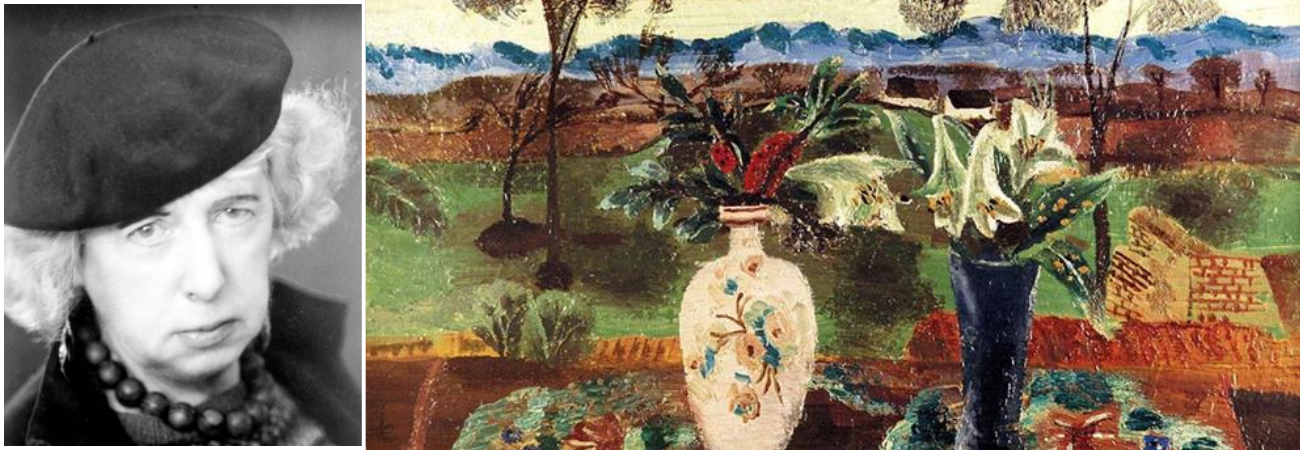
Two women, born within two years of one another at opposite ends of the British Empire, spent their lives wrestling paint into meaning. Frances Mary Hodgkins, born in New Zealand in 1869, and Emily Carr, born in Victoria in 1871, shared restless, independent spirits and an uncompromising commitment to art. Both forged careers in environments that offered little encouragement to women who refused to remain ornamental. And yet, their visions diverged sharply—one drawn toward the shifting currents of European modernism, the other rooted in the forests, villages, and spiritual terrain of the Pacific Northwest.
To place them side by side is to watch two distinct answers to the same question unfold: what does it mean to be a serious artist, a woman, and a colonial subject at the turn of the twentieth century?
Origins and Early Independence
Hodgkins was born in Dunedin, the daughter of a respected amateur painter and drawing master. Art, for her, began as both inheritance and expectation. Carr, by contrast, grew up in Victoria, in a household that valued culture but did not imagine a professional artistic life for a daughter. Both women lost parents relatively early, and both were shaped by a sense of self-reliance that bordered on defiance. Each, in her own way, refused to be contained by the conventions of colonial society.
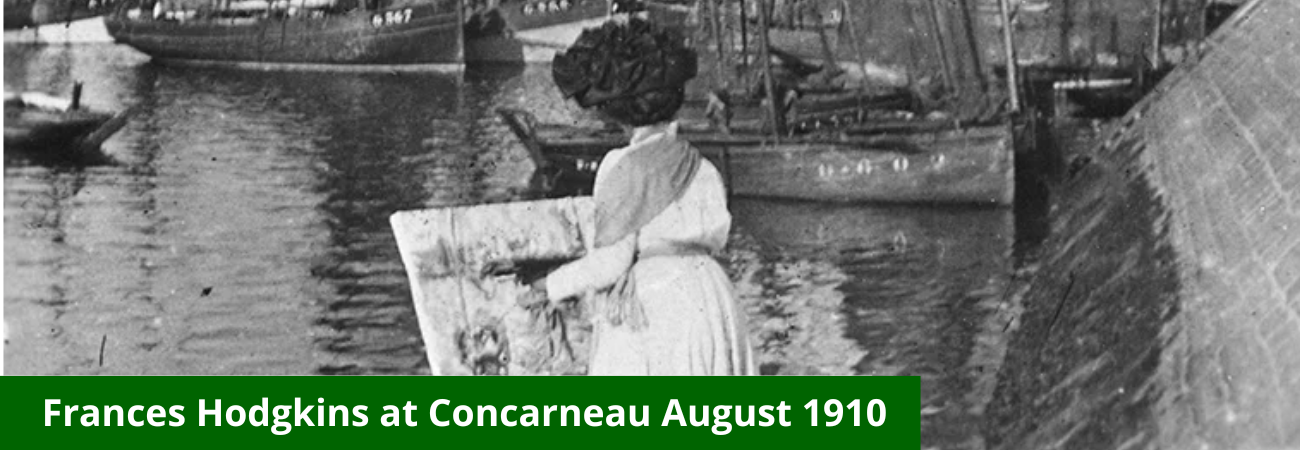
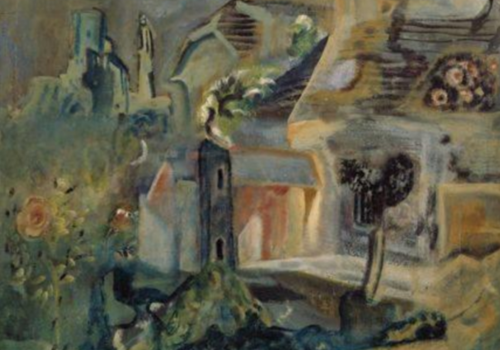
A pivotal connection occurred in 1910–1911, when Carr attended the Académie Colarossi in Paris where Hodgkins was an instructor, their first female instructor. While Paris served Hodgkins as a base for four years she, like many other artists, would spend the summer months in popular French coastal locations. She toured Normandy and Picardy with her group of art students, including Carr, sketching in the villages around Concarneau., where Hodgkins now lived. At the end of a trip, they spent six weeks together painting the environs of Concarneau. Hodgkins was one of the few professional female instructors available at the time, and her influence exposed Carr directly to contemporary European ideas in modernist painting.
Their brief but significant encounter, created a tangible artistic link between the two women—a moment where Carr absorbed formal techniques and modernist sensibilities from someone who shared her determination to thrive as a woman in the arts. Yet, despite this mentorship, Carr’s later work would move in a direction profoundly different from Hodgkins’, highlighting the diversity of paths that early modernist training could inspire.
While Paris served Hodgkins as a base for four years she, like many other artists, would spend the summer months in popular French coastal locations. She toured Normandy and Picardy with her group of students, sketching in the villages of Concarneau, LeHavre and St Valery-sur-Somme. It was on these teaching trips that she met and befriended some of her most loyal companions, one of the most significant of whom was Jane Saunders. She first met Saunders and her partner, Hannah Ritchie (1888-1981), in 1911 at Concarneau. Saunders and Ritchie continued to support Hodgkins throughout her life and also collected a number of major works by Hodgkins, most of which are now in public art gallery collections.
This brief but significant encounter created a tangible artistic link between the two women—a moment where Carr absorbed formal techniques and modernist sensibilities from someone who shared her determination to thrive as a woman in the arts. Yet, despite this mentorship, Carr’s later work would move in a direction profoundly different from Hodgkins’, highlighting the diversity of paths that early modernist training could inspire.
Hodgkins, meanwhile, left New Zealand repeatedly and for long stretches, ultimately making Europe her primary base. She studied, exhibited, and evolved within the ferment of modernist experimentation in places like London and Paris. Carr also travelled abroad—most notably to San Francisco, London, and Paris—but she always returned to the West Coast of Canada. If Hodgkins became a cosmopolitan artist shaped by Europe, Carr remained, at her core, a regional artist whose work was inseparable from place.
A Tale of Two Modernisms
This difference in geographic allegiance shaped nearly everything that followed.
Hodgkins absorbed and contributed to the language of modernism as it developed in Europe. Her paintings evolved from relatively naturalistic watercolours into increasingly abstracted compositions, often featuring still lifes, textiles, and domestic objects. She played with form and colour, flattening space and experimenting with structure in ways that aligned her with broader movements in early twentieth-century art. Her work reflects a dialogue with contemporaries and movements—Post-Impressionism, Fauvism, and beyond—even as she maintained a distinctive voice.
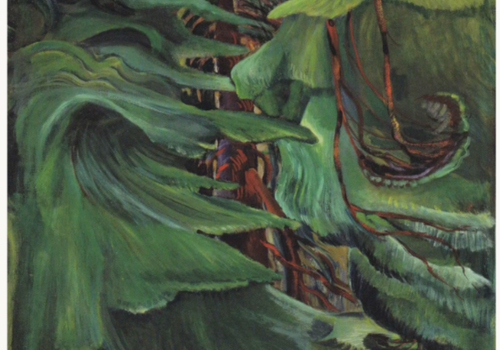
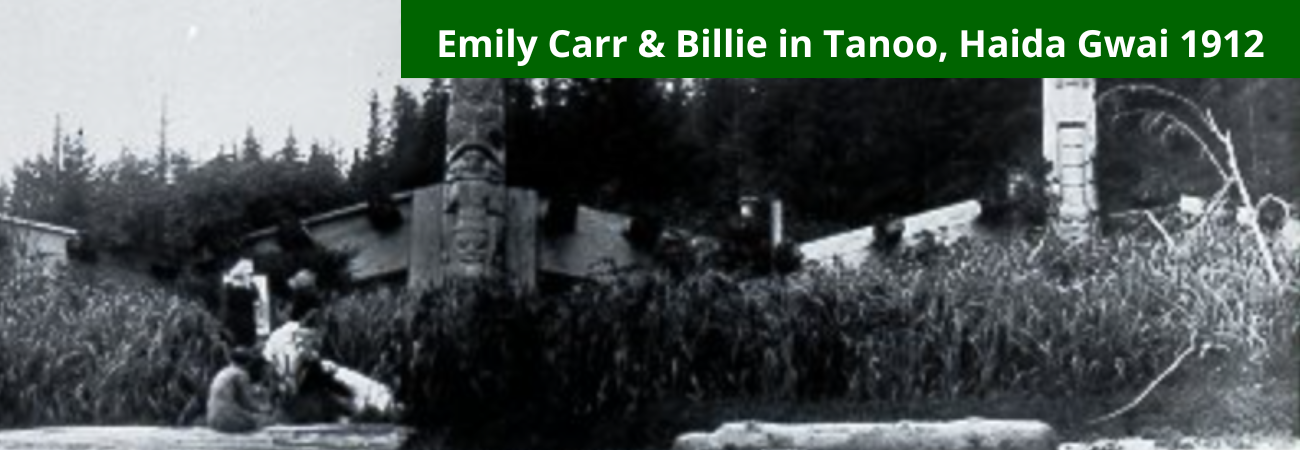
Carr, by contrast, engaged modernism more selectively and instrumentally. Her early work shows the influence of her training abroad under Hodgkins, but her mature style emerged through her encounters with Indigenous villages and landscapes on the coast of British Columbia. Rather than participating in a European conversation, Carr adapted modernist techniques to express something intensely local and personal. The towering trees, totem poles, and dense forests in her paintings are not exercises in style; they are acts of reverence, attempts to convey what she increasingly understood as a spiritual presence in the natural world.
Both artists, then, were modern—but in fundamentally different ways. Hodgkins moved toward abstraction through engagement with international art currents. Carr moved toward a kind of expressive, almost mystical modernism rooted in place and experience. Their brief teacher-student connection underscores how the same early exposure could lead to dramatically different outcomes: Hodgkins’ lessons equipped Carr with technical tools, yet Carr’s vision transformed those tools into a language entirely her own.
Subject Matter: Interior vs. Exterior Worlds
Their subject matter underscores this divergence.
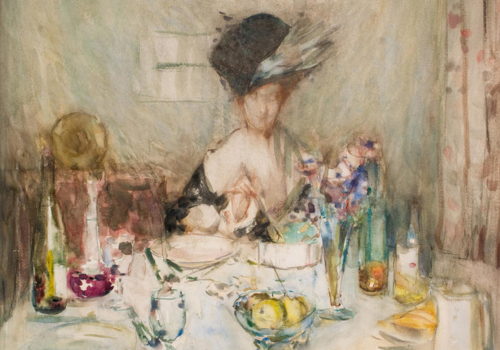
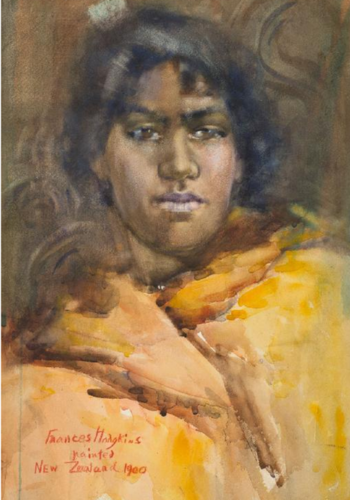
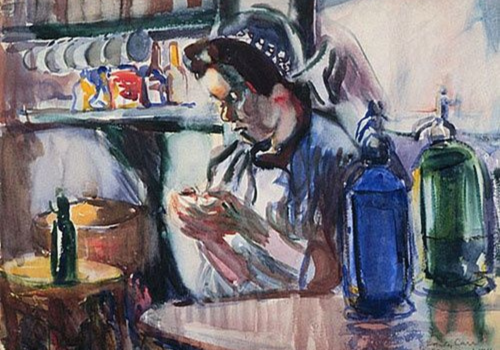
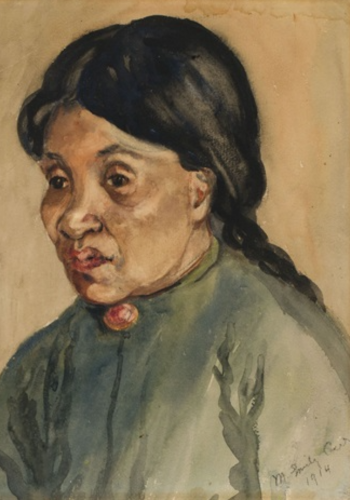
Hodgkins often painted interiors, still lifes, and figures, though not in a traditional sense. A tablecloth, a jug, a piece of fruit—these become vehicles for exploring colour relationships and compositional tension. Even when human figures appear, they are frequently secondary to the formal concerns of the painting. There is an intimacy to her work, a sense of the domestic and the immediate, but it is filtered through a modernist sensibility that resists straightforward narrative.
Carr’s work, by contrast, is expansive and outward-looking. Her most iconic paintings depict the forests and Indigenous cultural sites of the Pacific Northwest. The land itself becomes the subject, animated and alive. Where Hodgkins often turns inward, Carr looks outward—and upward—toward something larger than herself. Her paintings are charged with emotion and spiritual urgency, reflecting her belief that the divine could be encountered in nature.
Art and Empire: Colonial Contexts
This difference in subject matter also reflects differing relationships to colonial contexts. Hodgkins, though a colonial by birth, largely escaped the immediate realities of settler colonialism by relocating to Europe. Her work does not directly engage with Indigenous cultures or the politics of land and identity in New Zealand. NOT TRUE. Carr, however, could not avoid these realities. Her engagement with Indigenous villages and totem poles is central to her work—and deeply complex. She was both a documenter and an interpreter, someone who sought to honour what she saw as a disappearing culture, yet did so from within a colonial framework that inevitably shaped her perspective.
In recent years, Carr’s legacy has been re-examined in light of these tensions. While her admiration for Indigenous art and culture is clear, so too are the limitations of her understanding. Hodgkins, by contrast, has been critiqued less for cultural engagement and more for her position within the European art world—a colonial artist who found recognition only after leaving her homeland.
Lives Lived Outside Convention
Their personal lives reveal further parallels and contrasts. Neither woman married or had children, a choice—or perhaps a necessity—that allowed them to pursue their careers with a level of independence unusual for their time. Both experienced financial instability and periods of isolation. Hodgkins often relied on teaching and the support of patrons to sustain herself in Europe. Carr, for many years, ran a boarding house in Victoria to make ends meet, painting when she could and often feeling that her work was unrecognized.
Recognition, when it came, arrived differently for each. Hodgkins achieved a measure of success in Europe during her lifetime, exhibiting with prominent galleries and gaining critical attention, particularly later in her career. Carr’s recognition was slower and more geographically constrained. Her association with the Group of Seven beginning in 1927 helped bring her work to a wider audience, but it was not until the final decade of her life that she began to receive sustained acclaim.
Even then, Carr’s success was tempered by her health. Heart problems and periods of exhaustion limited her ability to work, and she turned increasingly to writing as a creative outlet. Her books, including Klee Wyck and The Book of Small and the House of All Sorts reveal a voice as distinctive as her painting—direct, searching, and deeply attuned to the textures of experience. Hodgkins, too, wrote letters that provide insight into her life and work, but she did not develop a parallel literary career in the way Carr did.
Style and Expression
Stylistically, the contrast between the two artists can be striking. Hodgkins’ later works often feature fragmented forms, bold colour juxtapositions, and a playful yet controlled approach to composition. There is a sense of experimentation, of pushing against boundaries and rethinking what a painting can be. Carr’s mature style, while also expressive and at times abstracted, is more unified in its vision. Her swirling brushstrokes and dynamic compositions serve a clear purpose: to convey movement, energy, and spirit within the landscape.
And yet, for all these differences, there are moments where their work seems to converge. Both artists developed a heightened sensitivity to form and colour, moving beyond straightforward representation toward something more interpretive. Both were, in their own ways, seeking essence rather than surface. Whether in a still life or a forest scene, the goal was not simply to depict but to reveal.
Rooted vs. Cosmopolitan
In the end, what distinguishes them most is their relationship to place. Hodgkins’ art is marked by movement—geographical, stylistic, and conceptual. She belongs to no single place, and her work reflects a life lived in transit, in dialogue with a broad and shifting artistic landscape. Carr’s art, by contrast, is rooted—deeply, stubbornly—in the land of the Pacific Northwest. Her paintings are inseparable from the forests and coastal environments that inspired them, and from the cultural encounters that shaped her understanding of that world.
The fact that Carr studied with Hodgkins adds nuance to this distinction: exposure to the cosmopolitan, experimental European style did not tether Carr to Europe. Instead, she transformed the lessons she learned into a uniquely local, spiritual modernism, demonstrating that influence is never one-to-one—learning can inspire entirely unexpected outcomes.
A Shared Legacy of Independence
To compare Hodgkins and Carr is not to rank them or to suggest that one path is more authentic than the other. Rather, it is to recognize the richness of possibility that existed—even within the constraints of their time—for women artists willing to pursue their vision. One found her voice in the studios and galleries of Europe, engaging with the cutting edge of modernist thought. The other found hers in the forests and villages of the West Coast, translating landscape into something at once personal and universal.
Both, in their own ways, expanded the boundaries of what art could be—and what it could mean.
And perhaps that is where their stories ultimately meet: in a shared insistence that art is not merely a profession or a pastime, but a way of seeing, a way of being, and a way of making sense of a world that is always, in one way or another, in flux.