Nan Cheney: Emily Carr’s Trusted Friend, Confidante, and Champion
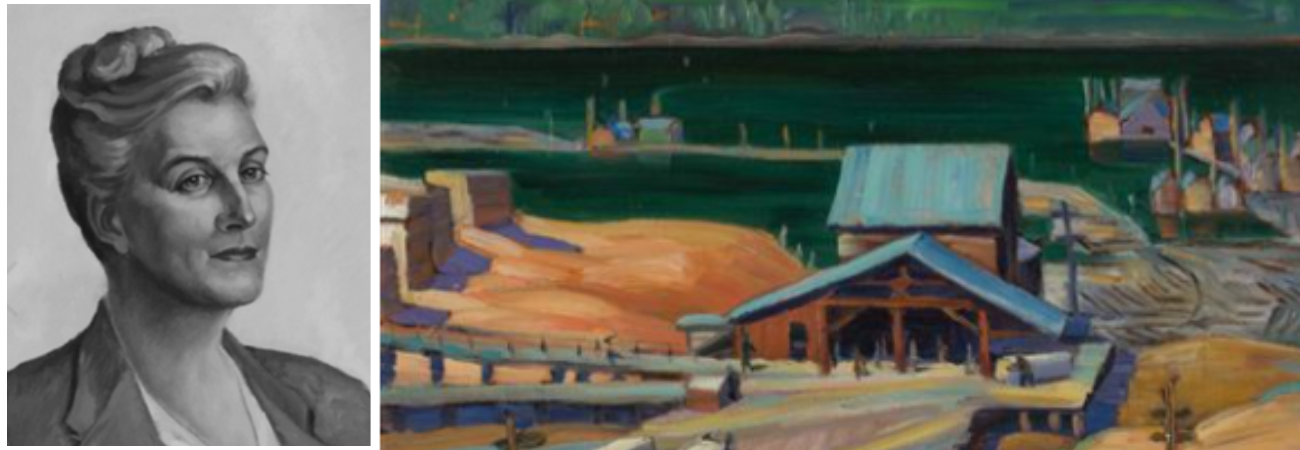
Nan Lawson Cheney (1897–1985) was one of Emily Carr’s closest friends, trusted correspondents, and earliest champions. Although she is less well known than Lawren Harris, Ira Dilworth, or Mark Tobey, Cheney played a significant role in promoting Carr’s work, organizing her annual solo exhibitions at the Vancouver Art Gallery from 1937 – 1941, and preserving her legacy through their friendship, extensive correspondence, and later publications.
Who Was Nan Cheney?
Born in Windsor, Nova Scotia, in 1897, Nan Lawson Cheney studied art at Tulane University before specializing in medical illustration. She became the first full-time medical illustrator in the Department of Anatomy at the University of British Columbia. While pursuing her scientific career, Cheney remained deeply involved in the arts and became acquainted with many of British Columbia’s leading artists.
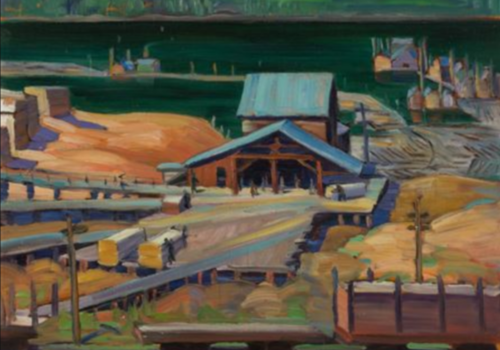
Although influenced by modernist ideas, Cheney’s paintings remained representational. She did not embrace the expressive distortion or spiritual symbolism found in Emily Carr’s mature work. Instead, her paintings display solid draftsmanship, balanced compositions, and subtle colour relationships.
Meeting Emily Carr
Cheney first met Emily Carr in 1927, shortly after Carr’s triumph at the landmark Canadian West Coast Art Native & Modern exhibition at the National Gallery with other artists, including members of the Group of Seven. The two women quickly discovered a shared love of art, nature, and thoughtful conversation.
Their friendship grew steadily over the following years through frequent visits and an extensive exchange of letters. Although Carr often cultivated the public image of a solitary artist, her correspondence with Cheney reveals someone who treasured close friendships, delighted in humour, and found pleasure in sharing the small events of everyday life.
A Trusted Confidante
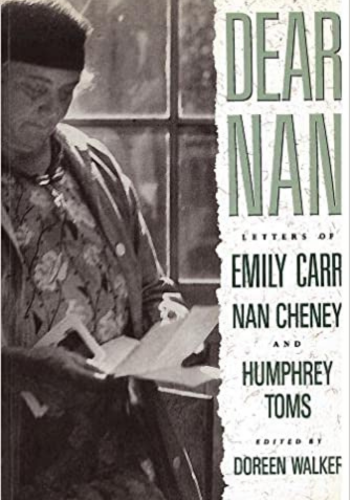
This collection of letters includes 150 letters Emily Carr wrote to Nan Cheney that date from 1930 to 1945, the most prolific period in Carr’s career as both painter and writer. In them she writes in colourful detail about her everyday activities, and discusses her painting – “the biggest thing in my life.” There are outbursts of exasperation and anger as well as many indications of her caring, her warmth, her wisdom and her wit, and of her impatience with critics and poseurs, and they give insights into her various relationships with, among others, Lawren Harris, Ira Dilworth, Jack Shadbolt, Garnett Sedgewick, Dorothy Livesay, A.Y. Jackson, and Arthur Lismer.
Few people knew Emily Carr as intimately as Nan Cheney. Their letters provide a remarkable window into Carr’s private world. She wrote candidly about the challenges of painting, periods of creative doubt, and her hopes for her writing projects. She also shared stories about her beloved dogs and other pets, discussed financial worries and declining health, expressed opinions about fellow artists such as Lawren Harris, A.Y. Jackson, and Jack Shadbolt, and reflected on spirituality and the natural world.
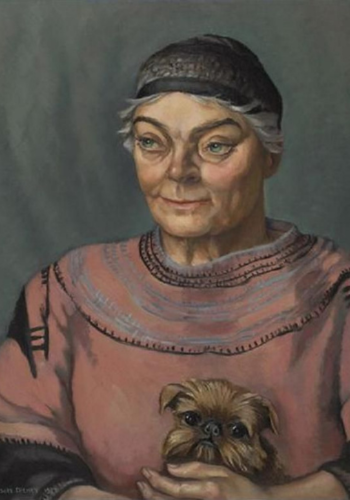
Cheney also produced portraits and figure paintings such as this portrait of Emily Carr she painted in 1938. Her portraits, like her self-portrait in the top of this post are sensitive and restrained, focusing on character rather than psychological intensity. She frequently painted family members, friends, and models in natural settings. Unlike Emily Carr, whose mature paintings sought to express the spiritual energy of the forest through bold forms and dynamic brushwork, Nan Cheney remained committed to careful observation and faithful representation. Her work reflects the academic traditions in which she was trained while incorporating a restrained modern sensibility.
Unlike some of Carr’s correspondents, Cheney never attempted to direct or influence her artistic development. Instead, she offered thoughtful encouragement, listened without judgment, and provided a safe space where Carr could write with unusual honesty about both her frustrations and her joys.
Preserving Emily Carr’s Legacy
In 1938, soon after Carr returned from a hospital stay after a recent heart attack, Eric Brown, then Director of the National Gallery, urged Cheney, who was by then well-connected to the Vancouver Art Gallery, to organize a solo exhibition of Carr’s paintings to help pay for her medical bills.
The exhibition was a great success, 11 of the 29 paintings sold, the largest number of paintings sold at a one man showsin the history of the gallery at that time. The reviews were generous and enthusiastic. In her biography of Carr, Maria Tippett reports that:
Never before had Carr’s paintings met with so overwhelmingly favourable a reception; never before had her interpretations of the spirit of the forest drawn such a positive response from British Columbians.
Nan Cheney’s greatest contribution may have come after Emily Carr’s death in 1945. Recognizing the historical importance of their correspondence, she carefully preserved the letters Carr had written to her and later donated them to the University of British Columbia’s Rare Books and Special Collections. Today, they represent one of the richest collections of primary source material available for understanding Carr’s personality, creative process, and daily life.
Dear Nan
Cheney also collaborated with Humphrey Toms to publish Dear Nan: Letters of Emily Carr, Nan Cheney and Humphrey Toms. Covering the years from 1930 to 1945, the collection documents Carr during the most productive period of her career as both painter and author.
The letters reveal her working methods, her reactions to exhibitions, the development of books such as Klee Wyck, and her relationships with many important figures in Canadian art. They also showcase Carr’s wit, warmth, impatience, generosity, and lively personality. For biographers and historians, these letters remain among the most revealing documents ever published about Emily Carr.
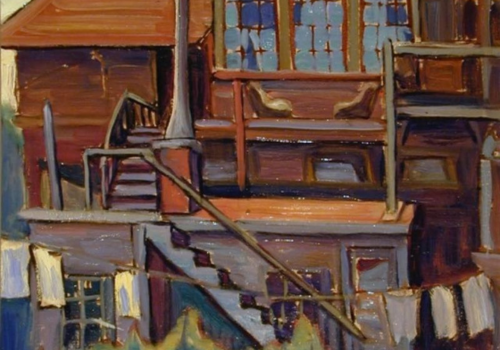
Emily Carr’s backyard of the House of All Sorts, 640 Simcoe Street, Victoria, by Nan Cheney 1932.
What the Letters Tell Us
One of the enduring myths about Emily Carr is that she lived as a complete recluse. Her correspondence with Nan Cheney tells a different story. The letters portray Carr as deeply affectionate toward trusted friends, intellectually curious, playful and humorous, eager for meaningful conversation, and appreciative of encouragement while remaining fiercely independent.
In one 1931 letter, for example, Carr happily describes her “beast family” of dogs before turning to reflections on painting and the rhythms of daily life. Such moments offer readers a vivid glimpse of the private Emily Carr rather than the legendary solitary artist.
Why Nan Cheney Matters
Although Lawren Harris strengthened Carr’s artistic confidence and Mark Tobey encouraged the evolution of her later style, Nan Cheney occupied a different but equally important place in Carr’s life. She was not a mentor or critic but a trusted friend who listened, encouraged, preserved, and ultimately ensured that future generations could come to know Emily Carr through her own words.
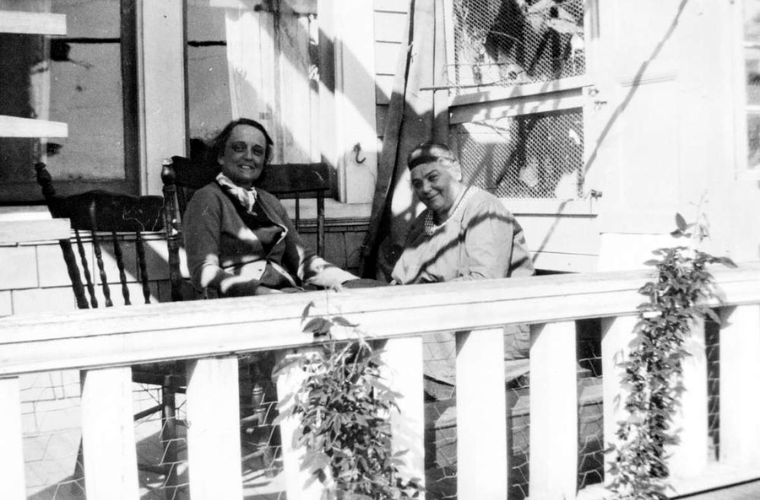
Cheney exhibited with the British Columbia Society of Fine Arts until 1950. She taught at the Banff School of Fine Arts, Alberta (1936); and taught at U.B.C., Vancouver (1951–1962). Her work is included in the collections of the National Gallery of Canada (which holds Cheney’s portrait of Carr) and the Art Gallery of Greater Victoria. She was affiliated with the British Columbia Society of Fine Arts (member in 1937); the Federation of Canadian Artists (1941); and the British Columbia Society of Artists (1950) (she was made a life member in 1957). She died in Vancouver in 1985. The Nan Cheney fonds is in the UBC Library, University of British Columbia. Some of her artworks are held at the BC Archives.
For anyone researching Emily Carr, Nan Cheney’s correspondence is indispensable. Her careful preservation of Carr’s letters provides unparalleled insight into the artist’s daily life, creative struggles, humour, friendships, and humanity. In doing so, Cheney transformed our understanding of one of Canada’s greatest artists and created one of the most valuable archival resources available to Carr scholars today.