How Bishop Edward and Mary Cridge Shaped the Young Emily Carr
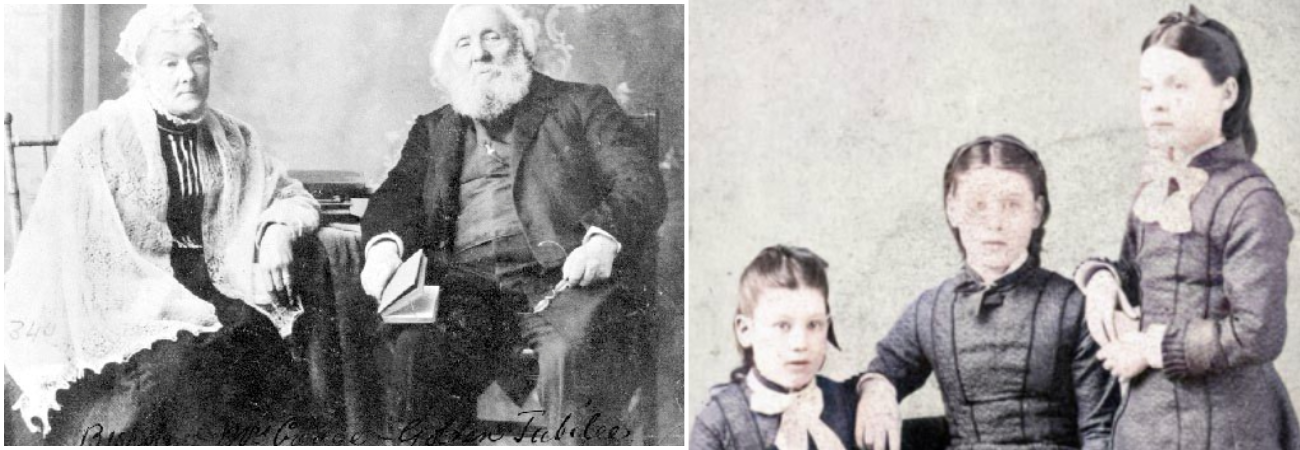
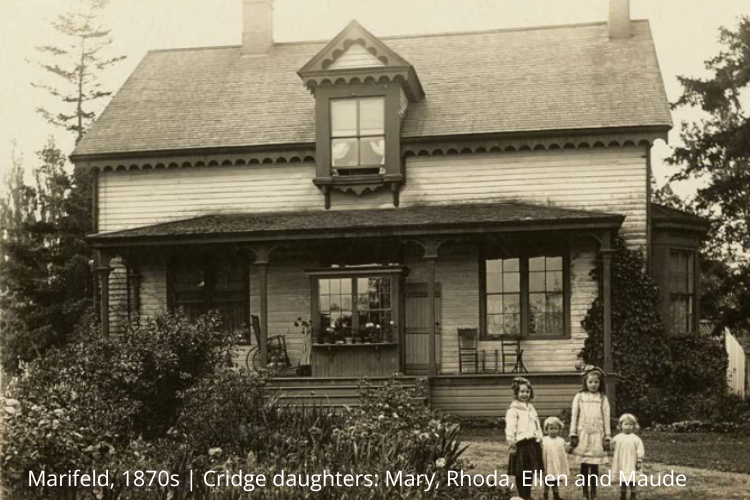
The life of Emily Carr is often told through her artistic journeys into the forests and villages of the Pacific Northwest, yet some of her most formative influences were rooted much closer to home—in the intimate, everyday world of childhood neighbours. Among the most significant of these were Edward Cridge and his wife Mary, whose property they called, Marifield, abutted the Carr family’s property. This proximity fostered not only acquaintance but companionship, weaving the Cridge family directly into the fabric of Carr’s earliest memories and, ultimately, her literary and emotional life.
Unlike more distant historical associations, the connection between the Carrs and the Cridges was immediate and domestic. The Cridge daughters: Mary, Rhoda, Ellen and Maude, and the Carr daughters: Lizzy, Alice and Emily, shared a world of play, imagination, and observation. Emily, along with her two older sisters, grew up alongside the Cridge girls, their lives intersecting in the informal rhythms of childhood—games in gardens, conversations half-understood, and the quiet absorption of adult values expressed through daily life.
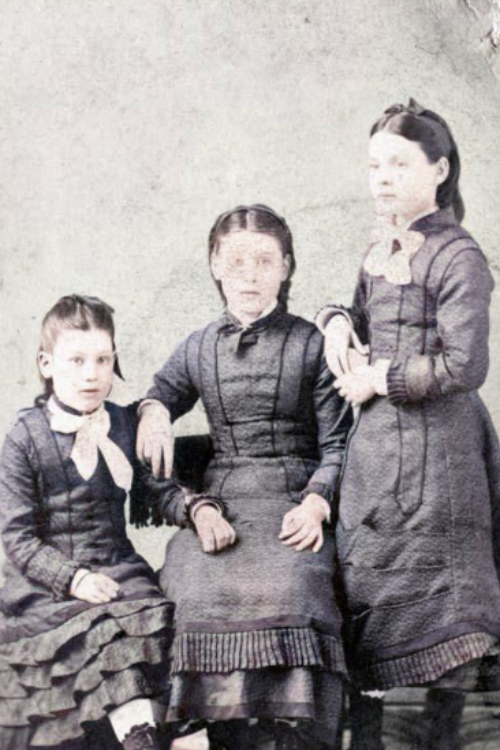
The Cridge and Carr girls were more than neighbours; they were friends, Sunday school classmates, and members of the close-knit social world that shaped late nineteenth-century Victoria.
Emily was five when Bishop Cridge built Marifield across the street in 1876. The Cridge family home would have stood as a place of both comfort and influence. It was here that the ideals of Bishop Cridge and Mary Cridge were lived out in practice. Bishop Cridge, a central figure in the founding of the Church of Our Lord, was known for his principled stand against the Anglican establishment, choosing instead a path of independent worship rooted in conviction rather than conformity.
Born in England in 1817, Bishop Edward Cridge arrived in Victoria in 1855 as chaplain to the Hudson’s Bay Company at Fort Victoria after conflict within the Anglican Church in England over “High Church” ritualism and “Low Church” Protestant traditions. A gifted scholar, musician, and community builder, Cridge quickly became one of the colony’s most influential figures.
He established schools, helped create Victoria’s first hospital with Dr. John Helmcken, founded an orphanage that later evolved into today’s Cridge Centre for the Family, and played a major role in the city’s religious, educational, and social development. Cridge’s parish stretched across Vancouver Island, and his friendship with Sir James Douglas helped strengthen his influence in the growing colony.
The defining conflict of Cridge’s life emerged after Bishop George Hills arrived in Victoria in 1860. Hills strongly supported the High Church Anglican tradition, while Cridge remained firmly Low Church. Tensions erupted dramatically in 1872 during the consecration of the new Christ Church Cathedral, when Cridge publicly protested a sermon promoting High Church practices.
The dispute became a city-wide controversy followed closely in the press. Although ecclesiastical and secular courts ultimately ruled in favour of Hills, much of the congregation sided with Cridge, including many prominent Victorians.
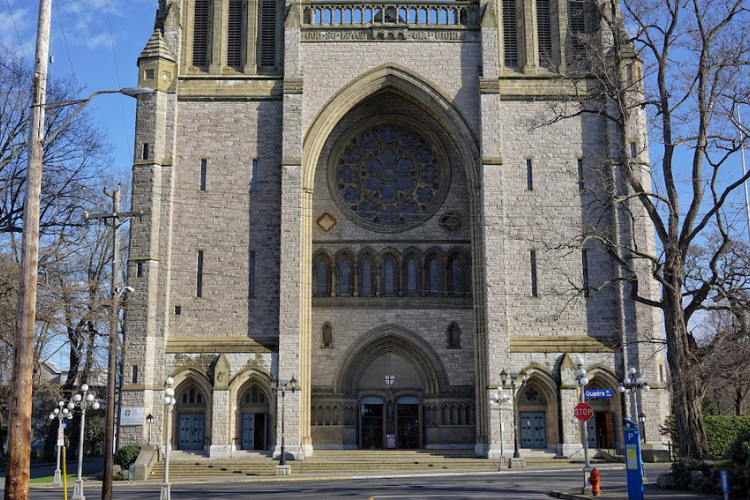
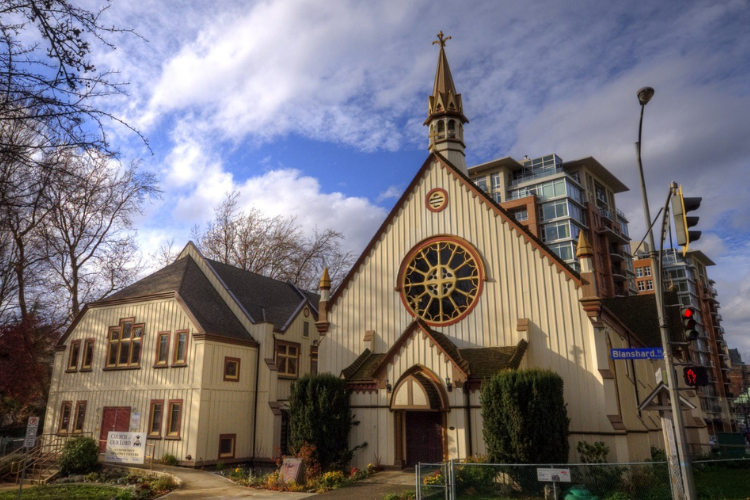
Forced from Christ Church Cathedral, Cridge and his followers formed a new congregation within the Reformed Episcopal Church and built the Church of Our Lord on Humboldt Street in 1876. The church became both a symbol of the schism and one of Victoria’s enduring heritage landmarks, closely connected to families such as the Carrs, including young Emily Carr.
The church became both a symbol of the schism and one of Victoria’s enduring heritage landmarks, closely connected to families such as the Carrs, including young Emily Carr.
Mary Cridge, equally formidable, devoted herself to social causes, advocating for women, the poor, and the marginalized with a quiet but determined strength. They founded which is now known as the Cridge Family Centre, and then the YWCA. Edith, Emily’s eldest sister sat on the founding boards of both organizations. In the early days of the YWCA, the meetings were held at Carr House. The two families were not just neighbours, they were important community builders.

Edith, Emily’s eldest sister, served on the founding boards of both organizations. along with the Cridges. Early YWCA meetings were held at Carr House, while Edith Carr and Mary Cridge taught Sunday school together at Marifield for children from both families.
The families were more than neighbours — they were dedicated community builders. Both shared the same sorrow, with the death of young children claimed by a measles epidemics. The Cridges lost four children, three sons and a daughter, while the Carr lost three sons.
For a young Emily Carr, these were not abstract figures in a public drama but real people—parents of her playmates, presences in nearby rooms, voices overheard, actions observed. The values they embodied—independence, moral courage, and compassion—were not taught to her formally but absorbed through proximity. This kind of early exposure often leaves a deeper imprint than later, more deliberate instruction.
Carr’s recollections of the Cridges appear most vividly in The Book of Small, her evocative collection of childhood stories. In these vignettes, she reconstructs the sensory and emotional landscape of her youth, and the Cridge family emerges as part of that remembered world. Through her distinctive voice—by turns humorous, observant, and gently critical—Carr captures the nuances of social interaction and the subtle hierarchies of childhood. The Cridge sisters are not distant figures but active participants in these scenes, their presence helping to shape Carr’s understanding of difference, belonging, and individuality.
What is particularly striking in these recollections is the way Carr registers the atmosphere surrounding the Cridge household. Even as a child, she seems aware that this was a family marked by a certain seriousness of purpose, a commitment to ideals that set them slightly apart. This sense of difference—of living according to one’s convictions despite social pressures—would later resonate deeply with Carr’s own experiences as an artist.
The influence of Bishop Cridge’s religious independence can be read, in retrospect, as an early model for Carr’s own resistance to convention. His break with the Anglican Church and the establishment of an alternative congregation was a bold assertion of personal belief over institutional authority. Carr, in her artistic life, would enact a similar defiance—rejecting academic norms, embracing unconventional subjects, and persisting in her vision despite years of neglect and misunderstanding.
Mary Cridge’s impact, though perhaps quieter, is no less significant. As a woman actively engaged in social reform, she embodied a form of female agency that would have been both visible and instructive to the young Emily. She taught Sunday school and was active in the community. Carr’s later life was marked by her own struggles against societal expectations placed on women, particularly in the realms of career and independence. The example of a woman who combined domestic life with public engagement and moral purpose would not have been lost on her.
The physical setting of these relationships also matters. The neighbourhood in which the Carrs and Cridges lived was part of the developing fabric of Victoria, a place where social roles were still being negotiated and defined. The proximity of Marifield to the Carr home meant that the boundaries between families were permeable; influence flowed easily across fences and pathways. In such an environment, ideas and attitudes were shared as much through observation as through conversation.
As Carr grew older and her spiritual life deepened, she moved away from organized religion, seeking instead a direct, personal connection with the divine in nature. Yet the seeds of this spiritual independence may well have been planted in those early encounters with the Cridge family. The notion that faith could be lived authentically, even if it meant standing apart from established structures, was one she had witnessed firsthand.
It is also worth considering how Carr’s literary sensibility was shaped by these early social interactions. The Book of Small is not merely a recollection of events but an exploration of perception—how a child sees, interprets, and remembers the world. The inclusion of the Cridge family in these stories suggests that they occupied a meaningful place in her imaginative landscape. Through them, Carr explored themes of authority, kindness, restraint, and individuality, all filtered through the lens of childhood experience.
The Church of Our Lord, so closely associated with Bishop Cridge, thus becomes part of this broader narrative—not just as a religious institution, but as an extension of the values lived out at Marifield. Its emphasis on simplicity and conviction mirrors the qualities Carr would later seek in her own life and work. While she did not align herself with the church as an adult, its foundational principles echo in her rejection of superficiality and her pursuit of deeper truths.
The writing of Emily Carr in her autobiographical short stories—especially those later collected in The Book of Small—offers rare, direct insight into her childhood relationship with the Cridge family, including Bishop Edward Cridge and his wife Mary Cridge.
In the story often referred to as “New Neighbours,” Carr recalls the gradual transformation of Victoria’s James Bay landscape as settlement expanded and neighbouring properties were subdivided. Within this shifting environment stood the Cridge property, described by Carr as a “big, wild field” opposite the Carr home, with the Cridge house set back among trees and orchards. This physical proximity reinforces what later historians have emphasized: the Cridges were not distant figures in Carr’s imagination, but part of her everyday childhood geography and lived experience.
Carr’s tone in these recollections is notably observant and emotionally receptive. She does not present the Cridges as abstract historical figures, but as part of a neighbourhood world that shaped her early understanding of authority, community, and difference. The Bishop’s presence is particularly memorable to her. In The Book of Small, Carr later recalls the spiritual authority of Bishop Cridge with characteristic vividness, noting the sincerity and gravity with which he delivered the blessing in church “as if he was taking it straight from God and giving it to us.”
This description is revealing in two ways. First, it confirms that Carr and her family were not only neighbours but also occasional participants in the Cridge congregation and social circle. Second, it shows how deeply the Bishop’s personality impressed itself on the young Carr: not as doctrine, but as performance, presence, and moral intensity. The Cridge household thus becomes part of Carr’s early sensory memory of authority—something she would later interrogate and reimagine in both her writing and painting.
Taken together, Carr’s recollections suggest that the Cridge family—Edward, Mary, and their daughters—formed an important part of her early social world. Their home, their religious practice, and their reputation for moral conviction contributed to the ethical atmosphere of James Bay during Carr’s childhood. The Cridges were not simply neighbours; they were a living example of principled independence in a rapidly changing colonial town.
For Carr, who would later struggle against conventional expectations in both art and gender roles, these early impressions likely mattered more than she explicitly acknowledged. The Cridge family embodied a kind of disciplined conviction—religious, social, and moral—that Carr both respected and ultimately transformed into her own lifelong pursuit of artistic and spiritual independence.