Emily Carr in Ucluelet: The Journey That Sparked a Lifetime of Exploration
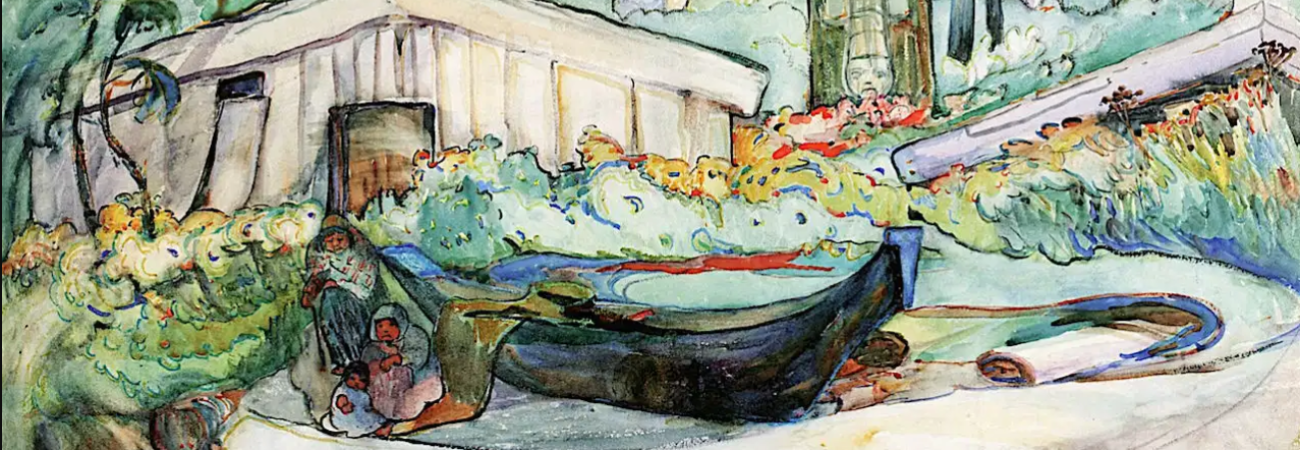
In 1899, Emily Carr ventured to Ucluelet on Vancouver Island’s rugged west coast to visit her missionary sister Elizabeth at a Presbyterian mission. During her stay, she began sketching Indigenous villages, carved house posts, and the surrounding landscape. These early drawings marked the beginning of a lifelong commitment to documenting the cultures and scenery of the Pacific Northwest.
Her first extended experience in an Indigenous village
Although Carr had grown up in Victoria and had seen Songhees people there, Ucluelet was her first opportunity to spend time in an Indigenous community on the west coast of Vancouver Island. She filled sketchbooks with cedar-plank houses, canoes, village scenes, portraits and carved house poles. Most of these were executed as pencil sketches, pen-and-ink drawings, and watercolours rather than finished oil paintings.
The beginning of a lifelong artistic mission
The trip profoundly affected Carr. It awakened her interest in recording the monumental art and architecture of Indigenous peoples at a time when many settlers believed these communities and traditions were disappearing.
Although she would not fully pursue this mission until after her 1907 Alaska voyage and especially her 1912 sketching expeditions, Ucluelet planted the seed. Many art historians regard it as the true beginning of the work that eventually made her famous.
“Klee Wyck”
During this visit she received the Nuu-chah-nulth nickname “Klee Wyck” (more accurately T’lewyck or similar spellings), commonly translated as “Laughing One” or “One Who Laughs.” She later adopted Klee Wyck as the title of her best-known and Governor General Award winning book of stories, published in 1941.
Her own recollections
More than forty years later, after suffering her first stroke in 1937, Carr wrote about arriving at Ucluelet in the opening chapter of Klee Wyck. She remembered arriving by steamer at dawn, descending a long slippery ladder into a canoe, and being paddled to the mission house. She described feeling young, frightened, and fascinated by the unfamiliar landscape and people.
After studying in France from 1910 to 1911, where she embraced the bold colours and expressive techniques of Impressionism, Post-Impressionism, and Fauvism, Emily Carr returned to British Columbia with a fundamentally new artistic vision. Rather than simply recording the appearance of a scene, she sought to convey its emotional and spiritual essence.
Her Evolution to a ‘Modern’ painter
This transformation is evident in her 1912 painting based on her 1899 Ucluelet sketch. While the earlier drawing serves as a careful documentary record of the village, the later work is infused with vivid, non-naturalistic colour and expressive brushwork. Carr also made a significant symbolic change: she replaced the three young girls in the foreground with crows feeding on coffins, a haunting image that reflects her perception of the decline of Indigenous villages and cultures in the years since her first visit.
When she returned to these sketches after studying in France, she transformed them from documentary records into expressive paintings that conveyed not only the appearance of the villages but also her emotional response to their decline.
The painting marks a decisive shift from observation to interpretation, revealing an artist increasingly concerned with expressing inner truth rather than outward appearance. These recollections are literary rather than strictly documentary, but they provide vivid insight into how memorable the experience remained throughout her life.
An example of her work from her first visit
Among the surviving works associated with the 1898 visit are drawings and watercolours including this one:
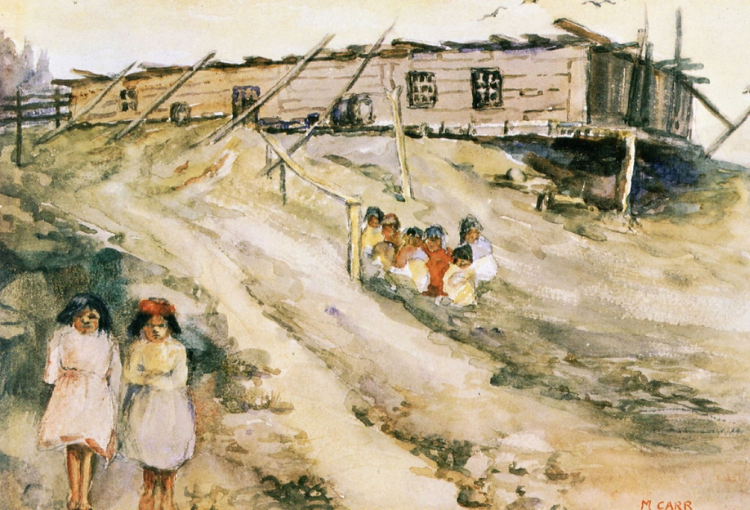
Cedar Canim’s House, Ucluelet (1899) – Pen and ink on paper. This drawing is one of the earliest surviving works from Carr’s first visit to the Nuu-chah-nulth village at Ucluelet. It records the village and its architecture with remarkable detail and marks the beginning of her lifelong interest in Indigenous communities of the Northwest Coast.
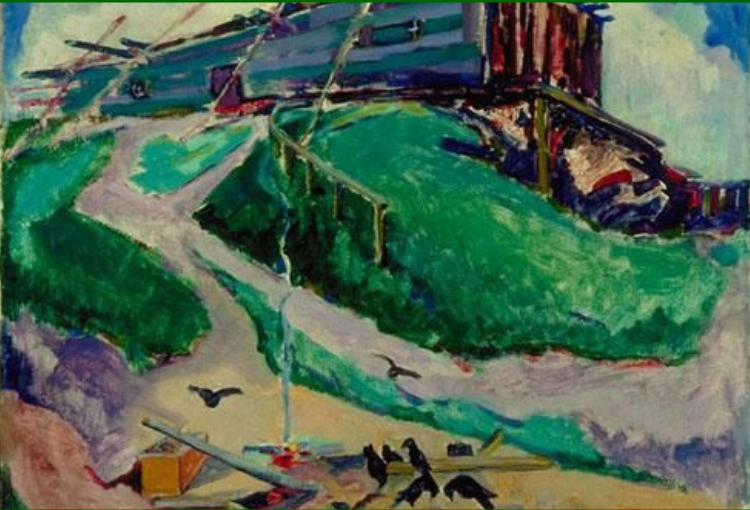
Community House (Ucluelet) (1912) – Oil on canvas. Painted more than a decade after her first visit, this work was based on Carr’s earlier sketches from Ucluelet. It reflects the bolder style she developed after her studies in France and is now in the collection of the Montreal Museum of Fine Arts.
Why the trip matters
Looking back, Emily Carr’s first visit to Ucluelet in 1899 marked a turning point in her career. It introduced her to the monumental Indigenous architecture of the Northwest Coast, demonstrated that Indigenous villages could serve as serious artistic subjects, inspired decades of sketching expeditions throughout coastal British Columbia, and ultimately helped shape her reputation as one of Canada’s foremost painters of Indigenous villages and the West Coast landscape.
For Carr, Ucluelet represented both a beginning and a loss: it was where she first discovered the artistic power of Indigenous architecture and culture, yet it also became a place through which she expressed her growing awareness that many of these villages were disappearing under the pressures of colonization, disease, and cultural disruption.