Emily Carr and the BC Archives: A Victoria Story Moves to Colwood, BC
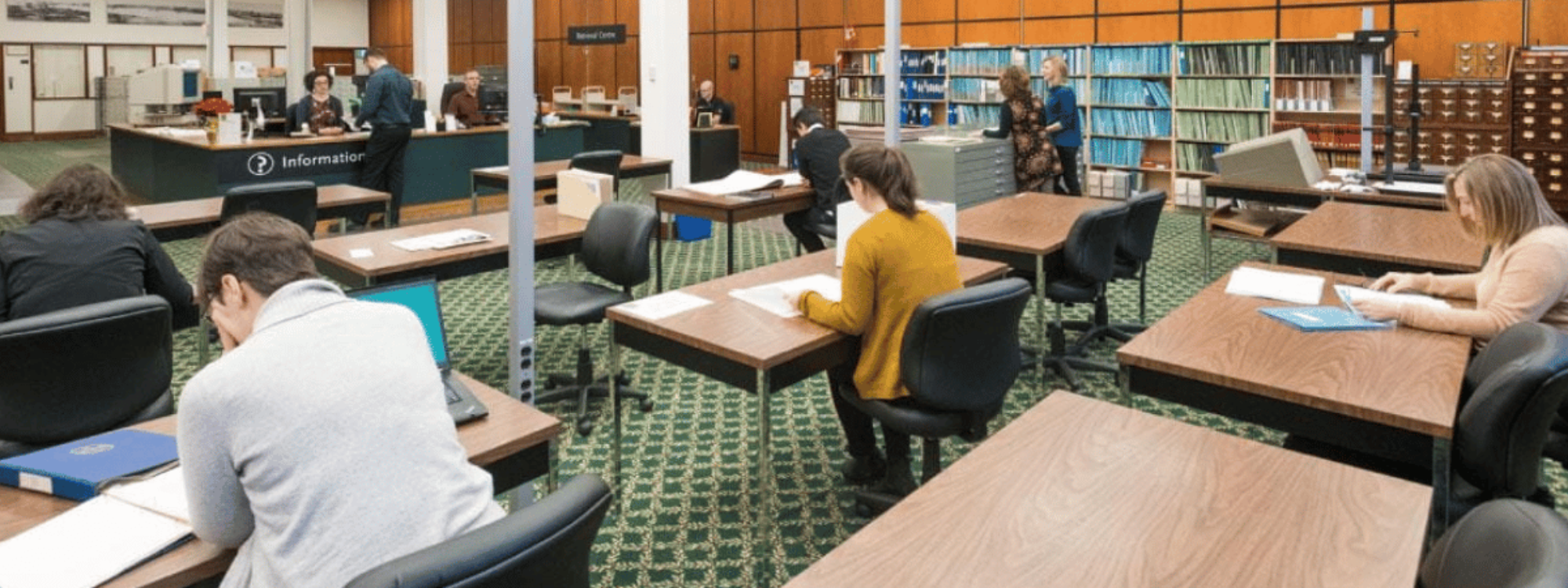
The relationship between Emily Carr and the BC Archives actually predates the building on Belleville Street by many decades. The provincial archives traces its origins to 1894, when librarian R.E. Gosnell began actively collecting records documenting British Columbia’s early history. The Provincial Archives was formally established in 1908 and opened to the public in 1920. By 1970, its collections had outgrown the Provincial Library, and the Archives moved into its purpose-built facility at the corner of Belleville and Government streets
That 1970 move is significant for Emily Carr because the Archives was becoming much more than a repository of government documents. It was developing an important documentary-art collection, including paintings, drawings, watercolours, photographs, manuscripts and correspondence. Emily Carr became one of its most important artists.
Emily Carr’s work at the Archives
The Archives’ connection with Carr was particularly strengthened in 1961, when it acquired the William Newcombe Collection. Newcombe’s collection contained Carr sketches, drawings and designs as well as several important paintings that had been purchased from Carr by Newcombe’s father, Dr. F.C. Newcombe, in 1913. The Archives subsequently accumulated letters, manuscripts, photographs and other documentation relating to Carr’s career.
This is an important point for understanding the relationship between Carr and the Archives.
The Archives did not simply preserve records about Emily Carr. It became a major repository of Carr’s actual artistic and literary work.
That distinction is particularly important today because the Royal BC Museum describes its Emily Carr holdings as including paintings, sketches, handicrafts, diaries, notebooks, scrapbooks, letters and manuscripts, together with photographs, research files and sound recordings. The institution describes the collection as the world’s largest collection of Emily Carr materials.
The Emily Carr Gallery
There was an even more direct connection.
In 1977, the Provincial Archives opened the Emily Carr Gallery at 1107 Wharf Street. It was a satellite facility of the Archives and specifically showcased material from its Carr collection.
The choice of location was wonderfully appropriate. The gallery was in a restored heritage building only a few steps from the place where Emily’s father, Richard Carr, had operated his wholesale and importing business. According to the Archives’ 1977 annual report, Emily was said to have watched the Indigenous people crossing the harbour from the Songhees Reserve to the Hudson’s Bay landing while waiting for her father to finish work and accompany her home.
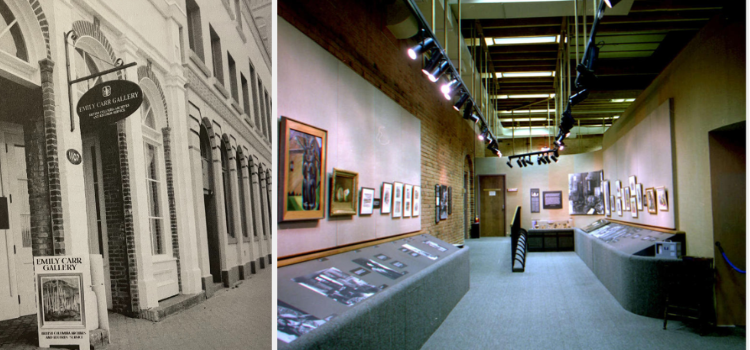
The Emily Carr Gallery attracted 25,534 visitors in 1984–85. Its exhibitions included Art and Archives and Emily Carr: 50 Years. Earlier exhibitions included Emily Carr: Growth and Change, covering Carr’s career from 1898 to 1937, and Klee Wyck: People of Her Travels.
The gallery eventually closed in 1991.
A remarkable acquisition in 1985
Another important piece of the story occurred in the mid-1980s.
In 1985–86, the Provincial Archives received the Phylis Inglis Collection of Emily Carr sketches, drawings, watercolours, correspondence and manuscripts, presented by the National Museums of Canada. The Archives’ annual report called this its most significant acquisition of the year. Phylis Inglis was the adopted daughter of Ira Dilworth, Carr’s editor for her first four books of short stories. After Dilworth’s death in 1962, Phylis went on to edit Carr’s Hundreds and Thousands: The Journal of an Artist published in 1966.
This illustrates why the Archives has been so important to Carr scholarship.
A painting in a museum tells us something about Carr. A sketchbook can tell us something else. But when the sketchbook, letters, manuscript drafts, photographs, diaries and related documentary material can be examined together, researchers can begin to reconstruct how Carr actually lived and worked.
That is where an archive becomes indispensable to an artist’s history.
The Archives and the Royal BC Museum
The relationship became still closer in 2003, when the BC Archives joined the Royal BC Museum. Helmcken House and the Netherlands Carillon became part of the same cultural precinct. The Archives explains that it works with the Royal BC Museum to develop exhibitions and programming.
The relationship was already evident before the formal 2003 merger.
A particularly good example is the Royal BC Museum’s major Emily Carr exhibition of 2001–02. The exhibition brought together three major Victoria institutions: the BC Archives, the Art Gallery of Greater Victoria and the Royal BC Museum.
The Archives was especially important. Its annual report described it as holding the largest public collection of Carr’s artworks, writings and other documentation, while Archives curator Kathryn Bridge curated the exhibition. The AGGV supplied finished artworks and the Royal BC Museum presented the exhibition.
That is an extraordinary example of the Victoria art community working collectively around Emily Carr.
And that relationship continues today
The connection hasn’t disappeared simply because the Archives is moving.
In fact, some of the best examples of Carr scholarship demonstrate why the Archives matters.
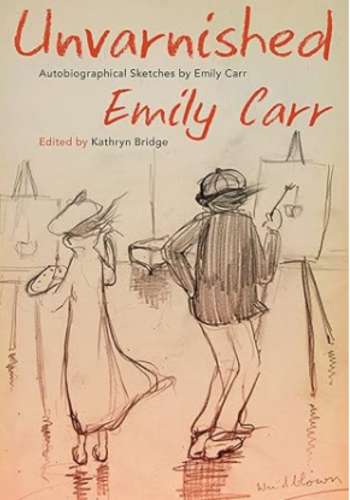
Consider Emily Carr’s Wild Flowers. The original manuscript by Carr and the botanical watercolours by her childhood drawing teacher Emily Henrietta Woods are held in the BC Archives. Their existence together allowed Kathryn Bridge to provide the historical context for a publication bringing Carr’s previously unpublished writing to the public.
Emily Carr’s Wild Flowers is another example. The original manuscript by Carr and the botanical watercolours by her childhood drawing teacher Emily Henrietta Woods are held in the BC Archives. Their existence together allowed Kathryn Bridge to provide the historical context for a publication bringing Carr’s previously unpublished writing to the public.
Consider Emily Carr’s Wild Flowers. The original manuscript by Carr and the botanical watercolours by her childhood drawing teacher Emily Henrietta Woods are held in the BC Archives. Their existence together allowed Kathryn Bridge to provide the historical context for a publication bringing Carr’s previously unpublished writing to the public.
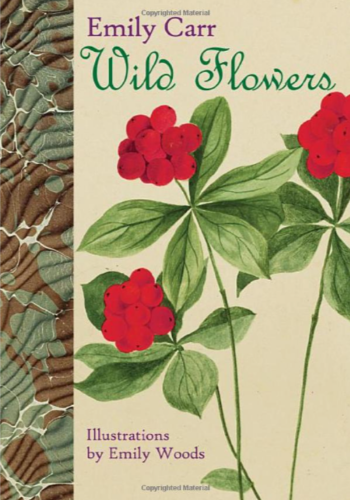
Or consider Unvarnished: Autobiographical Sketches of Emily Carr. The Royal BC Museum describes the book as being drawn from Carr’s handwritten notebooks and typescripts, with photographs and sketches from the BC Archives. It covers Carr’s life from 1899 to 1939, including her European art education, her travels, her encounters with the Group of Seven and conversations with Lawren Harris.
Those are excellent examples of the Archives doing something more important than simply preserving the past.
It makes new Emily Carr stories possible.
Now the relationship is changing
This is why the 2026–27 move to Colwood deserves attention from anyone interested in Emily Carr.
The current BC Archives building opened in 1970 because the old Archives had outgrown its space. More than fifty years later, the Archives itself says that the Belleville Street building has aging infrastructure, accessibility challenges and parking limitations and was not designed for today’s digitization and internet requirements.
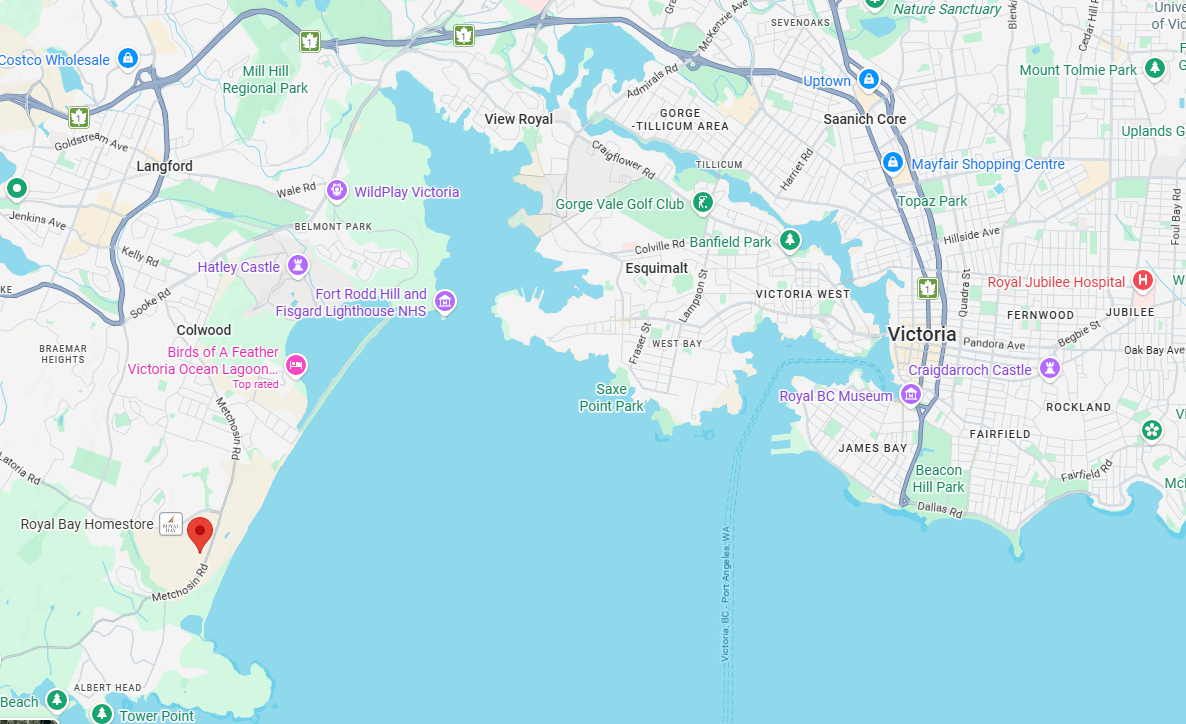
Beginning in summer 2026, the Archives started moving its downtown collections, staff and services to PARC Campus in Colwood.
The Archives says approximately 20% of its provincial archival collection is currently housed at the downtown campus, with the other 80% already in off-site storage. The material housed downtown will move into purpose-built storage at PARC.
For researchers, this is a significant change.
The downtown Archives will gradually become less accessible. The Emily Carr archival records are no longer accessible since September 21. Carr’s archival materials that have already been microfilmed will still available until November 21 after which time the reference room will close completely. The new reference room at PARC Campus is expected to begin limited operations in early 2027, with regular services expected to resume in summer 2027.
The Archives does not anticipate maintaining any Archives services at the Royal BC Museum’s downtown campus. Its operations, staff, services and collections are moving to Colwood.
What Emily Carr loses—and what she gains
For more than half a century, the BC Archives and the Royal BC Museum have occupied the same downtown cultural landscape. Researchers could come to Victoria’s museum precinct to investigate the province’s history and encounter Emily Carr through paintings, manuscripts, photographs, artifacts and exhibitions.
That physical relationship is ending. But there is also a potential gain.
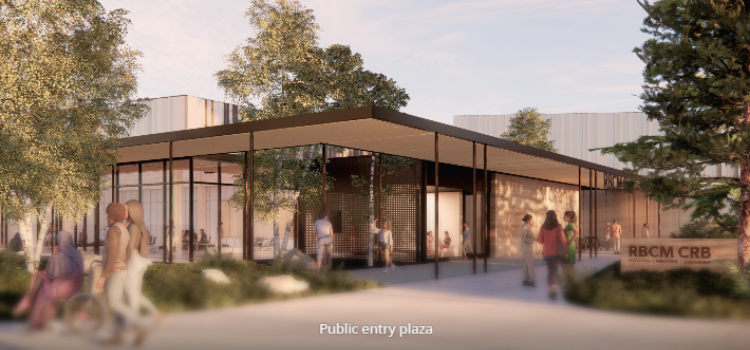
PARC is being designed specifically for collections and research. It will have a new Archives reading room, smaller research rooms, a community digitization space with five scanning stations, learning labs, group space and new environmental storage for audio-visual materials.
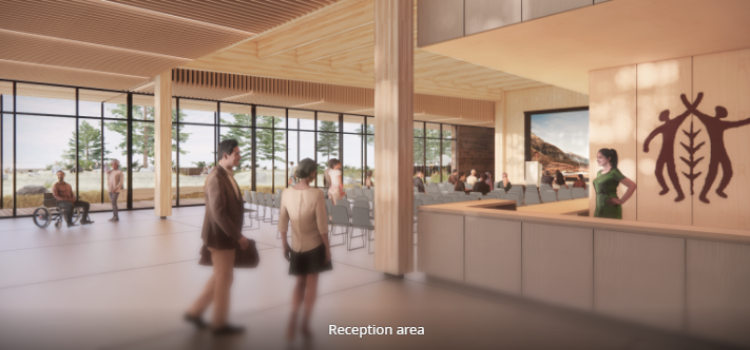
And that creates an interesting new chapter for Emily Carr scholarship.
The most compelling thread is the continuity of Carr’s documentary legacy:
1961 — William Newcombe Collection strengthens the Archives’ Carr holdings.
1970 — Provincial Archives moves into the new Belleville Street building.
1977 — Emily Carr Gallery opens on Wharf Street.
1985 — Phylis Inglis Carr collection arrives from the National Museums of Canada.
1991 — Emily Carr Gallery closes.
2001–02 — Archives plays a central role in the major Emily Carr exhibition at the Royal BC Museum.
2003 — BC Archives joins the Royal BC Museum.
2026–27 — Archives leaves downtown Victoria for PARC Campus in Colwood.
The fascinating story is therefore not just about a building.
It is about how British Columbia has collected, preserved, interpreted and shared Emily Carr’s legacy for more than a century—and how that relationship is about to enter a new physical chapter.
Collections and Research Building Animated Walkthrough [6 min]
This animated video reflects the designers’ preliminary concept for the project.
https://youtu.be/UP3MRAaJKJ4?si=KY93mM_mz-9hPvs7
Royal BC Museum PARC Campus
3608 Ryder Hesjedal Way
Colwood BC
V9C 0T2