Emily Carr and Myfanwy Pavelic: A Lifelong Artistic Friendship
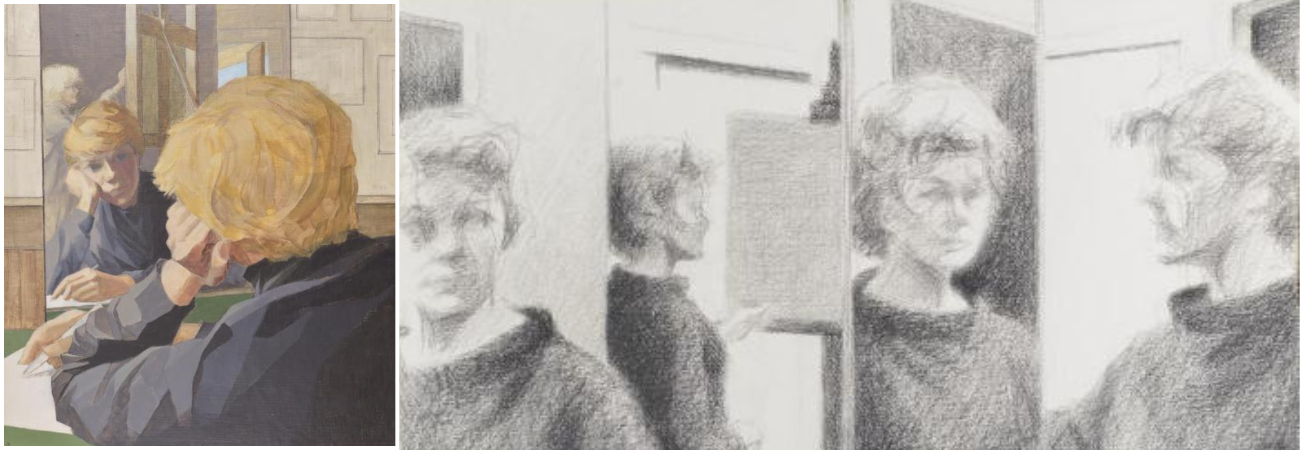
Born in Victoria in 1916, Myfanwy Pavelic — born Myfanwy Spencer, daughter of Spencer’s Department Store owner David Spencer — formed one of the most significant artistic relationships of her life with Emily Carr. The two met when Myfanwy was just six years old, and Carr was 45, beginning a friendship and mentorship that would shape the young artist’s creative future. Carr immediately recognized Myfanwy’s talent and encouraged her artistic ambitions at a time when the shy and often homebound child was struggling with health challenges.
Carr immediately recognized Myfanwy’s talent and encouraged her artistic ambitions at a time when the shy and often homebound child was struggling with health challenges. In 1932, Carr arranged an exhibition of Myfanwy’s drawings at her Peoples’ Gallery on Simcoe Street, later known as the House of All Sorts, when the young artist was only fifteen years old. The two women generations apart continued a warm, lively and close relationship until Carr’s death in 1945.
In her biography Emily Carr: The Untold Story, Edythe Hembroff notes that Myfanwy helped Carr prepare, crate and ship her paintings for what would be her last solo exhibition in her lifetime at the Vancouver Art Gallery in 1943. In a letter Carr sent to Hembroff noted in her Carr’s biography:
If I feel better be and bye when Myfanwy comes home, maybe I can get her to get my paints and those Mount Douglas sketches and do the few bit needed here. My sketch bag has never been unpacked since Mount Douglas [her last sketching trip before her death on 1945].
According to Hembroff, Myfanwy was instrumental in Carr making the deadline.
Although music was Myfanwy’s first passion, chronic weakness in her wrists prevented her from pursuing the concert piano career she had envisioned. Instead, she redirected her creative energies toward drawing and painting, developing the extraordinary sensitivity to line, mood, and emotional depth that would later define her portraits.
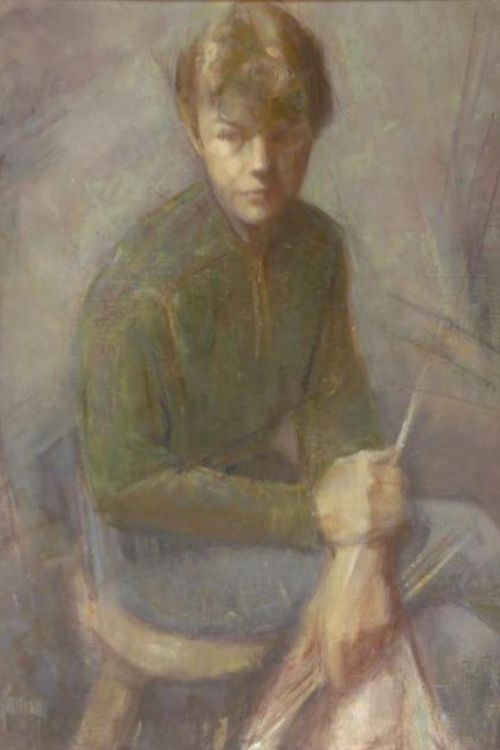
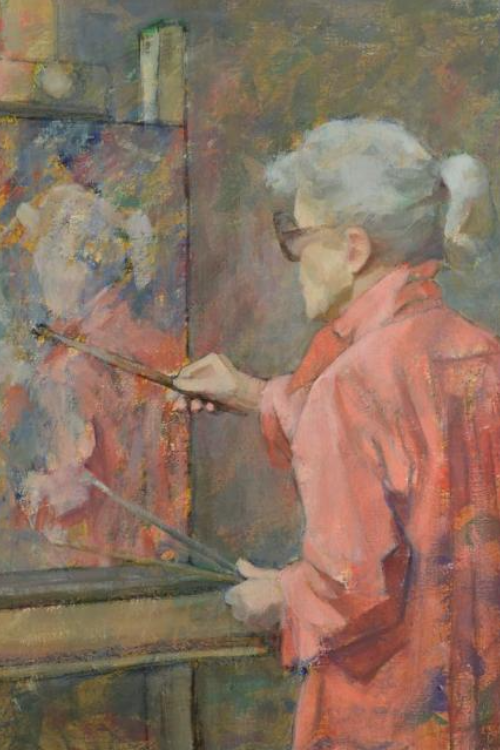
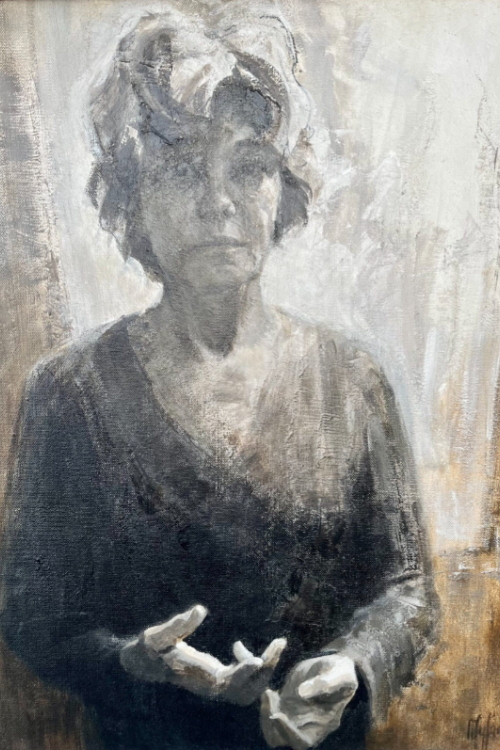
Her early years included travel in Europe, schooling in Montreal, and involvement in the vibrant Vancouver arts community before she settled for many years in New York City, returning regularly to Victoria during the summers. During the Second World War, she travelled across Canada painting portraits and donating the proceeds to the Red Cross, while in New York she moved within artistic and musical circles that included sculptor Malvina Hoffman, guitarist Andrés Segovia, and pianist Vladimir Horowitz. In 1948, she married Nikola Pavelic, son of a former Yugoslav prime minister.
Despite the growing popularity of Abstract Expressionism, Minimalism, and Conceptual Art during the 1950s and 1960s, Pavelic remained devoted to portraiture and realism. Though she experimented with collage and abstraction, she ultimately realized that her deepest artistic strength lay in revealing the psychological and emotional presence of her subjects.
Her portraits were never simple likenesses; they were what she described as explorations of “depth,” inner landscapes that sought to uncover the soul beneath the outward appearance. “The person has both form and depth,” she once explained. “That depth is my subject.”
Pavelic became internationally celebrated for her portraits of musicians, artists, and public figures, including Yehudi Menuhin, Glenn Gould, Mstislav Rostropovich, Ravi Shankar, and actress Katharine Hepburn, with whom she developed a close friendship over many sittings. In 1990, former Prime Minister Pierre Trudeau selected Pavelic to paint his official portrait for Parliament Hill in Ottawa, a work later adapted for a commemorative postage stamp. Her portrait of Menuhin now hangs in London’s National Portrait Gallery.
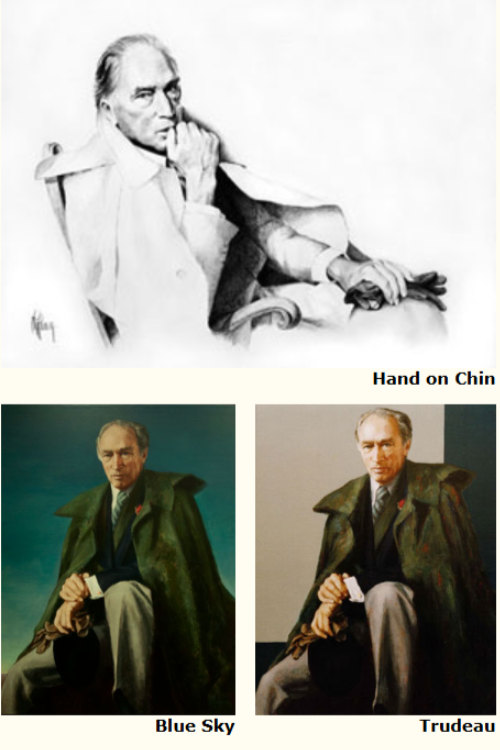
In 1990, former Prime Minister Pierre Trudeau selected Pavelic to paint his official portrait for Parliament Hill in Ottawa, a work later adapted for a commemorative postage stamp. Her portrait of Menuhin now hangs in London’s National Portrait Gallery.
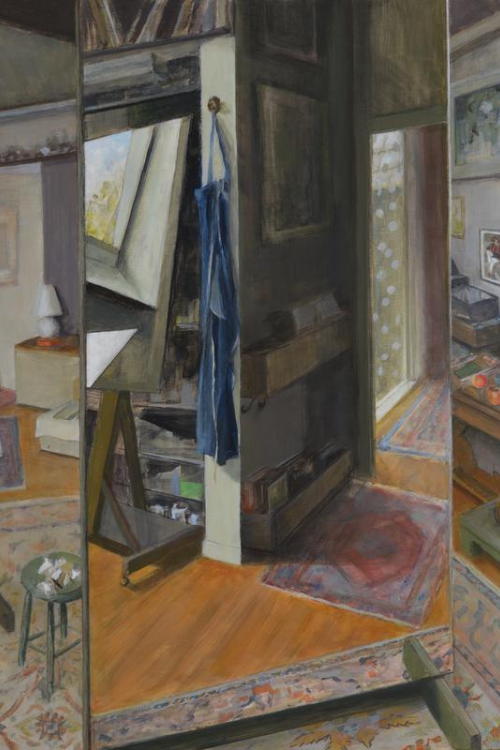
Back in Victoria, Pavelic became an important member of the Limners during the 1970s, joining artists such as Maxwell Bates, Robin Skelton, Herbert Siebner, and Karl Spreitz. The Limners provided artistic camaraderie, lively debate, and enduring friendship, becoming one of Victoria’s most influential artistic circles. Pavelic’s own work expanded beyond portraiture into reflections, interiors, mirrors, shells, rocks, and collages, all connected by her fascination with emotional resonance and layered meaning. Her collage works, often incorporating symbolic materials connected to the sitter — musical scores, tissue paper, or architectural plans — revealed her interest in texture, memory, and association.
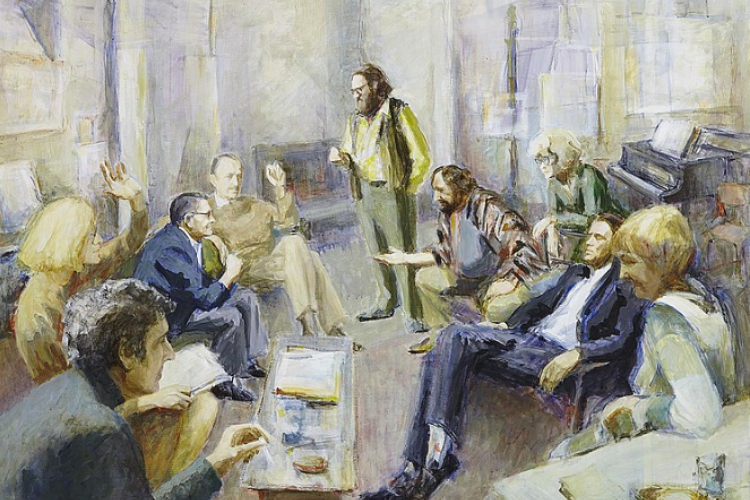
The Limners by Myfanwy Pavelic. The Victoria Limners Society was a collective of painters, potters, sculptors and other visual artists that formed in 1971 and dissolved in 2008.
Throughout her career, Pavelic was admired not only for her technical brilliance but also for the emotional honesty of her work. Colin Graham, director of the Art Gallery of Greater Victoria, praised the expressive power of her drawing, noting that her pencil work was marked by seriousness, restraint, and deep sensitivity rather than showmanship.
Pavelic herself believed that true drawing emerged from authenticity and direct feeling:
“When I am close to what I am, when all pretense or effort is gone, the line seems to come directly.”
Honoured with the Order of Canada in 1984, the Order of British Columbia in 2001, and an honorary doctorate from the University of Victoria, Myfanwy Pavelic remains one of Canada’s most accomplished portrait artists. Yet at the heart of her remarkable artistic journey was the encouragement she received as a child from Emily Carr — a friendship between two Victoria artists that bridged generations and helped shape the course of Canadian art.