Emily Carr and Mark Tobey: A Friendship That Crossed Borders and Changed an Artist
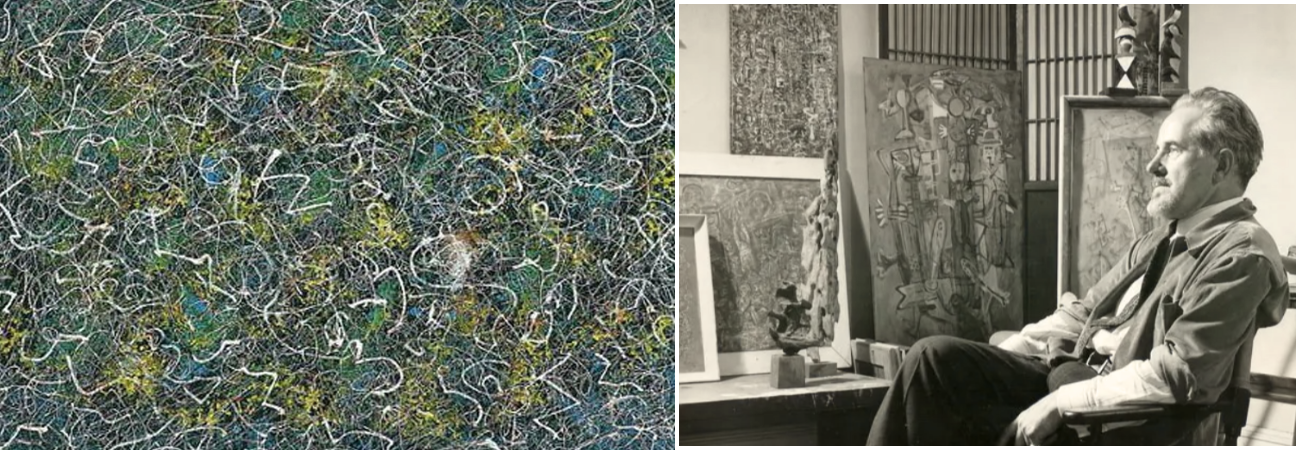
In the story of Emily Carr’s artistic development, much attention has been given to her relationship with members of the Group of Seven, particularly Lawren Harris. Yet other friendships—ones that began just across the border in Seattle—were equally important in helping Carr find confidence in her mature artistic voice. That friendship was with Seattle artists, Ambrose and Viola Patterson and in particular Mark Tobey.
Ambrose and Viola Patterson, two artists-teachers from the University of Washington in Seattle stumbled across Carr’s boarding house next to Beacon Hill Park in the early 1920s and found it a perfect place for their weekend trips to Victoria. They were frequent guests from then on until Carr moved from the House of All Sorts in 1936.
Up until then, Carr lived in relative isolation in Victoria, supporting herself by operating a boarding house. Her paintings of Indigenous villages and the forests of British Columbia attracted little attention and few buyers. Although she continued to paint whenever she could, she often felt disconnected from the larger art world. Her new Seattle friends connected her to Seattle art scene and then to Mark Tobey who soon became her mentor and champion.
Seattle Discovers Emily Carr
During the 1920s, Seattle emerged as a visual arts center during this time possessed one of the liveliest artistic communities on the Pacific coast. Modern ideas from Europe were finding their way into studios, galleries, and classrooms, creating an atmosphere of experimentation that contrasted with Victoria’s relatively conservative art scene.
In 1921, Tobey was looking for a new start in life following a divorce so he moved to Seattle. He found a teaching job at the Cornish School of Allied Arts. Around this time, Tobey met a Chinese painter and student who introduced him to Chinese calligraphy. This would have a huge influence on the artist’s work for the rest of his life.
Carr met Tobey at the 1924 Annual Pacific Northwest Exhibition in Seattle. One of the four paintings she was encouraged to exhibit by the Pattersons, Macauley Point (1924), won an honourable mention.
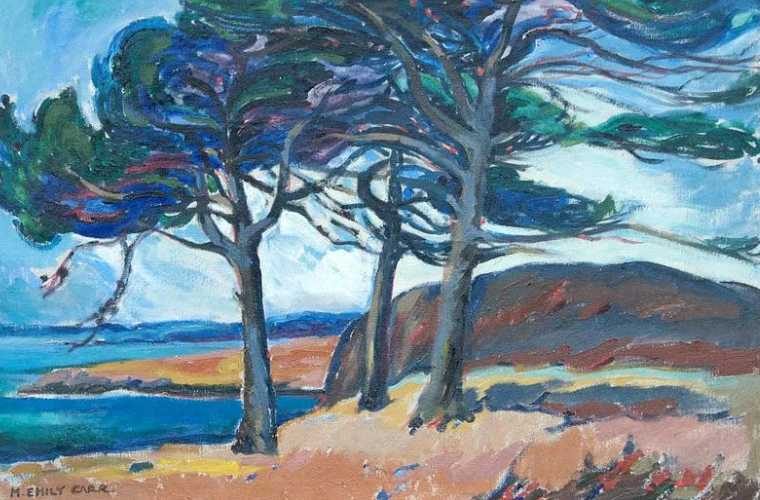
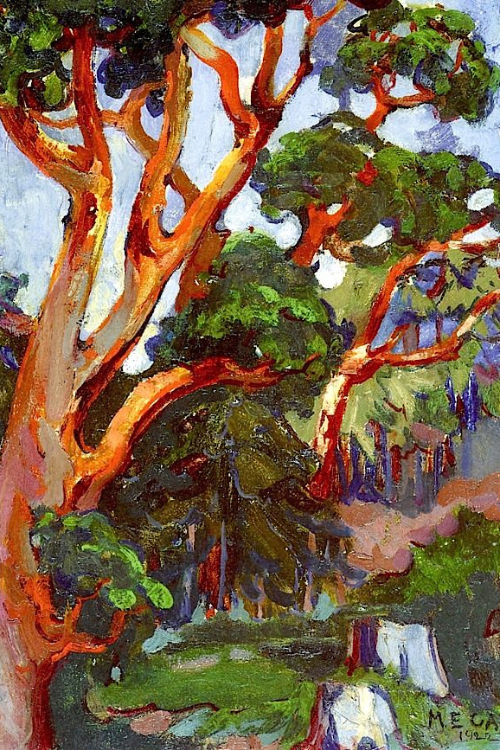
Arbutus Trees (1922), was “her most striking painting in the exhibition with its branches tortured ..by the sunlight which fires the twisted stems,” a reviewer wrote.
For perhaps the first time in many years, Carr found herself surrounded by artists who appreciated the originality of her work rather than questioning or disparaging it.
Among those artists was Mark Tobey.
Meeting Mark Tobey
Although nearly twenty years younger than Carr, Mark Tobey immediately recognized the power of her paintings. He saw an artist whose work was rooted deeply in the landscapes of the Pacific Northwest, not New York, Paris or Toronto, yet expressed something entirely original.
After moving to Seattle in 1921 to teach at the Cornish School of Allied Arts, Tobey became fascinated by Chinese calligraphy through one of his students. Later travels to Europe, the Middle East, and Asia deepened his interest in Persian and Arabic scripts, Eastern philosophy, and the Baháʼí Faith. These experiences shaped the distinctive style for which he would later become internationally known—his intricate “White Writing” paintings that sought to express invisible spiritual energies rather than physical appearances.
Soon after the 1924 Seattle exhibition, Tobey visited Carr at the House of All Sorts. He was just entering his long career of experimentation and Chinese calligraphy, neither of great interest to Carr artistically. Her interest in him was their common belief in the connection of art to spirituality.
One of the most memorable episodes came in 1928 when Tobey conducted a week long painting master class at the House of All Sorts while staying as one of Carr’s boarders. Carr joined three other students, giving her an unusual opportunity to study closely with one of the Pacific Northwest’s leading modernists without leaving Victoria.
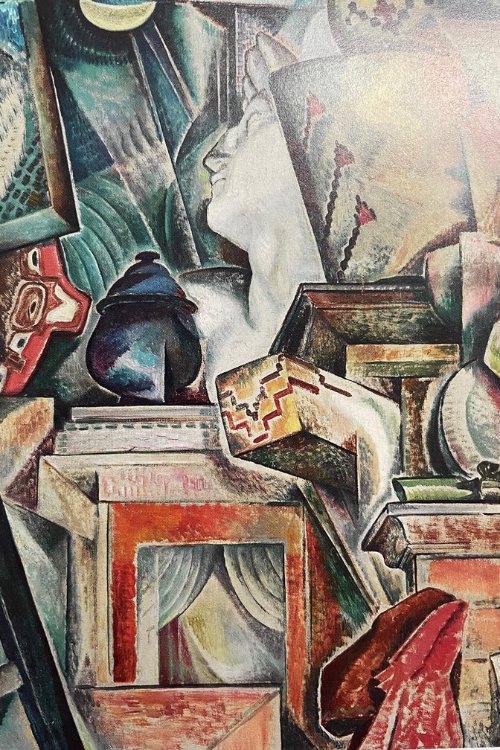
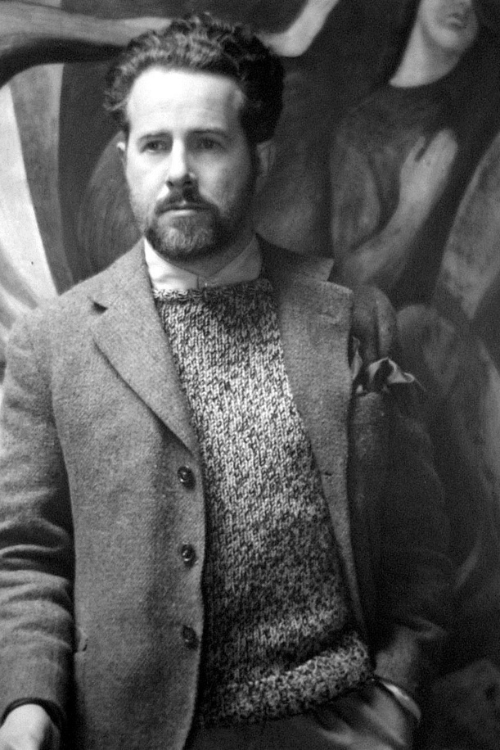
Carr had been cut off from other progressive artists for so long, she was a receptive, sometimes docile student exploring modern art expressionism. Both opinionated and temperamental, they often held long debates about artistic values.
More than a fellow painter, Tobey became a friend, mentor, and champion. Through his encouragement and the support of Seattle’s artistic community, Carr gained something she had long struggled to find: validation from artists who recognized the originality of her vision. At a critical moment in her life, Seattle artists saw greatness in Emily Carr before many Canadians did.
Unlike many critics of the day, Tobey did not encourage Carr to imitate fashionable artistic trends or him. Instead, he urged her to trust her own instincts and continue pursuing the intensely personal vision already emerging in her work.
Kindred Spirits With Different Views
By the time Tobey met Carr, he had already established himself as one of Seattle’s most adventurous modernists. The friendship developed through visits, conversations, and correspondence. Carr was drawn to Tobey’s intelligence and openness. He was part of a younger generation of artists who were questioning traditional approaches and searching for deeper meanings in art. His ideas resonated with her own desire to express not simply what she saw, but what she felt.
Although Carr never adopted Tobey’s style, she recognized a kindred spirit. Both artists believed that painting could reveal something beyond ordinary appearances. Tobey pursued this through abstraction and calligraphic rhythms. Carr sought the same spiritual presence within the forests, skies, and Indigenous villages of the Pacific Northwest.
Within Seattle’s artistic circles, Carr was viewed as an authentic and uniquely West Coast voice. Artists there admired her direct engagement with the forests, villages, and landscapes of the Pacific Northwest. They recognized that she was creating work unlike anything being produced elsewhere.
This appreciation was particularly meaningful because it came from artists who shared her regional perspective. Seattle and Victoria occupied opposite sides of the same coastal world. The forests, waterways, mountains, and Indigenous cultures that inspired Carr were familiar to artists in the Pacific Northwest. They understood that her paintings were not simply records of scenery but attempts to capture the spiritual energy of the region.
Tobey became one of Carr’s strongest advocates. He encouraged her to trust her instincts and to continue exploring new artistic directions. Rather than urging her to imitate contemporary trends, he urged her to embrace her own unique vision.
Their paintings looked very different, but their artistic goals were remarkably similar.
Tobey lived in the Seattle, Washington area for most of his life before moving to Basel, Switzerland in the early 1960s with his companion, Pehr Hallsten; Tobey died there in 1976.
Two Different Styles of Spiritual Dimensions
Tobey’s influence on Carr was not stylistic in a direct sense. Carr did not paint like Tobey, nor did Tobey paint like Carr. Their work remained distinctly their own. Both artists were interested in expressing the spiritual dimensions of experience. Both sought to move beyond literal representation. Both believed that art should reveal unseen energies and deeper truths.
Tobey often pursued these ideas through abstraction and intricate linear patterns. Carr pursued them through forests, skies, and landscapes animated by movement and life. While their methods differed, their goals were remarkably similar.
Through her contact with Tobey and Seattle’s artistic community, Carr gained confidence to experiment more boldly. She began moving away from straightforward depictions of villages and landscapes toward increasingly expressive compositions.
Toward a New Artistic Freedom
During the 1930s Carr’s paintings became increasingly bold and expressive. Works such as Scorned as Timber, Beloved of the Sky, Above the Gravel Pit, and Odds and Ends reveal an artist working with remarkable confidence. Trees twist with powerful movement, forms dissolve into rhythmic patterns, and landscapes become vibrant expressions of spiritual life.
Many influences contributed to this transformation, including Carr’s later friendships with members of the Group of Seven. Yet the encouragement she had already received from Tobey and Seattle’s artistic community gave her confidence to trust her own instincts and continue experimenting.
The change became evident in the paintings she created during the 1930s. Many of the paintings now regarded as her masterpieces emerged during this period.
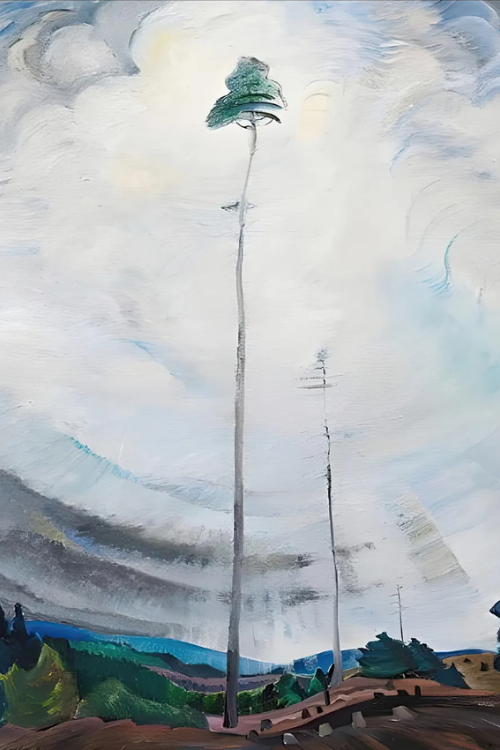
The change became evident in the paintings she created during the 1930s. Many of the paintings now regarded as her masterpieces emerged during this period. Scorned by Timber, Beloved of the Sky (1935) on the left. Over the Gravel Pit (1937) on the bottom left. Odds and Ends (1939) on the bottom right.
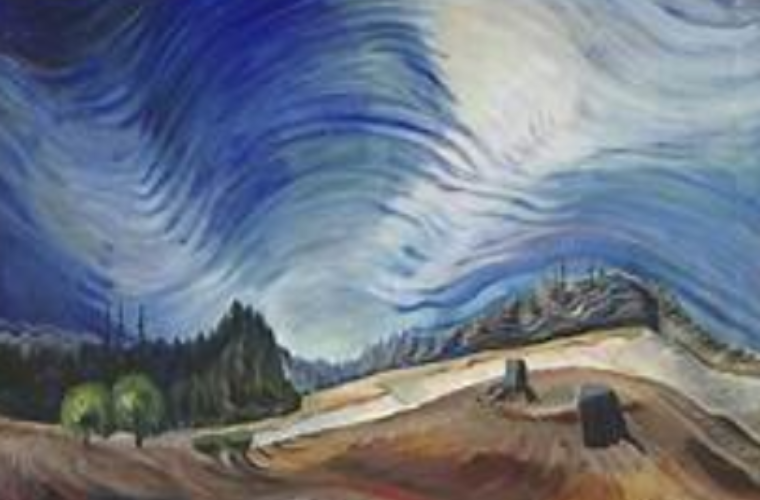
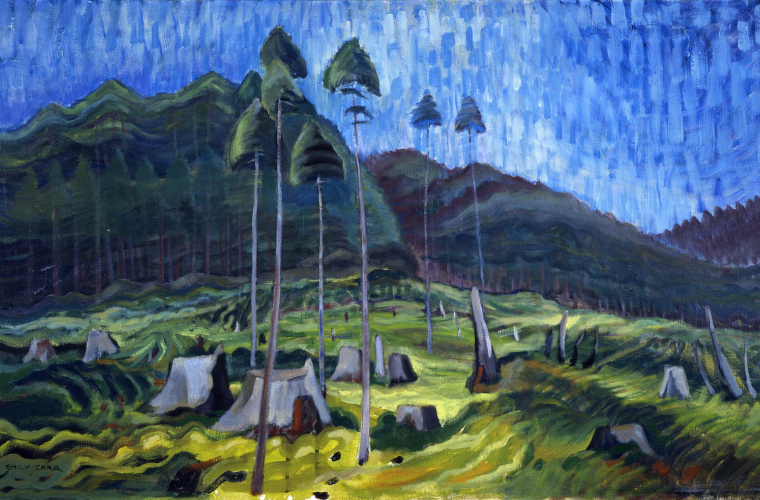
According to one of her biographers, Edythe Hembroff in Emily the Untold Story (1978), Tobey claims following Carr’s death that her following his advice freed her “from the dishpan and back to her easel, the park and the beach” and her success was due to her taking his artistic advice.
A Lasting Connection
Tobey’s relationship with Victoria continued long after Carr’s death in 1945. As one of the leading figures of the Pacific Northwest School, he maintained close ties with Victoria’s art community. At the invitation of Art Gallery of Greater Victoria director Colin Graham, Tobey exhibited there during the 1950s and again in 1975. His gifts and donations eventually formed an important part of the gallery’s permanent collection.
Today, the friendship between Emily Carr and Mark Tobey stands as one of the most fascinating artistic relationships on the West Coast.
It reminds us that Carr’s artistic journey cannot be understood solely within Canadian borders. The Pacific Northwest has always been a shared cultural landscape, where artists, ideas, and inspiration flowed freely between Victoria and Seattle.
Long before Emily Carr became celebrated as one of Canada’s greatest painters, Seattle artists recognized the originality of her vision long before Canadian artists did. Through the friendship of Ambrose and Viola Patterson—and especially Mark Tobey—Carr found encouragement at a pivotal moment in her career. Their belief in her work helped give her the confidence to create the bold, visionary paintings that define her legacy today.
Pubic galleries with significant holdings of Tobey’s artwork Mark Tobey’s paintings are represented in many of the world’s leading art museums, with the most significant collection held by the Seattle Art Museum, which preserves his artistic legacy in the city where he developed his distinctive style. Important works are also housed at the Museum of Modern Art (MoMA) in New York, whose early acquisitions helped establish his international reputation; the Smithsonian American Art Museum in Washington, D.C., where his work is presented within the broader history of American modernism; the National Gallery of Art in Washington, D.C., which has organized major exhibitions highlighting his contributions to twentieth-century art; and The Phillips Collection in Washington, D.C., an early champion of Tobey’s meditative abstractions and one of the first museums to recognize the originality of his vision.