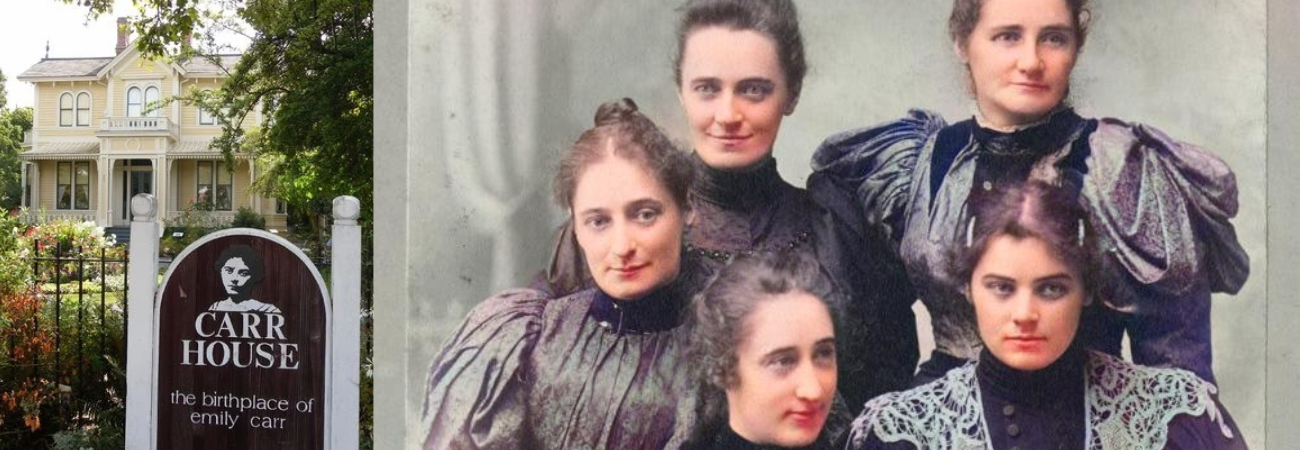
Emily Carr’s relationship with her four older sisters—Edith, Clara, Elizabeth (known as Lizzie), and Alice—was one of the most important and complicated influences on her life. The five sisters grew up within blocks of each other in a prosperous Victoria household, but their personalities, ambitions, and expectations of one another differed considerably.
After their mother died in 1886 and their father in 1888, the family’s circumstances changed dramatically. Edith, the eldest, assumed responsibility for the younger children, while Emily, the youngest surviving daughter, increasingly resisted the restrictions imposed upon her. Her determination to become an artist placed her at odds with the conventional expectations of her family, and she often felt that her sisters neither understood nor supported her artistic ambitions. This
Yet the story is not one of estrangement. As the sisters grew older, they established separate lives while maintaining regular contact. They more often than not shared Sunday dinners together even the years that Emily lived in Vancouver. When Emily was attending art school in San Francisco in 1980s, three of her sisters came to stay with her for over a year. Their relationships developed into a mixture of affection, irritation, loyalty, and mutual dependence. Emily’s writings reveal particularly complex feelings about her family, often expressing old grievances about their lack of appreciation for her ‘modern’ art and sometimes celebrating the everyday pleasures of sisterhood. The four unmarried sisters lived within two blocks of each other all their lives. They were a tight knit group of sisters their entire lives,
Alice became her favourite sister and closest companion among the four, accompanying her on important journeys and sharing experiences that Emily later transformed into illustrated journals. By the 1920s and 1930s, when three of the sisters lived close to one another in Victoria, their daily visits, shared meals, and domestic routines provided a family connection that endured despite their differences.
Edith Carr: The Eldest Sister and Family Authority
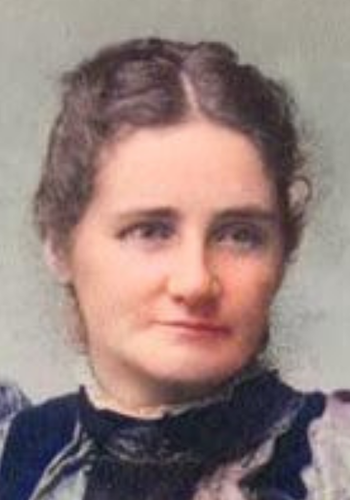
Edith “Dede” Carr (b. 1856, California, d. 1919, Victoria), occupied a position of considerable authority in Emily’s childhood and adolescence. As the eldest daughter, she was about twenty years older than Emily and belonged almost to a different generation. Born in California, Edith had grown up with the expectations and social conventions of the Victorian middle class passed on by their English born parents.
When their parents died, she became responsible for managing the household and overseeing her younger siblings. This responsibility placed her in a difficult position: she was still a relatively young woman, but she had inherited the practical duties of a parent without necessarily possessing the emotional or financial authority that a parent might have exercised. As a single woman, she could not even open a bank account. Emily, who was independent-minded, artistically inclined, and increasingly impatient with conventional rules, proved particularly difficult for her to manage.
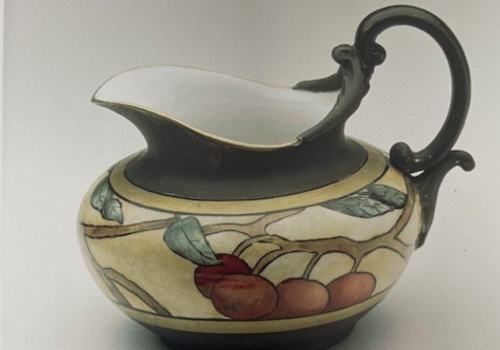
Edith was herself an accomplished artist and craftswoman, She was skilled in china painting, wood carving, jewellery making, pen-and-ink drawing and other decorative arts. Her china painting earned her first prize at the Victoria Fall Fair in 1904, an achievement that demonstrated the quality of her work and brought her recognition in the local community. Edith also shared her knowledge by teaching artistic and craft skills to others in Victoria, continuing her instruction well into her sixties.
Each Christmas, Edith organized an exhibition and sale of her handmade work at the family home, and she regularly contributed painted ceramics and other creations to the Reformed Episcopal Church Christmas Bazaar. The proceeds from these activities supported charitable and religious organizations, for which she received several awards. Edith was also involved, along with her sisters, in establishing the Victoria YWCA, reflecting her commitment to community service. Although she never achieved the public recognition later accorded to her youngest sister Emily, Edith was a talented and productive artist who made a meaningful contribution to Victoria’s artistic and charitable life in the late nineteenth and early twentieth centuries.
In Growing Pains, her autobiography, Emily portrayed Edith’s rule of the family as stern and authoritarian. She recalled that after their father’s death, her eldest sister took charge of the household and controlled the family home. Emily felt that Edith treated the younger children as dependents rather than as individuals entitled to independence.
Her account describes a household in which discipline, religious propriety, and appearances mattered greatly. Emily remembered being punished for what she called insubordination, particularly when she challenged adults whom she considered hypocritical or undeserving of respect. She also resented the authority Edith exercised over the family property, believing that the home should have belonged equally to the surviving children.
These recollections must be read with an understanding of Emily’s perspective. Growing Pains was written many decades after the events it describes, and Emily was explaining how her early experiences had contributed to her determination to become an artist. Her portrayal of Edith is therefore both a family recollection and part of a larger personal narrative about rebellion, independence, and the struggle to establish an artistic identity.
Edith’s responsibilities were real, and the family had experienced the loss of both parents while the younger children were still growing up.
Unlike Emily, whose artistic ambitions took her abroad and eventually brought her national recognition, Edith devoted much of her adult life to the family, the church and charitable work in Victoria. Yet she was an artist in her own right and was involved in several important initiatives serving women, children and families in the growing city.
What makes Edith particularly interesting is that her life brings together three aspects of late nineteenth- and early twentieth-century Victoria: the accomplishments of women artists, the development of organized women’s social services, and the influence of the city’s Anglican and Reformed Episcopal church communities.
Emily remembered the household as a place where her individuality was poorly understood and her artistic ambitions were not encouraged. She sometimes refers to Edith as “The Kaiser” and claims in her autobiography that she was often threatened with the riding whip.
Their conflict became especially significant when Emily wanted to pursue formal art education. In 1890, she left Victoria to study at the California School of Design in San Francisco. Her decision represented an important step toward independence, but it also meant leaving the family environment in which Edith exercised authority. Emily later described herself as the rebellious member of the household, unwilling to accept its rules simply because they were traditional.
One incident that would strain the relationship between the sisters for many years occurred in 1899, after Edith had finally agreed to let Emily have a dog. According to Edith, the animal proved to be vicious and aggressive. While Emily was away on a sketching trip that year, an accident delayed her return. In her absence, police arrived to investigate complaints about the dog, and Edith gave them permission to have it put down. Emily never forgave her elder sister for this decision. However, when she learned in December 1919 that Edith was on her deathbed, Emily set aside the longstanding resentment, and the two sisters reconciled over the incident before Edith died.
Edith’s relationship with Emily was not necessarily devoid of affection. Family accounts suggest that the eldest sister devoted considerable energy to the younger children, and the tensions between the two women arose partly from their strong and contrasting personalities. Both could be determined and forceful, although they occupied very different positions within the family. Edith believed in responsibility and order; Emily wanted freedom to follow her artistic instincts.
Their conflict reflected not only individual differences but also the difficulties faced by women who attempted to pursue unconventional lives in the late nineteenth century.
Edith died long before Emily achieved the national recognition that came with her participation in the 1927 exhibition of West Coast Indigenous art at the National Gallery of Canada and her subsequent acceptance by Canadian art institutions. She therefore did not witness the later transformation of her youngest sister from a struggling, often misunderstood, strong-willed, deeply sensitive person into one of Canada’s most celebrated artists. The relationship remained a formative part of Emily’s personal history, particularly in the way she understood independence and the cost of pursuing a life outside conventional expectations.
What Emily had to say about her sister Edith:
From Growing Pains
Our oldest sister was like Father; she helped Mother raise us and finished our upbringing when Mother died.
This is Emily’s description of Edith who assumed responsibility for the younger children following their mother’s death. It also hints at the difficult relationship Emily had with the sister who became the authority figure in the household.
Clara Louisa Carr: “Tallie,” the Married Sister
Clara Louisa Carr (b. May 11, 1857, California) , known “within the family as “Tallie, occupied a much different position from her unmarried sisters. She married Major John Nicholles from the Royal Engineers in 1882 and became the mother of a family of her own. She was the only one of the five sisters to marry. Her life followed a path that differed from Emily’s in a particularly important respect. While Emily pursued painting, travel, and eventually writing, Clara assumed the responsibilities and routines of married life and motherhood.
Emily sometimes referred to Clara by her nickname, Tallie, in her autobiographical and fictionalized recollections of family life. These names were part of the family’s informal language: Emily herself was often called Milly, while her sisters and brother appeared under familiar names in her writings, Bigger (Lizzie), Middle (Alice), and Small (Emily). In The Book of Small and related stories, Emily turned memories of the family home into literary portraits, using humour and caricature to recreate the personalities, habits, and relationships of her childhood.
Clara’s marriage distinguished her from Edith, Lizzie, and Alice, who also remained unmarried. She was 25 when she married, Emily was 10. It also meant that her domestic experiences were different from Emily’s. Emily had little interest in following the conventional path expected of women of her generation. Her commitment to painting, her willingness to travel alone, and her refusal to organize her life around marriage made her an unconventional figure even among women who pursued artistic or intellectual interests.
Clara’s children remained part of Emily’s extended family and played a role in her life and legacy. Two of Clara’s daughters assisted Emily during her visits to Haida Gwaii, while her youngest son, Richard Victor Nicholles, served as a pallbearer at Emily’s funeral in 1945. They provide a perspective different from Emily’s own sometimes combative autobiographical accounts. In particular, memories of Aunt Milly help reveal how her unconventional personality appeared to younger relatives. To them, she could be eccentric, outspoken, and unpredictable, but she was also a distinctive family figure whose artistic identity set her apart.
Clara’s place in the family reminds us that Emily’s sisters were not simply supporting characters in the story of a famous artist. They had their own households, interests, obligations, and experiences. Although Emily’s paintings and books now dominate the family’s public history, the sisters’ different lives help explain the domestic world to which Emily remained connected throughout much of her life.
What Emily had to say about her sister Clara fromThree Sisters
My married sister who had taken drawing lessons looked at my dog and said, ‘Not bad.’”
A small but delightful recollection of Clara’s response to Emily’s early artistic efforts.
Elizabeth Emily (Lizzie) Carr: The Practical and Religious Sister
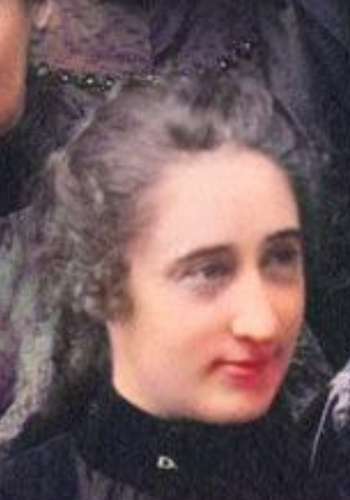
lizabeth Emily Carr (b, November 6, 1869, Victoria, d. August 3, 1936), usually called Lizzie, and sometimes “Big” was one of the four sisters with whom Emily shared the family home for the first 25 years of her life and later the rhythms of everyday life in Victoria. Unlike Emily, who increasingly defined herself through her art and writing, Lizzie developed a practical professional life and was remembered as a deeply religious woman. Sunday mornings at Carr House meant meetings with Lizzie’s missionary friends.
Emily’s descriptions suggest that the two sisters differed in temperament, interests, and outlook, but their relationship also demonstrates how affection and family loyalty could survive substantial differences.
In Growing Pains, Emily described Lizzie and Alice as comparatively obedient and well-behaved children, in contrast to her own rebellious nature. She remembered Lizzie as religious and inclined to accept the established rules of family life. Emily, by comparison, questioned authority and disliked what she regarded as hypocrisy. These differences were especially apparent after the deaths of their parents, when Edith exercised control over the household and the younger sisters had to find their places within a new family arrangement.
Emily’s early experiences help explain why she sometimes portrayed her sisters as people who did not understand her. She felt isolated by her artistic ambitions and resented the expectation that she should conform to the standards of conventional family life. Yet her recollections also suggest that she recognized the different qualities of her sisters. Lizzie’s steadiness and practical outlook were unlike Emily’s restless temperament, but those differences did not prevent the sisters from maintaining a strong relationship all their lives.
Lizzie trained as a masseuse, and practiced her profession in the dining room at Carr House. This profession profession gave her a practical means of supporting herself. Her choice of work differed markedly from Emily’s uncertain career as an artist. Emily spent years seeking recognition, struggling financially, travelling to study, and attempting to establish a distinctive artistic language. Lizzie’s professional life was more firmly rooted in the immediate needs of her community. Their different approaches to work reflect the range of possibilities available to women of their generation, as well as the different personalities within the Carr family.
An especially revealing aspect of their relationship emerges from Emily’s account of the sisters’ later domestic arrangements. In her short piece “Three Sisters,” she described three women whose interests and occupations differed considerably: Lizzie worked as a masseuse, Alice ran a school, and Emily was an artist. Each had a separate household and her own circle of friends. Yet their homes were close together, and the sisters visited one another regularly, often in the evening and always on Sundays. Emily portrayed these visits with characteristic humour, especially when her assortment of animals accompanied her.
The account shows a more relaxed side of their relationship than the childhood conflicts described in Growing Pains. Rather than concentrating on authority or resentment, Emily depicted the sisters as independent women who had developed their own routines while preserving the pleasure of one another’s company. The description is affectionate without suggesting that they had become alike. Their differences remained part of what made their relationships interesting.
Family recollections describe regular meals and visits among the women, with Sunday dinner and other meals shared between the neighbouring households. Such arrangements gave the sisters a familiar structure of companionship without requiring them to abandon their individual lives.
Lizzie’s relationship with Emily illustrates a central feature of the Carr sisters’ history: the ability to maintain family ties without necessarily sharing the same values or ambitions. Emily could criticize the conventional attitudes she associated with her sisters and still find comfort in their presence. Their relationship was neither one of complete agreement nor one of permanent estrangement. It was sustained through the ordinary acts of visiting, eating together, and remaining involved in one another’s lives.
What Emily had to say about her sister Lizzie:
What Emily had to say about her sister Lizzie: From Three Sisters
What with massage, missionaries, and good works, Lizzie was a busy woman and a good one. She did not flatter us to our faces; but the dogs and I—and soon too the monkey—knew that she was the Carr family’s backbone in time of trouble.
These quotations reveal Emily’s recognition of Lizzie’s generosity and practical contributions, despite their sometimes difficult relationship.
Alice Mary Carr: Emily’s Favourite Sister and Closest Companion
lice Mary Carr (b. October 18, 1869, d. October 25, 1953) was the youngest of Emily’s four older sisters and, by Emily’s own repeated statements. Their relationship stands out from the other sisters because it involved shared travel, personal companionship, and a closeness that continued for all their lives. Although they could not more different in temperament and occupation, Alice was someone Emily could share experiences and create memories that later became part of her literary legacy.
ne of the earliest glimpses of their relationship comes from Emily’s childhood recollections. The sisters shared aspects of family life, including all of them taking drawing lessons at the insistence of their father but they approached their interests differently. Emily recalled that Lizzie and Alice painted flowers while she concentrated on drawing heads. The wanted to play dolls while she wanted to play in the Cow Yard. Even as a child, she was developing artistic interests that distinguished her from her siblings.
She also remembered Alice sharing a bedroom with her after their mother’s death. Emily set up an easel beneath the dormer window, an arrangement that made her feel like a real artist, although Alice complained when she had to sweep around its legs. The anecdote is small but revealing: their lives were intertwined in ordinary domestic ways, even as Emily’s artistic ambitions began to take shape.
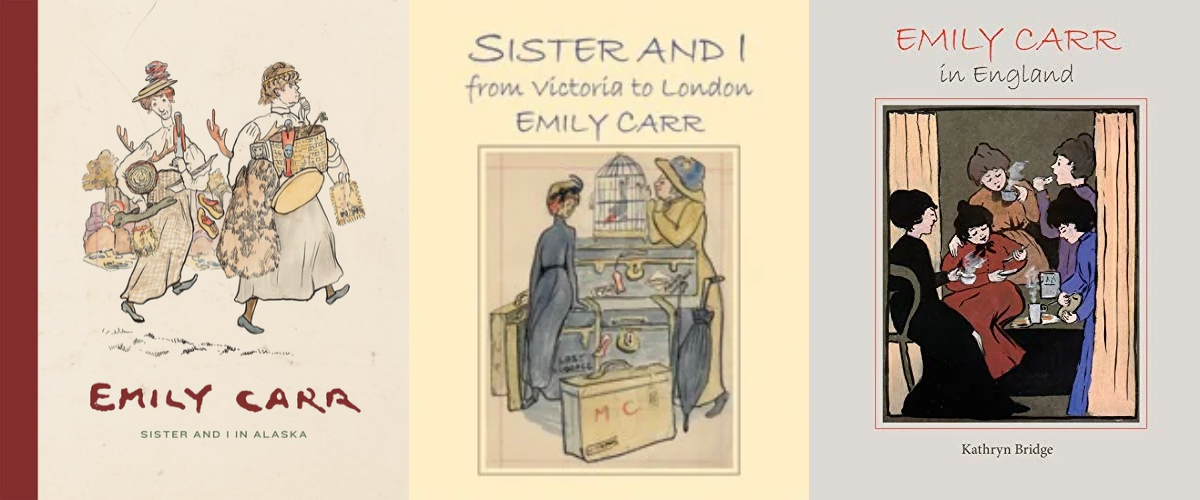
Their relationship took on a new dimension through travel. In 1907, Emily and Alice travelled together to Alaska, a journey that proved important to Emily’s artistic development. The trip introduced her to Indigenous communities and the monumental totem poles that would become central to her artistic interests. Emily recorded their adventures in a notebook and through drawings, documenting the journey as well as the places they visited. The experience became the basis for Sister and I in Alaska, one of her illustrated travel narratives now referred to as her “Funny Books.”
The journey is significant for more than its influence on Emily’s art. Travelling together required the sisters to share unfamiliar surroundings, make decisions, and cope with the discomforts and surprises of travel. Emily’s accounts combined observation with humour, giving the trip a personal dimension that would be lost if it were considered only as preparation for her later painting. Alice was not merely a relative who accompanied Emily on a journey; she was part of the experience that Emily chose to preserve in writing and illustration.
The sisters travelled together again in 1910, when Emily went to Europe to study art. Their journey from Victoria to London took them across Canada by train and across the Atlantic by steamer. In Sister and I from Victoria to London, Emily recorded their encounters, mishaps, and observations through colourful descriptions and drawings. The journal presents the two women navigating the unfamiliar world of travel together, with Emily’s lively storytelling turning everyday incidents into entertaining episodes.
The surviving travel narratives offer an unusually intimate view of the sisters’ companionship. Rather than presenting Alice through a formal biography or a series of family anecdotes, Emily placed her directly within the action of the story. The illustrations and descriptions preserve something of their shared experience: the discomforts of travel, their reactions to unfamiliar places, and the amusement they found in unexpected situations. These works are valuable not only for understanding Emily’s personality but also for documenting a relationship that she considered worth recording.
Alice also pursued a profession of her own, running an early kindergarten in Victoria out of a rented bungalow two blocks from the family home where she resided until 1913. Like Lizzie, she established an independent life rather than relying on marriage or remaining simply within the family household. Her work suggests that the three unmarried sisters developed separate identities while maintaining their connection to one another. Emily’s artistic career, Alice’s school, and Lizzie’s professional work, Edith’s charitable work gave each woman a distinct role in the community.
The sisters’ homes were close enough for frequent visits. Emily’s “Three Sisters” provides a particularly affectionate account of these arrangements. She described the women as very different in temperament, preferences, and friends, but also as familiar companions whose daily routines repeatedly brought them together. The sisters visited one another in the evenings, and their households became part of a shared domestic world. Emily’s animals always accompanied her or she would not visit them, adding an element of comic disorder to visits with her more conventional sisters.
This account is especially important because it complicates the picture of Emily as an isolated artist who never found understanding within her family. She certainly felt misunderstood in her youth, and she continued to value independence throughout her life. But her later writing reveals pleasure in the companionship of her sisters. The women did not have to agree about everything to remain connected. Their differences were part of the texture of their relationships, and Emily could turn those differences into affectionate humour.
After suffering a number of heart attacks and a stroke, Emily moved into Alice’s cottage in 1940, the last place she lived outside hospitals and until she died on March 2, 1945. The cottage was one block away from the place where Emily was born.
Alice’s importance to Emily also lies in the way their relationship connects the artist’s personal life with her published work. The travel journals preserve Alice’s presence for later readers, allowing us to see the sisters together rather than treating Emily as an entirely solitary figure. Their journeys provide a counterpoint to the difficult family memories in Growing Pains, (which she intentionally withheld from publishing until after her death at her own request), demonstrating that Emily’s experience of sisterhood included adventure, collaboration, and shared enjoyment as well as frustration.
Of all the sisters, Alice appears to have occupied the most consistently cherished place in Emily’s life. Alice was the sister with whom Emily travelled and whose companionship she celebrated in her illustrated journals. Their relationship offers the clearest example of the warmth and humour that could exist beneath the Carr family’s complicated history.
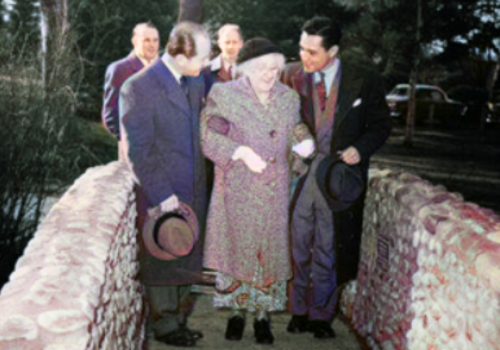
In 1953, Alice commissioned this stone footbridge in Beacon Hill Park as a memorial to her sister and a tribute to her life and artistic achievements. Using money she had saved over several years, she personally arranged for the bridge to be designed and constructed in one of Emily’s favourite painting locations in the park.
The memorial also has a personal connection to the Carr family’s longstanding friendship as a nanny for the Hennell family of Victoria, whose architect, Alexander Robert Hennell, Alice chose to design the bridge. Hennel is the man to the left of Alice who had all but gone blind at this time.
Alice was 84 years old when she died and was the last surviving members of the nine children of Richard and Emily Saunders Carr. Three sons born between Clara and Lizzie died at childbirth and the youngest sibling Richard, born in Victoria 1875 died of tuberculosis at a sanitarium in California in 1899 at the age of 24, while Emily was at art school in London. Clara died at her home on St. Andrew Street on October 25, 1953, later the same year the bridge was built.
What Emily had to say about her sister Alice: from Three Sisters
Alice was always calm. Monkey, dogs, children! The greatest of these were children.
Emily’s affectionate description of Alice captures her sister’s patience and devotion to the children in her school. Alice was particularly dear to Emily, who frequently expressed her preference for Alice’s company.
Emily’s affectionate description of Alice captures her sister’s patience and devotion to the children in her school. Alice was particularly dear to Emily, who frequently expressed her preference for Alice’s company.
Sisterhood, Independence, and the Carr Family Legacy
The relationships between Emily Carr and her sisters changed over time. Edith’s authority shaped Emily’s early struggle for independence, while Clara’s marriage placed her on a different domestic path. Lizzie’s practical and religious outlook contrasted with Emily’s artistic temperament, and Alice became the sister whose companionship Emily most clearly celebrated. These relationships cannot be reduced to a simple story of family conflict or unconditional affection. They involved differences in personality, generational expectations, professional ambitions, and the responsibilities that followed the deaths of their parents.
Emily’s autobiographical writing must also be approached thoughtfully. Growing Pains presents a forceful account of a young woman who felt constrained by her family and determined to make a life of her own. It was written with the benefit of hindsight, after decades of artistic struggle and eventual recognition. Her short stories and reminiscences, by contrast, sometimes recall the sisters’ later domestic lives with humour and warmth. Taken together, these writings reveal a more complex relationship than either account alone might suggest.
The sisters’ story also offers a glimpse into the choices available to women of their generation. None followed exactly the same path. Edith assumed family responsibilities; Clara married and raised children; Lizzie pursued professional work; Alice ran a school; and Emily devoted herself to art and writing. Their different lives demonstrate that the Carr household contained a variety of ambitions and temperaments, even though Emily’s later fame has made her the most visible member of the family.
Through her autobiographies, stories, and illustrated travel journals, Emily left readers a record of these relationships—sometimes sharply critical, sometimes comic, and sometimes deeply affectionate. Beyond the celebrated paintings and the reputation of a pioneering Canadian artist, the sisters’ story reveals a woman whose independence mattered profoundly to her, but who also retained a lasting connection to the family she both challenged and loved.
In her journal on December 31, 1933, Emily wrote about her relationship with her sisters:
We love each other dearly. I can’t imagine life without them; it would be one awful blank.
She continued with a particularly perceptive observation:
We are each so utterly different—lives, aims, outlook. Bless them, bless them!
This is perhaps one of the most touching passages Emily wrote about her sisters. It reveals that, despite their differences, family tensions and occasional disagreements, she recognized how important they were to one another.
hosted, designed & maintained by Marilyn Jones for the walks & talks, bus tours and presentations she offers on Emily Carr in-person and online from Victoria, BC.