Doris Shadbolt and Emily Carr: A Legacy Discovered, Interpreted and Preserved
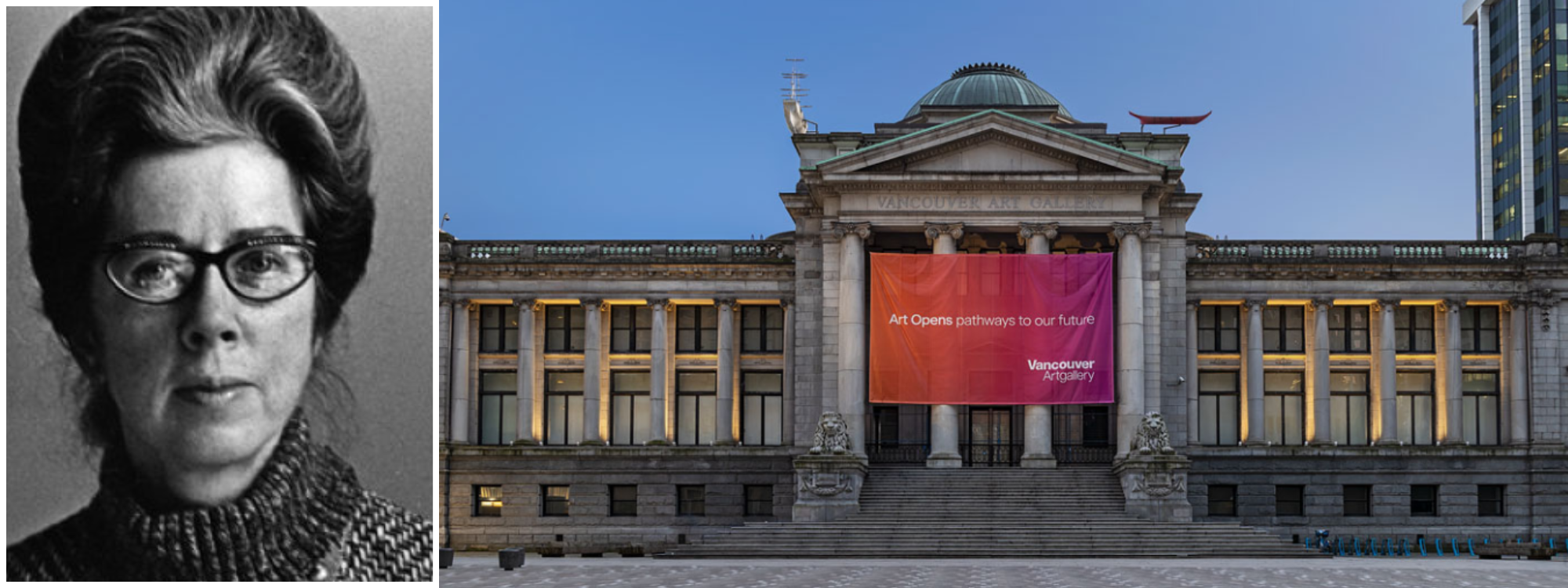
Doris Shadbolt (November 28, 1918 – December 22, 2003) occupies a distinctive place in the history of Emily Carr. She did not know Carr personally—Carr died in 1945, the same year Shadbolt moved to Vancouver—but over the next three decades Shadbolt became one of the people most responsible for shaping how Carr’s art was understood, exhibited and written about. Her relationship with Carr was therefore not one of friendship or personal acquaintance, but of curator, scholar, interpreter and advocate.
Early life and education
Born Doris Meisel in Preston, Ontario, to parents Rufus Meisel and Ann Hamacher Meisel, she grew up in a family environment that fostered her early interest in the arts. She pursued formal studies in fine arts at the University of Toronto, where she trained under notable instructors Charles Comfort and John Alford, graduating magna cum laude with a Bachelor of Arts degree in 1941.
She grew up alongside her two sisters, Ruth and Grace, in a household that emphasized self-reliance and education for its daughters, reflecting the cultural aspirations of small-town Ontario communities during this period. The 1931 Canadian Census records the family residing in Preston, with Doris, then 12, listed as a student alongside her sisters Ruth (14) and Grace (4), underscoring a supportive environment focused on learning amid economic pressures.
Shadbolt’s early exposure to art was informal and self-initiated, shaped by limited local resources but encouraged by family dynamics; as her sister Grace later recalled, Doris was a “brilliant but quiet” child who experimented creatively with activities like painting, sewing clothes, and crafting doll outfits. This formative environment in post-World War I Ontario, marked by community resilience and modest cultural pursuits, fostered her budding interest in the arts without formal training until later years.
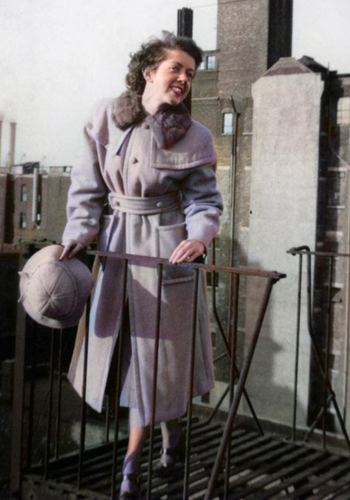
Doris Shadbolt (1918 – 2003) never knew Emily Carr personally; she discovered Carr through her work and subsequently devoted much of her professional life to understanding, exhibiting and interpreting it.
After graduating from the University of Toronto with a Bachelor of Arts in fine arts in 1941, Doris Shadbolt began her professional career in the Canadian art world during the early years of the Second World War.
Doris Shadbolt enrolled at the University of Toronto in the late 1930s, supported by a scholarship that enabled her studies in fine arts despite her family’s initial surprise at her academic pursuits. She graduated in 1941 with an Honours Bachelor of Arts in Fine Arts, earning Magna Cum Laude distinction.

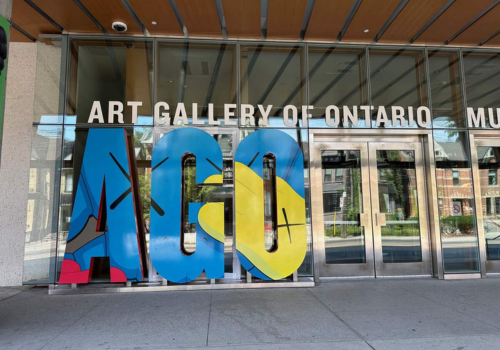
From 1942 to 1943, she worked as a research assistant in the curatorial department of the Art Gallery of Toronto, now the Art Gallery of Ontario. Her responsibilities included cataloguing collections and assisting with exhibitions and public programs.
Among her early assignments was work related to Emily Carr’s solo museum exhibition, including the discovery and preparation of Carr’s paintings that had been stored in the gallery’s basement.
In 1943, Shadbolt moved to Ottawa to join the National Gallery of Canada, where she worked until 1945 as an assistant involved in exhibition preparation and administrative duties. Working under director Charles Comfort, whom she had studied with at the University of Toronto, she gained experience in the operations of a national art institution during wartime.
It was also at the National Gallery that she met the artist Jack Shadbolt, whom she would later marry. These early positions in Toronto and Ottawa gave Shadbolt a strong foundation in curatorial research, exhibition planning, art handling and museum administration, skills that would shape her influential career in Canadian art.
Doris’s husband, Jack Shadbolt (1909 – 1998), did know Emily Carr. As a young artist in Victoria, Jack often visited Carr at her studio on Simcoe Street along with other young artists. He later described being introduced to her by his friend Max Maynard.
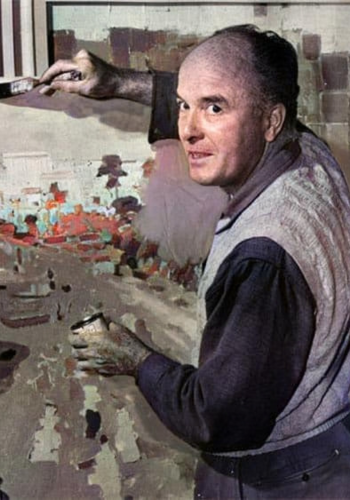
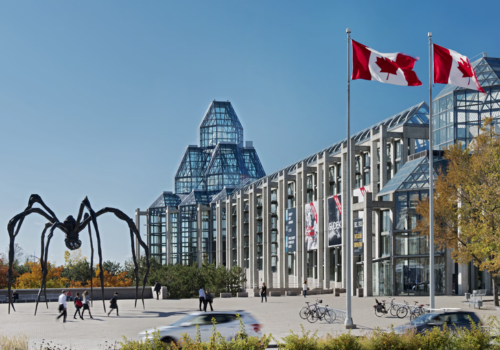
Doris Meisel met the painter Jack Shadbolt while working at the National Gallery of Canada in Ottawa, where she was employed from 1943 to 1945. The couple married in 1945 following Shadbolt’s return from military service in Europe during World War II. Their union marked a pivotal personal milestone, as Doris prioritized their shared artistic aspirations.
She gained additional experience at the Metropolitan Museum of Art in New York (1948–1949) and as West Coast representative for Arts Canada magazine before joining the Vancouver Art Gallery (VAG) as a paid docent handling art education programs in 1950, advancing through roles such as Director of Education, Curator (from 1963), Senior Curator, and Associate Director until her retirement in 1975.
Upon arriving in Vancouver with her husband in 1950, Doris Shadbolt began her involvement with the Vancouver Art Gallery (VAG) as a paid docent in the education department and quickly advanced to Director of Education, a role she held until 1963. Her work focused on developing public engagement programs, drawing on influences from her studies in New York to innovate educational approaches at the gallery.
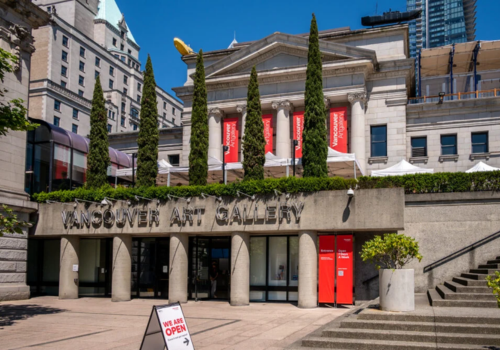
Career at the Vancouver Art Gallery
Appointment and progression of roles
During her tenure at the VAG, Shadbolt was instrumental in transforming the gallery into a vital hub for avant-garde artists, musicians, and writers in the 1960s and 1970s, developing an innovative exhibitions program that gained national and international recognition. She curated landmark shows that elevated Canadian and Indigenous art, including Arts of the Raven (1967), the first major aesthetic presentation of Northwest Coast Native art outside an anthropological framework; Emily Carr: A Centennial Exhibition (1971); The Art of Bill Reid (1974); and modern international exhibits like New York 13 (1968)
In 1963, Shadbolt was appointed Research Curator, expanding her oversight to include collection research and curatorial planning. She served as Acting Director from 1966 to 1967, managing overall gallery operations during a transitional period. By 1967, she progressed to Senior Curator, coordinating staff, acquisitions, and programming to strengthen the VAG’s position as a key regional institution.
In 1972, Shadbolt was promoted to Associate Director, a senior leadership position where she continued to guide administrative and curatorial strategies until her retirement in 1975.
Throughout her tenure, her responsibilities encompassed education initiatives, collection management, and staff coordination, all aimed at elevating the gallery’s profile on national and international stages. She left the VAG in 1975 to pursue independent research and writing on Canadian and Indigenous art.
Her Publications
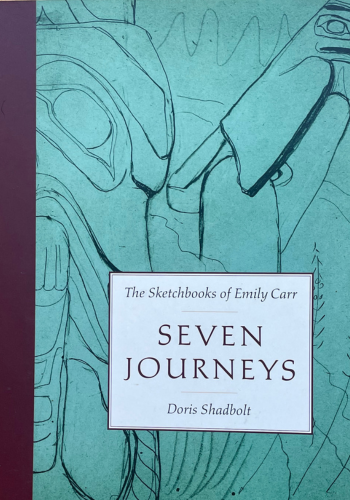
Her scholarly output further cemented her legacy, with key publications such as The Art of Emily Carr (1979), Bill Reid (1986, winner of two BC Book Awards), and Seven Journeys: The Sketchbooks of Emily Carr (2001). In her later years, Shadbolt continued advocating for the arts through philanthropy; in 1987, she co-founded VIVA (Vancouver Institute for the Visual Arts) with Jack Shadbolt, which evolved into the Jack and Doris Shadbolt Foundation to provide annual awards to mid-career visual artists.
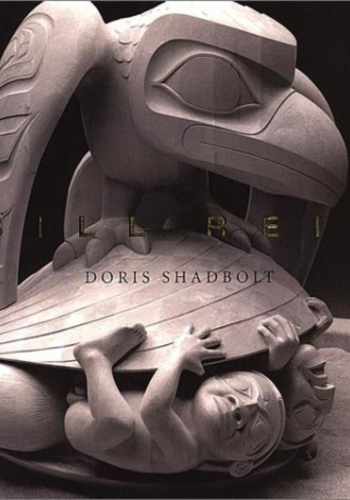
Shadbolt’s Bill Reid (1986), also published by Douglas & McIntyre, offers a scholarly biography of the Haida artist Bill Reid, exploring his rediscovery of Haida heritage and his mastery across forms like sculpture and jewelry. The book includes numerous photographs of Reid’s works, such as totem poles and the bronze The Spirit of Haida Gwaii, and highlights his cultural significance in North American art. It won the 1987 Hubert Evans Non-Fiction Prize and was revised in 1998 with an additional chapter on Reid’s final years, incorporating over 40 new color images.
Key curatorial projects and innovations
During her tenure as curator and associate director at the Vancouver Art Gallery (VAG), Doris Shadbolt organized several landmark exhibitions that highlighted modern Canadian and international art, with a particular emphasis on British Columbia artists. One of her early projects, The Nude in Art (1965), explored classical themes through historical and contemporary works, establishing a foundation for thematic curatorial approaches at the VAG.
This was followed by Images for a Canadian Heritage (1966), a comprehensive display of historical and modern pieces that underscored emerging national identity, drawing significant local attention to Canada’s artistic evolution. Shadbolt’s focus on British Columbia talent was evident in her curation of the Emily Carr Centennial Exhibition (1971), which celebrated the artist’s centenary with a touring show of over 100 works, fostering greater public appreciation for Carr’s contributions to West Coast modernism and leading to key acquisitions for the VAG collection.
She also championed Indigenous art through Arts of the Raven (1967), an innovative presentation of Northwest Coast works that reframed them as fine art rather than ethnographic artifacts, earning international acclaim including a review in The New York Times and influencing broader discourse on Indigenous aesthetics in Canada. She later curated The Art of Bill Reid (1974), a major exhibition showcasing the Haida artist’s works, further promoting Indigenous contemporary art. These projects not only spotlighted local artists like Carr but also integrated them into national and global contexts, enhancing the VAG’s reputation.
To introduce international contemporary developments, Shadbolt curated Los Angeles 6 (1968), featuring West Coast innovators such as Robert Irwin and Edward Kienholz, and New York 13 (1969), which showcased luminaries including Jasper Johns, Andy Warhol, and Frank Stella, bridging Vancouver’s scene with major U.S. movements.
A pivotal innovation came with 955,000 (1970), co-curated with Lucy Lippard, this conceptual art exhibition included global figures like Vito Acconci and Eva Hesse alongside local talents such as N.E. Thing Co. and Jeff Wall, exposing West Coast audiences to avant-garde practices and inspiring emerging Vancouver artists.
Additionally, Direction 69 incorporated multimedia elements, such as Dennis Vance’s interactive sound sculpture Fat Emma, which engaged visitors through technology and movement, pioneering experiential displays at the VAG. As director of education from 1950 to 1963, Shadbolt developed public programs and guided tours that made art accessible to diverse Vancouver audiences during the 1950s and 1960s, including school outreach and community lectures that democratized cultural engagement in a growing city.
These initiatives, continued through her curatorial roles into the 1970s, emphasized interpretive programming tied to exhibitions, such as discussions on Indigenous art post-Arts of the Raven, broadening participation beyond elite circles. Shadbolt’s efforts extended to institutional growth, where she facilitated collaborations with international curators and artists, resulting in key acquisitions like works by Emily Carr and Northwest Coast creators, which strengthened the VAG’s collection and elevated its national profile.
Her introduction of thematic, multimedia, and cross-cultural displays innovated West Coast art presentation, shifting focus from traditional connoisseurship to inclusive, discourse-driven exhibitions that shaped Vancouver’s cultural identity through the 1970s.
Broader institutional involvement
Board memberships and committees
Following her retirement from the Vancouver Art Gallery in 1975, Doris Shadbolt extended her administrative influence through voluntarism on local arts boards and committees in Vancouver, primarily during the 1980s. These positions, building on her curatorial expertise, emphasized strategic acquisitions, policy formulation, and the role of art in community development.
National and international advisory roles
Doris Shadbolt played a pivotal role in shaping Canadian cultural policy through her appointments to several national advisory bodies during the late 1960s and 1970s. She served as a member of the Canadian Eskimo Art Council from 1967 to 1973, contributing to efforts that promoted and preserved Inuit art on a national scale. This council, established to support the development of Inuit artistic traditions, benefited from her expertise as a curator, helping to foster recognition of Indigenous cultural expressions within federal frameworks.
In 1979, she was appointed to the Canadian Cultural Property Export Review Board, where she reviewed export permit applications to protect significant cultural objects from leaving the country, thereby safeguarding Canada’s artistic patrimony. In the 1970s, Shadbolt’s advisory influence extended to key funding and review mechanisms. She participated in the Canada Council, including as a jury member for the Aid to Periodicals program in 1976–1977, aiding decisions on grants that supported artistic publications and periodicals across Canada. She also served on the board of the National Museums of Canada.
Through these positions, Shadbolt not only influenced funding and export policies but also elevated Canadian art’s visibility internationally, contributing to a more robust national cultural infrastructure.
Her contributions earned her prestigious honors, including being named an Officer of the Order of Canada in 1973, honorary doctorates from the University of British Columbia, Simon Fraser University, and Emily Carr College of Art and Design, and the Governor General’s Award in 2000 for lifetime achievement in the arts.
Among her other notable works on Emily Carr are Watercolours and Drawings of Emily Carr (1977), a co-authored exhibition catalogue with the Art Gallery of Greater Victoria that features Carr’s sketches and watercolours from a 1977 show; Emily Carr (1990), a focused paperback biography published by Douglas & McIntyre; and Seven Journeys: The Sketchbooks of Emily Carr (2002), which selects 85 drawings from Carr’s sketchbooks to illuminate her inspirations from British Columbia’s landscapes and Indigenous communities, published by the University of Washington Press.
Shadbolt also contributed to multimedia formats, co-authoring the DVD Wayne Ngan: Island Potter (1980) with Nancy Riley for CBC, which documents the life and ceramic artistry of the British Columbia potter Wayne Ngan.
Research themes and lasting impact
Shadbolt’s scholarly work was profoundly shaped by the Marxist-influenced art history of Meyer Schapiro, whom she encountered during seminars at Columbia University in 1948, leading her to emphasize the social contexts of artistic production in her analyses of Canadian art.
This approach is evident in her focus on British Columbia modernists, particularly Emily Carr, whose documentation of Indigenous villages she interpreted as both an ethnological record and a reflection of broader cultural decay in early 20th-century British Columbia. Similarly, her examinations of Indigenous artists like Bill Reid highlighted the revival of Haida traditions amid colonial pressures, portraying Reid’s sculptures and jewelry as vessels of cultural continuity and metaphorical depth, where form encoded spiritual vitality.
Methodologically, Shadbolt blended biographical narratives with rigorous visual analysis to illuminate the evolution of West Coast artists, often challenging myths propagated by artists’ own accounts and prioritizing thematic intersections over strict chronology. In her studies of Carr, for instance, she wove personal influences—like theosophy and encounters with the Group of Seven—into discussions of stylistic shifts, such as the integration of Indigenous motifs with forest symbolism to express spiritual quests.
This method extended to promoting underrepresented voices from the Pacific Northwest, as seen in her curatorial and written efforts to elevate Northwest Coast art from ethnographic categorization to fine art appreciation, fostering a more inclusive narrative for regional modernism.
Shadbolt’s contributions established enduring reference points for scholarship on Carr and Reid, with her comprehensive analyses serving as foundational texts that demythologized Carr’s persona and contextualized Reid’s innovations within Haida cosmology. Her work influenced academic curricula by integrating social-historical lenses into Canadian art education and inspired exhibitions that bridged local and international perspectives, sustaining interest in West Coast artists well into the 21st century.
As a capstone to her career, Seven Journeys (2002), written at age 84, delved into Carr’s sketchbooks from her transformative 1927–1930 coastal travels, selecting drawings that captured the immediacy of her inspirations and underscored the intimacy of her artistic process.
Awards and recognitions
National honors and orders
Doris Shadbolt was appointed an Officer of the Order of Canada on December 17, 1973, in recognition of her enterprising contributions as a curator, writer, and coordinator of exhibitions at the Vancouver Art Gallery (VAG). This honour highlighted her pivotal role in advancing Canadian art curation and education through innovative programming and scholarly publications during her tenure at the VAG from 1950 to 1975. The investiture ceremony took place on April 3, 1974, affirming her status among Canada’s cultural leaders.
In 2000, Shadbolt received the Governor General’s Award in Visual and Media Arts in the Outstanding Contribution category, honoring her lifetime achievements in promoting Canadian visual arts through curation, writing, and institutional leadership. This prestigious national award underscored the enduring impact of her work at the VAG and her influential publications on artists. The recognition came as part of the award’s inaugural year, emphasizing her foundational contributions to the sector.
Academic and professional distinctions
Doris Shadbolt received multiple honorary degrees that underscored her profound influence on Canadian visual arts, curatorship, and cultural institutions. In 1994, Simon Fraser University awarded her an honorary Doctor of Laws (LL.D.) in recognition of her exemplary career as a museum curator and advocate for contemporary art.
The following year, in 1995, Emily Carr University of Art + Design conferred upon her an honorary Doctor of Letters (DLitt), honoring her scholarly contributions to art history and education. In 1996, the University of British Columbia granted her an honorary degree, celebrating her lifelong dedication to fostering artistic excellence and public engagement with Northwest Coast and modern Canadian art. These academic honors highlighted her transition from practitioner to influential figure in art administration and criticism.
Shadbolt’s professional achievements extended to literary accolades, particularly for her seminal biography Bill Reid (1986), which illuminated the life and work of the renowned Haida artist. The book secured two awards at the 1987 BC Book Prizes, including recognition in non-fiction categories, affirming her skill in blending rigorous research with accessible narrative.
Her curatorial innovations and authorship further solidified her reputation for excellence within Canadian art communities, where she was celebrated for advancing Indigenous and modernist perspectives through exhibitions and publications.
Philanthropy and legacy
Establishment of the Shadbolt Foundation
In 1988, Doris Shadbolt and her husband, the artist Jack Shadbolt, co-founded the Vancouver Institute for the Visual Arts (VIVA) as a charitable organization dedicated to supporting visual artists in British Columbia. This initiative stemmed from their shared commitment to fostering artistic talent on the West Coast, drawing on Doris Shadbolt’s extensive experience as a curator and administrator at the Vancouver Art Gallery. The foundation was initially financed through their personal resources, establishing an endowment to ensure long-term sustainability for artist recognition programs.
Following Jack Shadbolt’s death in 1998, the organization was renamed the Jack and Doris Shadbolt Foundation for the Visual Arts, honoring their joint legacy. Its primary objective is to advance the visual arts in British Columbia by providing financial support and recognition to mid-career artists demonstrating outstanding achievement and commitment.
The cornerstone of this mission is the annual VIVA Awards, which grant $15,000 each to selected recipients, chosen by an independent jury drawn from the arts community; every fifth year until recently, an Honour Award of $50,000 was also bestowed for sustained historical influence in the field.
In addition, since 2008, the foundation has administered the biennial Alvin Balkind Curator’s Prize to support curatorial work, with the program structured to alternate with VIVA Awards in certain years. The foundation is governed by a board of trustees and manages its endowment to fund these initiatives without accepting direct applications.
Doris Shadbolt’s vision for the foundation emphasized nurturing emerging and mid-career talent in British Columbia’s visual arts scene, reflecting her lifelong advocacy for innovative and regional artistic expression.
After her death in 2003, the organization continued operations under its board, maintaining the awards program as a testament to the Shadbolts’ philanthropic intent. Demonstrating its longevity, the foundation announced the 2024 VIVA Award recipients—Gabrielle L’Hirondelle Hill and T’uy’t’tanat Cease Wyss—in early 2025, underscoring ongoing support for contemporary West Coast artists despite the suspension of the Honour Awards.
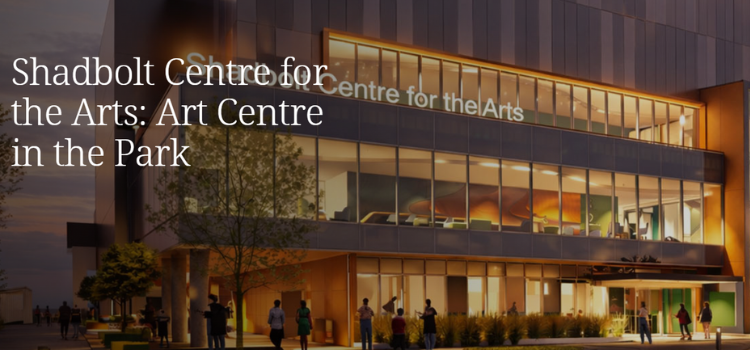
More recently, a new Shadbolt Centre for the Arts will transform Burnaby’s Deer Lake Park into an even more prominent cultural destination. The project will replace the aging wing of the existing theatre and integrate it with the current Shadbolt Centre to create a unified cultural campus. An innovative design makes the most of the compact site by placing the new theatre on the second level, while opening the ground floor to an inviting public space.
At the heart of the addition will be a 364-seat, state-of-the-art multipurpose theatre with a fully retractable stage, allowing it to accommodate a wide range of performances and community events. The centre will also include new art and dance studios, artist support spaces, and bar and food services. A glass façade will create a distinctive “lantern in the park,” while the space beneath the elevated theatre will become an artists’ alley, providing opportunities for local artists to exhibit, perform and interact with the public.
Scheduled to open in 2027, the expanded Shadbolt Centre is intended to strengthen its role as a hub for arts, culture and community life. More than simply adding performance space, the project aims to create an accessible, welcoming environment where artists and the public can connect. By combining contemporary architecture, flexible cultural facilities and opportunities for community participation, the new centre is envisioned as a catalyst for Burnaby’s continuing cultural growth and Deer Lake Park’s identity as a place where creativity and community come together.
Art collections and endowments
Doris Shadbolt amassed a significant personal collection of British Columbia ceramics, comprising approximately 225 pieces acquired primarily from the 1960s onward. This collection featured works by prominent local potters, including Wayne Ngan, whose contributions formed about half of the holdings with pieces such as large raku jars and salt-glazed pots; Glenn Lewis; Tam Irving; and others like John Reeve, Charmian Johnson, and Gathie Falk.
The selection emphasized functional yet aesthetically refined vessels—plates, cups, vases, and tea sets—that reflected the West Coast studio pottery movement influenced by figures like Bernard Leach.
Following Shadbolt’s death in 2003, her estate donated the ceramics collection to the Morris and Helen Belkin Art Gallery at the University of British Columbia in 2005, where it is held in trust and stored for preservation and potential exhibition. Approximately 40 pieces from this collection were loaned for the 2010 “Vancouver Collects” exhibition at the Gallery of BC Ceramics, highlighting its role in documenting regional artistic identity.
Shadbolt’s curation of these items extended her lifelong advocacy for local craft traditions, surrounding her and her husband Jack with everyday objects that embodied ethical and regional values in pottery.
Beyond the ceramics bequest, Shadbolt’s estate supported visual arts programs through endowments facilitated by the Shadbolt Foundation. Notable contributions include the Jack and Doris Shadbolt Publication Endowment to the Vancouver Art Gallery, aiding scholarly and exhibition-related outputs, and the establishment of the Doris Shadbolt Scholarship at Emily Carr University of Art + Design to foster emerging artists. These gifts underscored her commitment to sustaining British Columbia’s creative ecosystem.
Personal interests and later life
Artistic pursuits and hobbies
Beyond her professional roles in curation and education, Doris Shadbolt engaged in personal artistic pursuits that reflected her deep appreciation for modernist aesthetics and craft traditions.
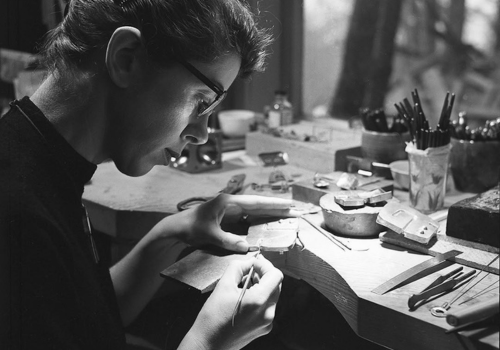
Beginning around 1953, she created silver jewelry in her home studio in Burnaby, British Columbia, crafting brooches and pendants using simple, abstract forms and a hollow construction technique that provided depth and lightness without the heft of solid silver.
Her designs drew inspiration from natural forms, aligning with the post-war emphasis on organic abstraction prevalent in mid-20th-century Canadian craft. This avocational practice, spanning the 1950s and 1960s, represented a modest but expressive extension of her curatorial interests in sculpture and design, though it never overshadowed her primary career commitments.
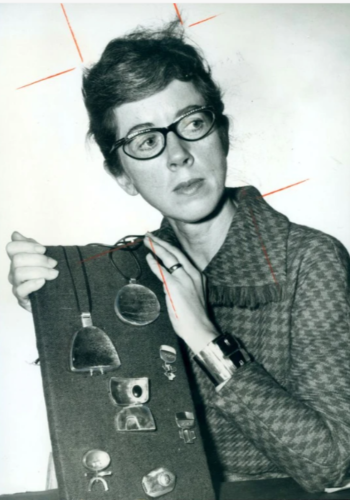
Shadbolt’s jewelry work culminated in public recognition, including an award at the 1958 Northwest Craftsmen’s Exhibition and local shows in Seattle, Washington. In 1961, she held a solo exhibition at the New Design Gallery in Vancouver, where she described her pieces as wearable sculpture, stating, “sculpture is sculpture—even if it’s jewelry.” This perspective underscored her belief in the unity of form across scales and mediums, influenced by the modernist principles she championed in her writing and gallery programming.
Her output remained limited, with pieces now held in collections such as those of the Vancouver Art Gallery, where they illustrate the era’s innovative craft movements. In addition to her jewelry-making, Shadbolt pursued collecting as a passionate hobby, amassing a significant assemblage of British Columbia ceramics by artists including Wayne Ngan, Glenn Lewis, and Tam Irving. This 170-piece collection, reflecting her longstanding support for regional studio potters, was bequeathed upon her death to the Morris and Helen Belkin Art Gallery at the University of British Columbia, where it forms a dedicated fonds preserving mid-20th-century ceramic innovation.
Residences, community engagement, and death
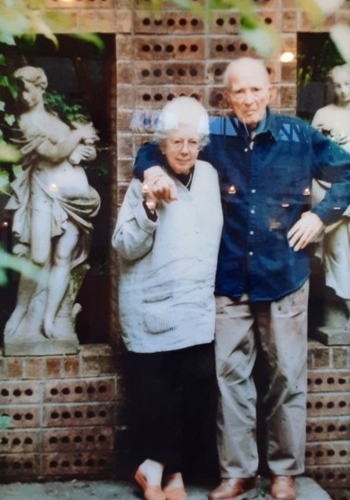
Doris Shadbolt and her husband Jack resided for over 50 years in a modest hillside home on Capitol Hill in Burnaby, British Columbia, overlooking the industrial east end of Vancouver harbour, until Jack’s death in 1998. The couple also maintained a summer retreat on Hornby Island, where they engaged with the local artists’ community.
]Following her retirement from the Vancouver Art Gallery in 1975, Shadbolt remained deeply involved in Vancouver’s cultural scene, serving on influential boards including the Canada Council, the Canadian Eskimo Arts Council, the National Museums of Canada, and the Cultural Property Review Board. In 1988, she co-founded the VIVA awards (later renamed the Jack and Doris Shadbolt Foundation for the Visual Arts), which provided grants to emerging British Columbia artists to support innovative work and cultural development.
Her commitment to the local arts community was captured in the 2002 documentary film Those Days: A Portrait of Doris Shadbolt, directed by Karen Henry, which featured interviews reflecting on her career and influence through archival footage and personal recollections.In her later years, Shadbolt devoted herself to writing and research on Canadian art, culminating in her final publication, Seven Journeys: The Sketchbooks of Emily Carr (2002), which showcased 85 drawings from Carr’s travels between 1927 and 1930, highlighting the inspirations behind her mature style.
The couple had no children, and after caring for Jack during his final illness, Shadbolt continued her scholarly pursuits until her own health declined.
Shadbolt suddenly died of a heart attack on December 22, 2003, while vacationing in San Miguel de Allende, Mexico, at the age of 85. A memorial service was held on February 9, 2004, at Robson Square in Vancouver, followed by a reception at the Vancouver Art Gallery.
Why Doris Shadbolt Matters to the Emily Carr Story
Doris Shadbolt’s relationship with Emily Carr began only after Carr’s career was already coming to an end. In 1942–43, while working at the Art Gallery of Toronto, Shadbolt encountered Carr’s paintings and became involved in preparing her work for exhibition. Carr died in Victoria in 1945, just as Shadbolt was beginning a new chapter of her own life and career in Vancouver.
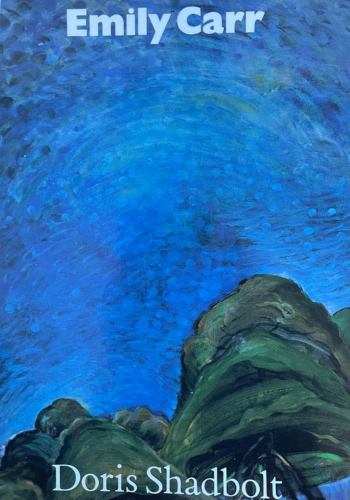
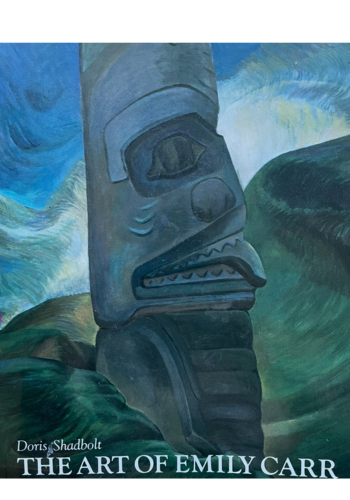
By the 1950s, her work at the Vancouver Art Gallery increasingly brought her into contact with Carr’s paintings, writing and growing reputation. Over the following decades, Shadbolt became one of the most influential interpreters and advocates of Carr’s work. In 1971, she curated the major Emily Carr: A Centennial Exhibition at the Vancouver Art Gallery, marking the centenary of Carr’s birth. Eight years later, she published The Art of Emily Carr, a substantial study that further shaped how Carr and her work were understood by subsequent generations. Although Shadbolt never met Carr, she played a significant role in ensuring that Carr’s artistic legacy was preserved, studied and brought to a wider Canadian audience.
Doris Shadbolt died in Vancouver on December 22, 2003. By then she had spent more than half a century working in Canadian art and had become an important curator, writer, educator and advocate for artists. She had also helped make the Vancouver Art Gallery an institution of national significance.
Carr died before the modern museum culture that now surrounds her work had fully developed. She could not participate in the creation of her own retrospective history. Others would have to decide which paintings mattered, how they should be exhibited, what relationships could be found among them and how her artistic achievement should be explained.
Doris Shadbolt became one of those people.
Through the 1971 centennial exhibition, The Art of Emily Carr, Emily Carr and Seven Journeys, she spent more than thirty years looking at Carr from different angles. She helped move the discussion from Emily Carr the personality to Emily Carr the artist. That distinction is perhaps Shadbolt’s greatest contribution.
Today, Carr’s paintings are held by major Canadian institutions, and the Vancouver Art Gallery describes its collection as the most comprehensive collection of her work in the world. Current exhibitions continue to reassess Carr’s relationship to landscape, modernism and Indigenous subjects.
But much of the foundation for that continuing conversation was laid by earlier generations of scholars and curators.
Doris Shadbolt was one of the most important.
She arrived in British Columbia after Emily Carr’s death, yet devoted decades of her life to understanding the artist Carr had been. In doing so, she helped ensure that Carr would not remain merely a remarkable woman from Victoria with an extraordinary life story. She helped establish her as an artist whose work demanded to be looked at, studied, debated and understood on its own terms.
For anyone interested in the history of Emily Carr’s reputation, Doris Shadbolt is therefore almost as important to the posthumous story of Carr as Lawren Harris was to the final decade of Carr’s life. Harris helped Carr see that her work belonged within the larger world of modern Canadian painting; Shadbolt helped later generations understand why.
And unlike Harris, Shadbolt had the advantage of looking back across the whole of Carr’s career.
That long view became her great contribution to Emily Carr’s legacy.