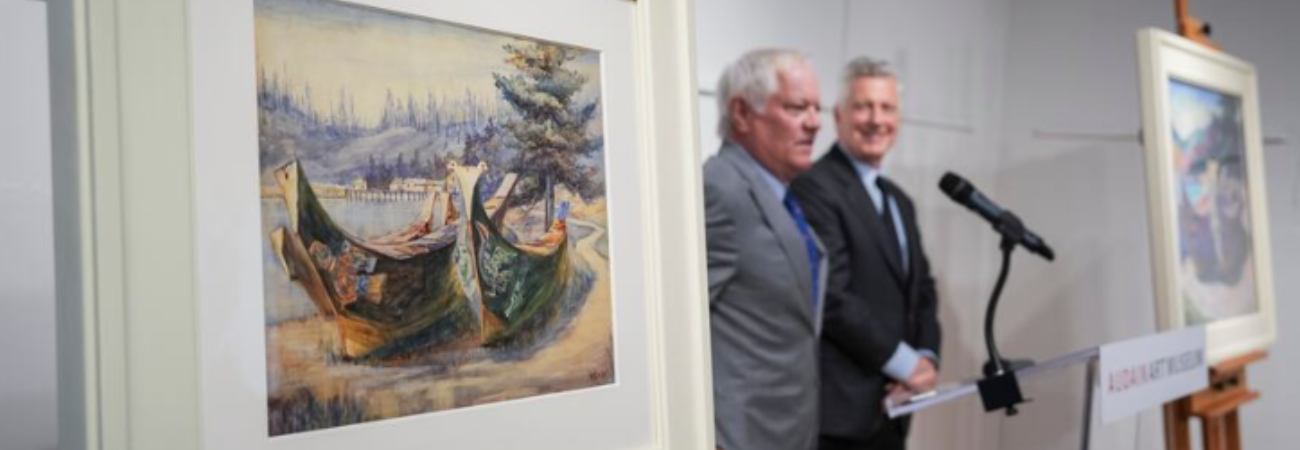
Emily Carr’s People’s Gallery was a deeply personal and innovative initiative she launched in late 1932, in the middle of the Great Depression. At the time, she was living in her boarding house, the House of All Sorts in Victoria which she operated as a sole source of income. She had given up her annual pottery sales and was letting her paintings go for $5 or $10 a piece. She had almost stopped breeding…

read more

From 1916 to 1930 when Emily Carr struggled to make a living from her art, she turned to an unlikely but deeply creative form of work—rug hooking. Living in her boarding house in Victoria, the House of All Sorts, while running a boarding house, Emily designed and produced hooked rugs to support herself through difficult financial years. What began as “breadwork,” as she called it, became another outlet for her restless imagination. Her rugs transformed wool,…

read more

When Emily Carr met the young artist Edythe Hembroff in 1930, Carr was nearing the end of her painting years. Her health was fragile and money scarce, yet her artistic vision remained fierce and some of her best artwork was yet to come. In Edythe, she found a kindred spirit: intelligent, observant, and deeply sympathetic to her struggles. Their friendship, part mentorship and part creative partnership, became one of the most meaningful of Emily’s…

read more