
The Artist and the Suitor: Emily Carr’s First “Heartbreak”

In the summer of 1898, a young Emily Carr boarded the steamship Willapa to return to Victoria with a portfolio of drawings and watercolours of the Indigenous communities of Ucluelet. She was just 27 and already deeply committed to becoming a serious artist, even though that path for women was anything but straightforward. The steamship Willipa was a slow-moving vessel, typically transporting and dropping off mixed cargo, livestock, and passengers along the coast. A trip from Victoria to Ucluelet likely took a full day and could extend to two, especially under poor weather conditions.
Aboard that ship, she met William Locke “Mayo” Paddon, the streamship’s purser. Four years younger than Emily, he was the son Reverend Canon William Locke Paddon, who had brought is family to Victoria from Ireland in 1890. Born in England and educated at Oxford University Paddon’s father was the Reverend of the St Jane’s Anglican Church on Oswego Street in Victoria, Paddon was one of his 10 children.
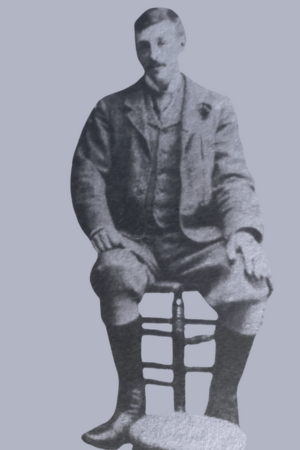
After their meeting, Paddon became a frequent visitor to the Carr home. Emily began to attend his church, St Saviour’s Anglican, and its bible study groups, instead of her family’s Reformed Episcopal. They took long walks holding hands on Dallas Road cliffs and Beacon Hill Park. He was charming, dependable, and immediately captivated by Emily’s intensity, talent and religious leanings.
Emily was attracted to him because of the ease in which she could share her deep concerns including the guilt she felt for disappointing her mother and being the black sheep of the family.
Emily was attracted to him because of the ease in which she could share her deep concerns including the guilt she felt for disappointing her mother and being the black sheep of the family.
He fell in love, hard and fast. She, on the other hand, was unmoved. For Emily, art was not a hobby—it was her lifeline. Romance didn’t fit into the picture. She had already refused his written proposal. But Mayo wasn’t one to give up. Over the next year, he continued to pursue her, believing she might change her mind. When Emily left for London in August 1899 to study at the Westminster School of Art, she likely thought the physical distance would quiet things. It didn’t.
In September 1900, William (Mayo) Paddon took a three-month leave of absence and travelled over 5,000 miles across the Atlantic to visit Emily Carr in London. She was delighted to see him—he was her first visitor from Victoria. They spent a romantic day together, walking hand in hand through Kew Gardens, enjoying a horse-drawn carriage ride, and picnicking in the park. The moment was deeply meaningful to Mayo; he pressed a sprig of heather Emily gave him into his Bible, where he kept it for the rest of his life.
However, Paddon’s arrival coincided with the start of Emily’s term at art school, and she later recalled that his presence disrupted her preparations. By early November, after reportedly proposing to her five times a week, Mayo returned to Victoria heartbroken, as he noted in his diary. He wrote to Emily, hoping they could remain friends, but after receiving a discouraging reply, he burned all of her letters.
Not out of cruelty, but out of clarity. “I can’t marry you,” she wrote in a fictionalized version of the episode later in life. “Besides—my work.” She asked him to leave because, as she admitted painfully, “while you are here, I am not doing my best.”
Emily Carr’s relationship with William May Paddon was marked by emotional intensity and deep inner conflict. Though Paddon offered her what she described as “an immense love,” Emily admitted it was a love “that I could neither accept [nor] return.” In her journals, she later reflected with anguish: “I think it was a bad, dreadful thing to do. I did it in self-defence because it was killing me, sapping the life from me.” These words reveal the profound toll the relationship took on her for the rest of her life.
While she recognized the sincerity of Paddon’s affection, she ultimately saw the emotional demands as incompatible with her fiercely independent spirit and her commitment to art. Rejecting his love was not a heartless act but one of painful self-preservation. The experience left a mark on Carr, shaping her sense of solitude and her devotion to creative freedom.
The emotional toll of Mayo’s love and her refusal weighed heavily on her. Not long after their final parting, Emily fell into a deep psychological and physical collapse. In January 1903, she was admitted to a sanatorium in East Anglia, where she stayed for over a year. During that time, she wasn’t allowed to paint—a cruel irony, given what she had given up to protect that very passion.
By the time she returned to Canada in 1904, Emily had paid a steep price for her independence. But she had also made a defining choice. She would live for her art, no matter the loneliness it brought. Looking back, she would describe the Mayo chapter as “killing her love”—a necessary death, in her eyes, to allow the artist in her to live.
Heartbroken after his relationship with Emily Carr ended, William Mayo Paddon left Victoria for California with a friend and the friend’s wife. There, he purchased a three-mile stretch of beachfront along Monterey Bay, about ninety miles south of San Francisco, naming it Palm Beach—a name it retains to this day. He developed the surrounding land, found financial success in real estate, and never returned to Canada.
In 1916 Emily returned to San Francisco for eight months and found employment at the St. Francis Hotel. While there, she also looked up Paddon. Their reunion was brief and emotionally cool. By this point, any romantic hopes—especially on Paddon’s side—had long since faded. Emily’s priorities had shifted: she was no longer the young woman infatuated with him, but an emerging artist with a stronger sense of self and purpose. Their interaction lacked the warmth and intensity of their earlier connection. But for Mayo, this isn’t the end of the story.
After the death of his friend he moved to San Francisco with, William married his widow. Their marriage eventually ended in divorce, and he remained single for the next 26 years. At age 65, he married Gussie May, who was 29 at the time. Together, they had four children and, by many accounts, a happy marriage—though Emily Carr would later claim otherwise. William Mayo Paddon lived to the age of 96.
She, meanwhile, would go on to become one of Canada’s most iconic painters and writers—her work shaped not only by the landscapes and cultures she deeply admired, but also by the emotional struggles she faced and refused to let define her.
With this background of William Paddon in mind, check out the story she wrote about Paddon called Martyn from Growing Pains: The Autobiography of Emily Carr (1946).
link to Martyn to go here


0 comments