Emily Carr, “Klee Wyck”, Sophie Frank and Indigenous Voices
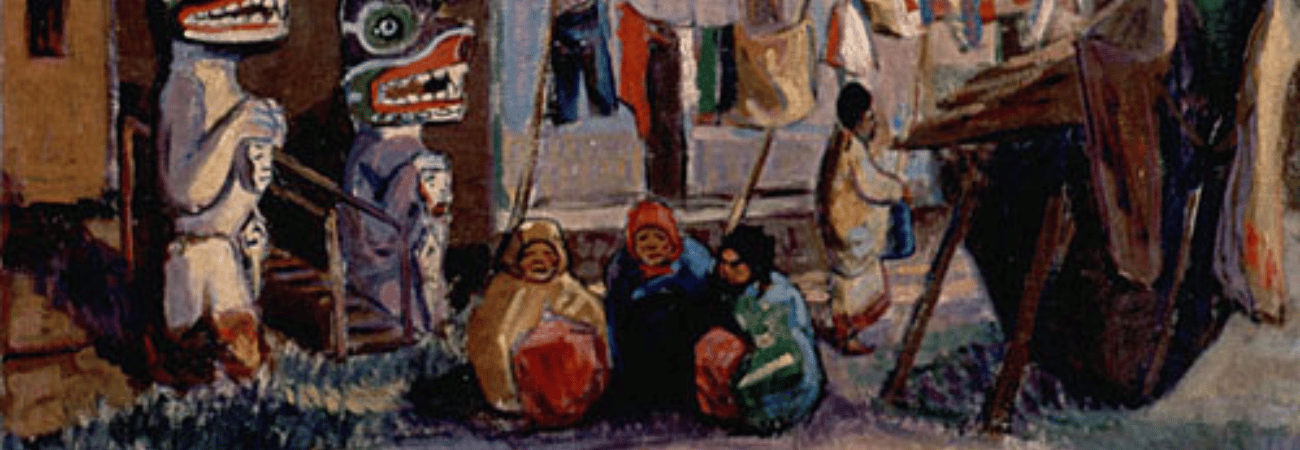
Emily Carr occupies a complicated, enduring place in Canadian cultural history. Celebrated as a visionary modernist painter and a fiercely original writer, she is also a figure whose life’s work is inseparable from her encounters with Indigenous peoples and cultures of the Northwest Coast. Her relationship to Indigenous communities was shaped by deep admiration, personal intimacy, colonial assumptions, and the constraints of her era. Nowhere are these tensions more visible than in Klee Wyck, the book that brought Carr national literary recognition when it was published in 1941.
To understand Klee Wyck—and Emily Carr herself—we must place her within the social, political, and cultural realities of late nineteenth- and early twentieth-century British Columbia, a world marked by colonial expansion, Indigenous dispossession, and a widespread belief that Indigenous cultures were “vanishing.”
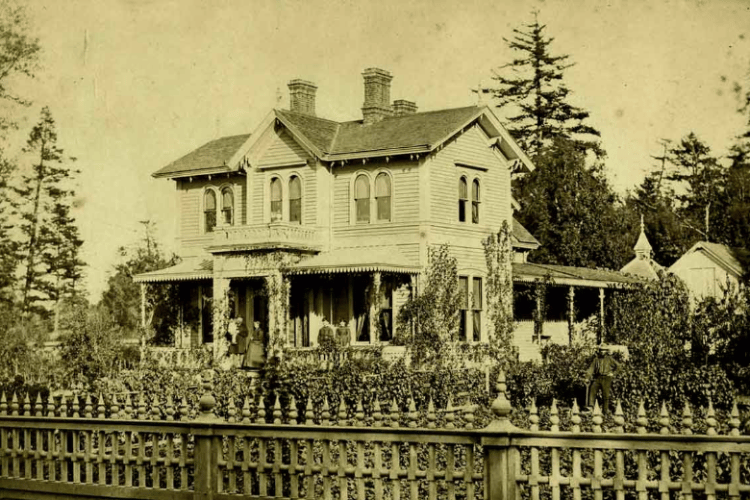
Emily Carr was born in Victoria in 1871, at a time when colonial settlement on the Northwest Coast was accelerating rapidly. Indigenous nations such as the Haida, Nuu-chah-nulth, Kwakwaka’wakw, Coast Salish, and Tsimshian were experiencing profound upheaval: land theft, the potlatch ban, residential schools, and aggressive missionary activity.
Early Encounters and the Colonial Context
Kwakwaka’wakw, Coast Salish, and Tsimshian were experiencing profound upheaval: land theft, the potlatch ban, residential schools, and aggressive missionary activity. Emily grew up surrounded by Indigenous presence, yet also by settler narratives that framed Indigenous peoples as relics of a fading past.
These narratives deeply influenced her early thinking. As a young artist, she absorbed the prevailing belief that Indigenous cultures were on the brink of extinction—a belief that, while false, became a powerful motivator for her work.
An Unlikely Life-Long Artistic Kinship Begins
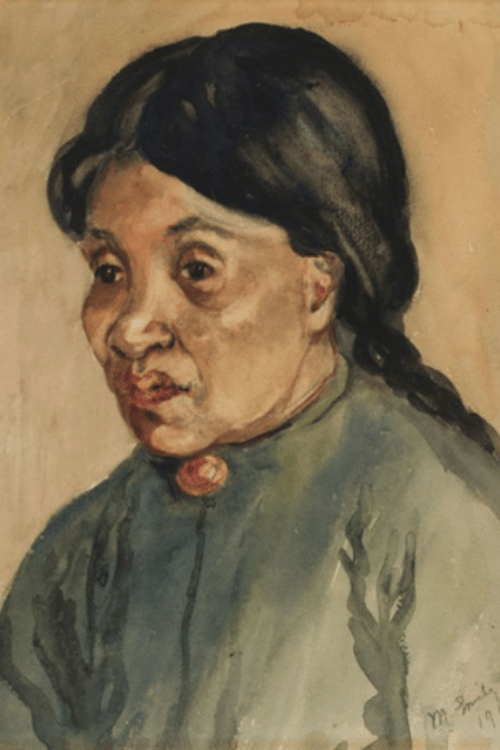
Carr’s longest and most intimate relationship with an Indigenous person was her friendship with Sophie Frank (Sewinchelwet), a skilled Squamish cedar root basket maker she met in Vancouver1906 when Sophie docked on her door selling baskets. She would travel from Eslhá7an, or the Mission Reserve, into the city every day with her children to try and sell or barter her baskets. A year older than Carr, Sophie became her confidante, and remained part of her life for more than three decades. Their relationship was deeply personal and emotionally significant to Carr; she often referred to Sophie as her closest friend and relied on her for emotional grounding during periods of isolation, ill health, and artistic doubt.
Over the course of her life which ended in 1938, Sophie buried twenty-one children who did not survive to adulthood. Through Sophie, Carr gained sustained, everyday exposure to Indigenous knowledge, humour, and resilience—an experience very different from her shorter visits to coastal villages.
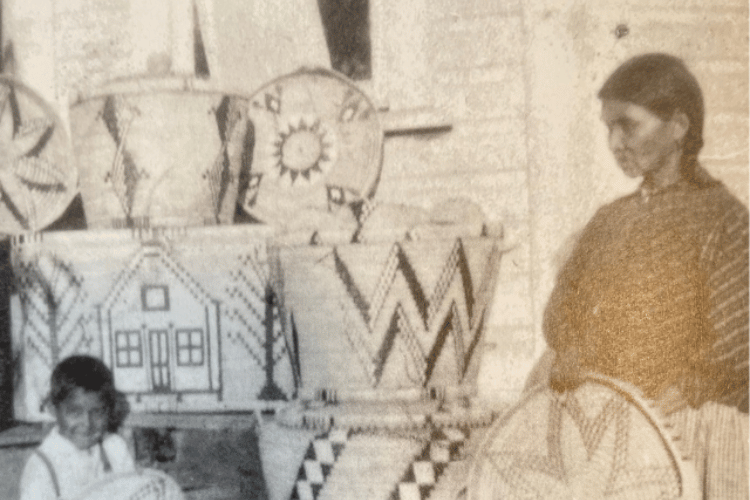
At the same time, their relationship was shaped by the inequalities of race, class, and colonial society. Sophie lived and on a reserve in North Vancouver. In books like The Book of Small and Hundreds and Thousands, Carr depicts Sophie with affection, admiration, and at times frustration, often casting her as morally steady, spiritually grounded, and quietly strong. The longevity and depth of their bond complicates any simple reading of Carr’s engagement with Indigenous people: Sophie Frank was not a distant “subject” of observation but a constant presence, shaping Carr’s understanding of relationship, care, and cultural difference over the course of thirty-three years.
The two were close friends, and Carr even dedicated her book Klee Wyck, to Frank, featuring her portrait as the frontispiece. She kept the watercolour portrait, believed to have been painted between1907 and 1908, in her home for her entire life.
Artistic Engagement: Documentation, Admiration, and Limits
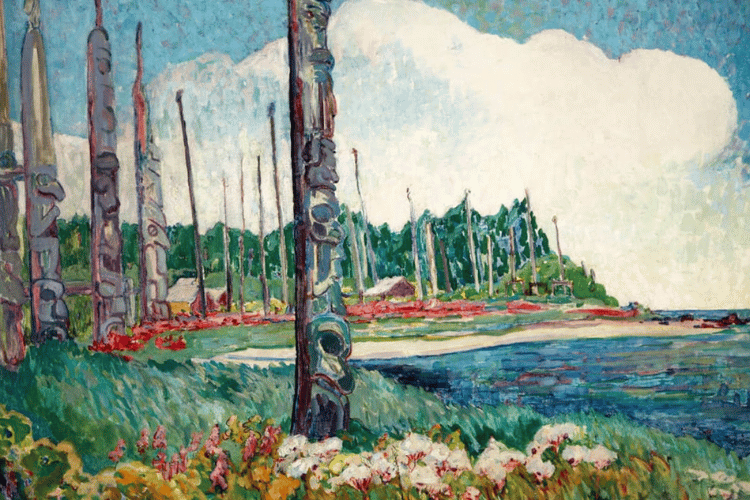
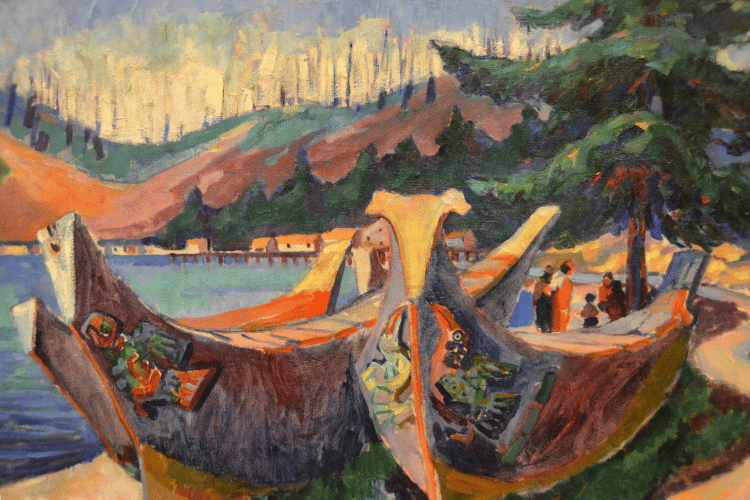
Carr made the first of two trips to First Nations villages and old village sites in Haida Gwaii in 1912, during which she produced a number of watercolours and oils on board. She used her field studies as source material for major paintings, and the goal of these works was to capture the forms of the poles and, to a lesser degree, the circumstances of their placement in the landscape or village.
Hes second trip to Haida Gwaii occurred in 1928, when she was fifty-seven years old. These later watercolours are different in execution—more forceful and more fully realized dimensionally—but have links to the works of 1912. Carr’s failing health prevented additional trips to Haida Gwaii, but she returned to the totemic subjects toward the end of her career, when she produced two major canvases based on the 1912 sketches made in Skidegate.
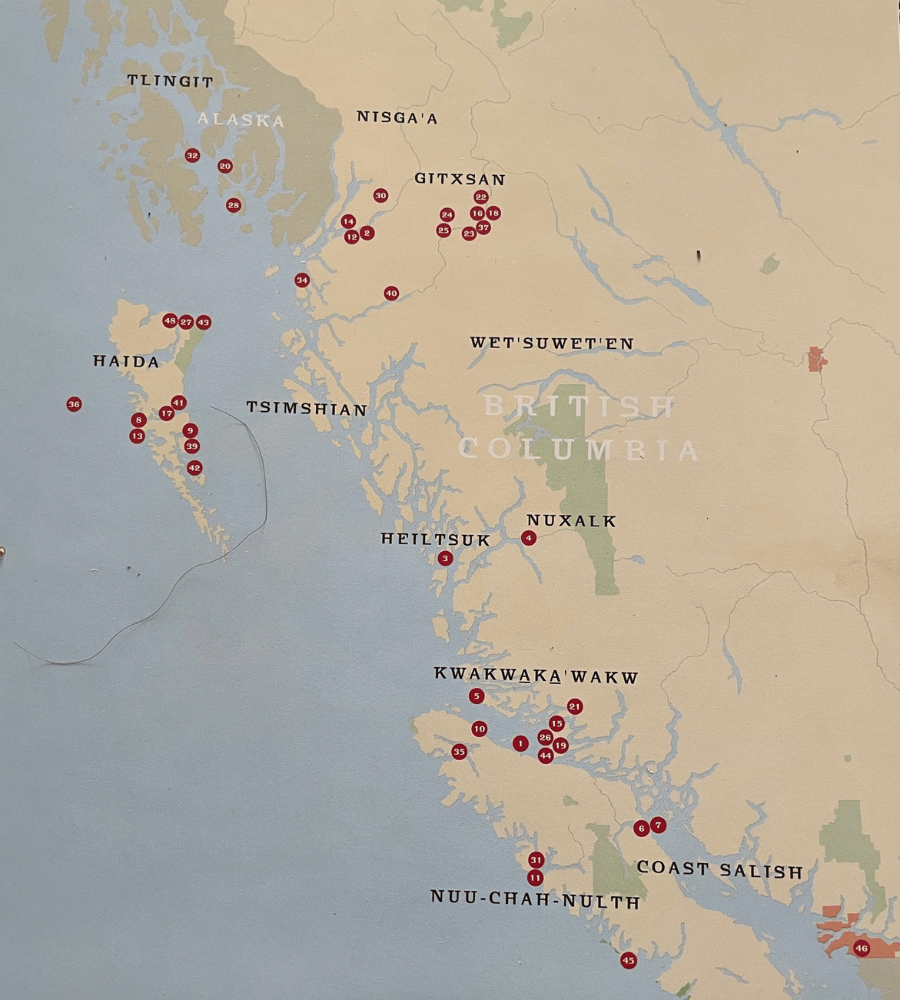
Her numerous sketching trips to Indigenous villages noted above from 1899 to 1933—often remote, coastal communities accessible only by boat—were driven by a sense of urgency. She wanted to record what she believed was disappearing: monumental poles, longhouses, and village sites already succumbing to rot, neglect, or deliberate destruction under colonial rule.
Carr’s paintings of Indigenous villages and totem poles remain among her most recognizable works. Unlike many contemporaries, she did not treat Indigenous art as mere ethnographic curiosity. She responded to it as living, spiritual, and profoundly artistic. She spoke often of the power of Indigenous carving and its integration with landscape, architecture, and belief.
Carr’s paintings of Indigenous villages and totem poles remain among her most recognizable works. Unlike many contemporaries, she did not treat Indigenous art as mere ethnographic curiosity. She responded to it as living, spiritual, and profoundly artistic. She spoke often of the power of Indigenous carving and its integration with landscape, architecture, and belief.
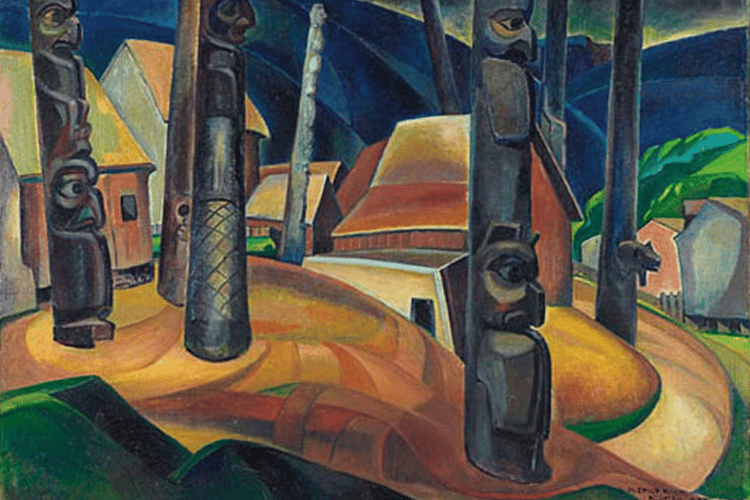
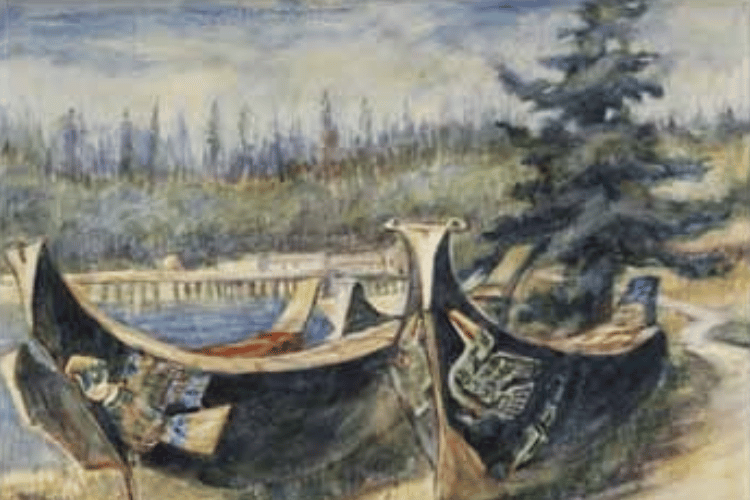
Yet Carr was not an anthropologist, nor was she an Indigenous insider. Her work inevitably reflects the asymmetries of power between herself and the people she painted. She often painted villages devoid of human figures, reinforcing the colonial myth of absence and abandonment—even when communities were very much alive, though displaced or constrained.
Still, Carr’s engagement was more sustained and personal than that of many settler artists. She returned repeatedly to certain regions, formed friendships, learned stories, and listened. Her work exists in the uneasy space between appreciation and appropriation, between preservation and projection.
“Klee Wyck”: A Name, a Relationship, a Perspective
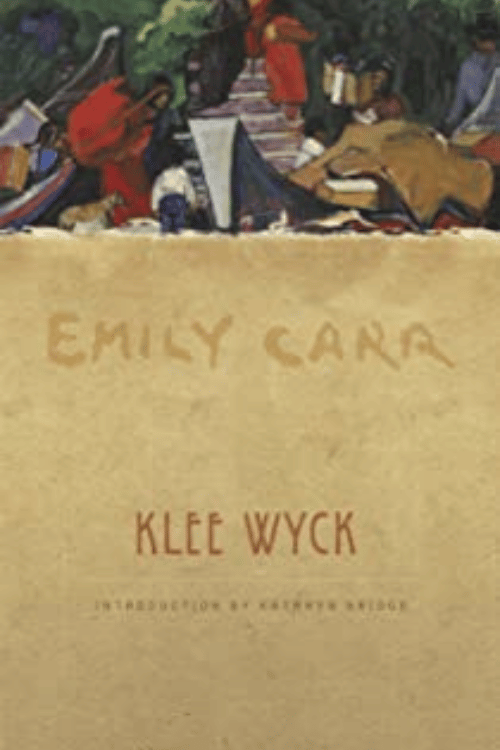
The title Klee Wyck comes from a nickname Carr was given while staying in a Nuu-chah-nulth community at Ucluelet in 1899. Commonly translated as “Laughing One” or “Smiling One,” the name reflected her warmth, humour, and openness during her time there. It was a mark of affection, and Carr treasured it. She used the name Klee Wyck on much of her pottery.
Published when Carr was in her late sixties, Klee Wyck is a collection of short prose sketches recounting her experiences in Indigenous communities along the coast. The book is not a memoir in the conventional sense, nor is it a novel. Instead, it reads like a series of intimate vignettes—observations, encounters, and remembered conversations shaped by decades of reflection.
Carr’s prose is vivid, sensory, and deeply personal. She writes of rain-soaked forests, the smell of smoke in longhouses, the rhythms of coastal life, and moments of connection across cultural divides. Her respect for Indigenous individuals is often palpable, particularly in her portrayals of elders, artists, and women.
Humanizing Indigenous Lives—Within a Colonial Frame
One of the most significant aspects of Klee Wyck is its insistence on Indigenous humanity at a time when Indigenous people were routinely dehumanized in popular discourse. Carr writes of friendships, humour, grief, generosity, and dignity. She does not romanticize Indigenous people as noble abstractions; she describes them as individuals with complex lives.
At the same time, Klee Wyck is shaped by Carr’s position as a settler woman of her era. She frequently frames Indigenous cultures as fragile, endangered, and inevitably passing away. This “salvage” mentality—common among artists and ethnographers of the time—both motivated her work and limited her understanding.
Carr rarely addresses the structural causes of cultural disruption: colonial policy, government violence, or economic dispossession. Instead, loss is often presented as a tragic but almost natural process. For modern readers, this absence is striking and instructive. Then again, Carr was an artist and could not be expected to act as a politician. She was as strong advocate for the arts as anyone could ever be, especially for the art and artists of the Pacific North West Coast.
The 1941 Publication and Its Reception
Klee Wyck was published in 1941 and won the Governor General’s Award for Non-Fiction, a remarkable achievement for a woman artist who had spent much of her life on the margins of recognition. The book brought Carr a new audience, many of whom had never encountered her paintings. She became more famous as a writer than she was as a painter at that time.
The timing of its publication was significant. As Canada sought cultural self-definition during the Second World War, Carr’s writing offered a vision of the West Coast that felt distinctly Canadian—rooted in landscape, history, and Indigenous presence. Yet this recognition came late, and Carr would die only four years later.
The success of Klee Wyck cemented Carr’s reputation not only as a painter but as a writer of rare voice and sensitivity. It also helped shape how generations of Canadians came to understand Indigenous cultures—sometimes thoughtfully, sometimes problematically.
Success Came at the Cost of Carr’s Own Voice
Despite its early success, Klee Wyck did not stay in its original form for long. In 1951, Clarke, Irwin & Company issued an “educational edition” that excised more than 2,300 words from Carr’s text—removing passages that critically depicted European missionaries, church influence, and other aspects of colonial authority, as well as accounts like that of a mixed-race family and Indigenous burial practices.
These cuts reflected the more conservative cultural climate of the mid-20th century and shaped readers’ understanding of Carr’s voice for decades, because this abridged version became the basis for most subsequent prints. It wasn’t until Douglas & McIntyre’s 2004/2003 restored edition, with scholarly introduction by Kathryn Bridge, that Carr’s original language and perspectives were fully reinstated, allowing modern audiences to read Klee Wyck as Carr intended.
Reading Klee Wyck Today
Today, Klee Wyck demands careful, contextual reading. It is neither a simple celebration nor something to be dismissed outright. Instead, it offers insight into how one settler artist grappled, imperfectly, with the Indigenous world around her and how sometimes personal, political and artistic perspectives collide.
Indigenous scholars and artists have rightly or wrongly raised questions about appropriation, representation, and authority in Carr’s work. At the same time, many acknowledge her genuine respect and her role in preserving visual records of village sites that were later destroyed or radically altered.
In Klee Wyck, Emily Carr does more than tell stories—she opens a door. Through these vivid, respectful sketches of Indigenous villages and the people she encountered, Carr invites readers into a world that was already under threat of erasure, and asks them to truly see it. The book became a turning point in the rediscovery of Carr herself, revealing her not only as a painter but as a writer deeply attuned to place, culture, and spirit.
At the same time, Klee Wyck stands as an early, if imperfect, acknowledgment of the profound artistry, sophistication, and living presence of Indigenous cultures on Canada’s Northwest Coast. Its lasting importance lies in this dual legacy: it helped bring Emily Carr into fuller view, and it helped generations of readers recognize the creative power and cultural depth of the Indigenous peoples and villages that so deeply shaped her vision.