Emily Carr, Billie and the Birth of a Kennel
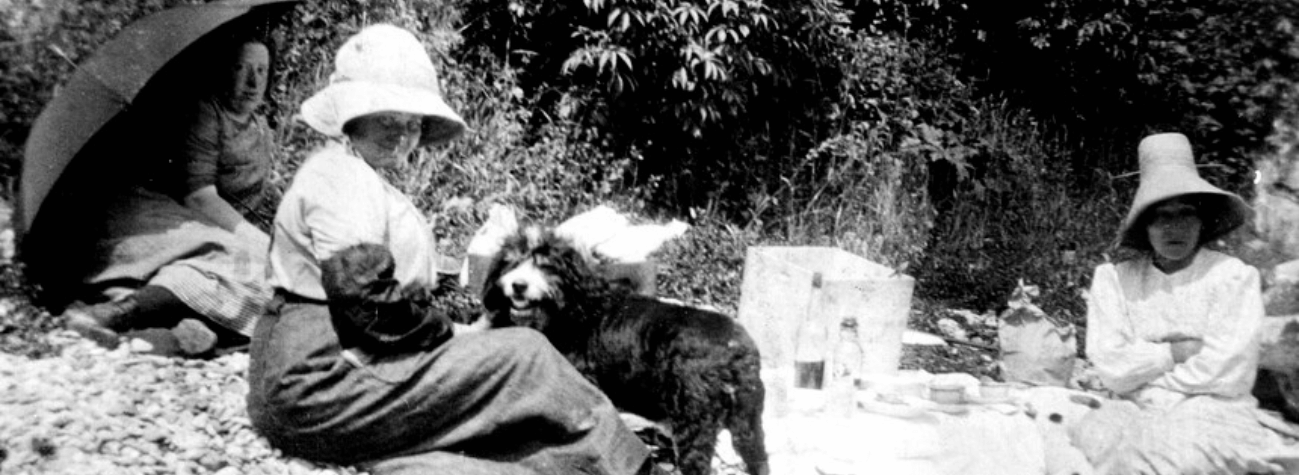
Billie arrived in Emily Carr’s life around 1906–1907. He was a half-bred Old English Sheepdog, given to her as a gift when he was about three years old. Though Carr initially refused him, Billie made his choice clear—he stayed. She later wrote, “He magnificently ignored my refusal and simply settled in.” Years later, after his death, Carr opened a dog breeding and boarding kennel in her backyard at the House of All Sorts.
Carr began her kennel by breeding purebred Old English Sheepdogs, a rare breed in Canada at the time. She developed a deep fondness for these dogs, often referring to them with great affection in her writings. She also boarded other people’s dogs to earn additional income. Her involvement with dogs was substantial and lasted for several years—roughly from the late 1920s through the early 1930s, before her art gained renewed recognition.
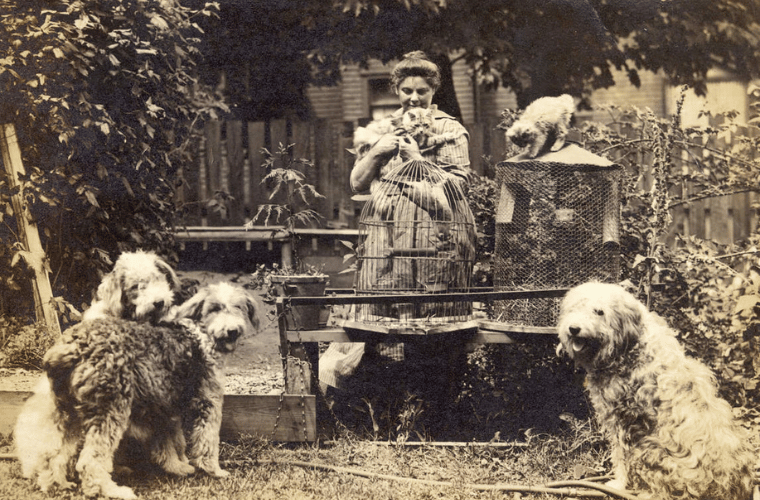
At first, Billie was unruly, known to bite and cause trouble. But Carr tamed him with a steady mix of affection and discipline. When he killed a chicken early on, she washed him clean and corrected him. The incident forged a powerful bond between them, and from then on, he was devoted.
Billie traveled with Carr, including on her significant 1912 trip to Haida Gwaii (pictured above). He became her shadow—faithful, alert, intelligent. Though he couldn’t be shown in contests due to his mixed breed, she always said he carried the very best traits of the Bobtail: “Loyalty, lovableness, wisdom, courage, and kindness. His presence filled her home and life for thirteen years.
When Billie died at age sixteen, Carr was devastated. His absence left such a void that she soon turned her grief into action, founding a kennel and breeding Sheepdogs in tribute to him. She wrote and sketched him with affection, even creating a whimsical calendar filled with illustrated scenes from his imagined perspective.
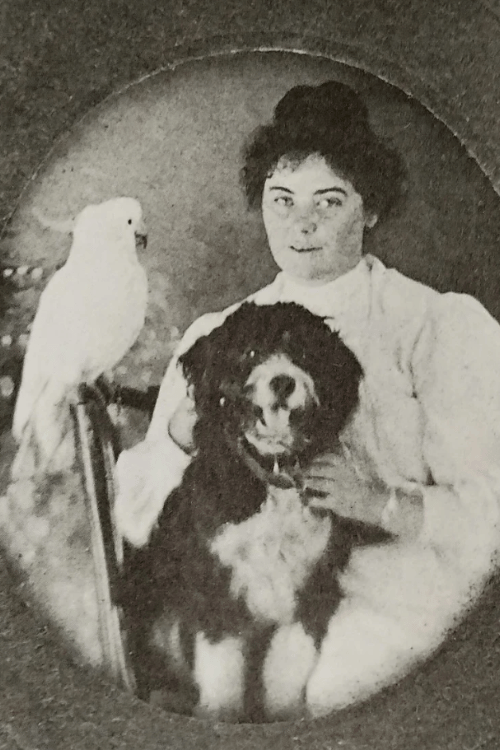
When Billie died at age sixteen, Carr was devastated. His absence left such a void that she soon turned her grief into action, founding a kennel and breeding Sheepdogs in tribute to him. She wrote and sketched him with affection, even creating a whimsical calendar filled with illustrated scenes from his perspective. Billie would later be immortalized in the Emily Carr Statue on the NW corner of Belleville and Government Street in front of the Empress Hotel in Victoria.
Years later, after Carr could no longer keep up with the energy demands and expenses of large dogs, she shifted to Belgian Griffons, small toy dogs with scruffy faces and big personalities. Among them, Ginger Pop stood out.
Where here English Sheepdog Billie had been noble and steady, Ginger Pop, Emily Carr’s a Belgian Griffon, was unpredictable and feisty. Yet both reflected parts of Emily’s own spirit—independent, loyal, a little wild, and deeply loving.
Ginger Pop lived with Carr during the House of All Sorts era and, like Billie, appears in her autobiographical writings, where she describes the dog as “a little imp” and “quick as ginger.” She describes Ginger Pop as a comic character, a source of laughter and companionship during a physically and emotionally trying time. The Griffons, and Ginger Pop in particular, didn’t just replace the sheepdogs—they brought Carr a more manageable kind of joy. Smaller dogs meant less food, fewer messes, and fewer demands on her energy. But the emotional reward remained just as rich.
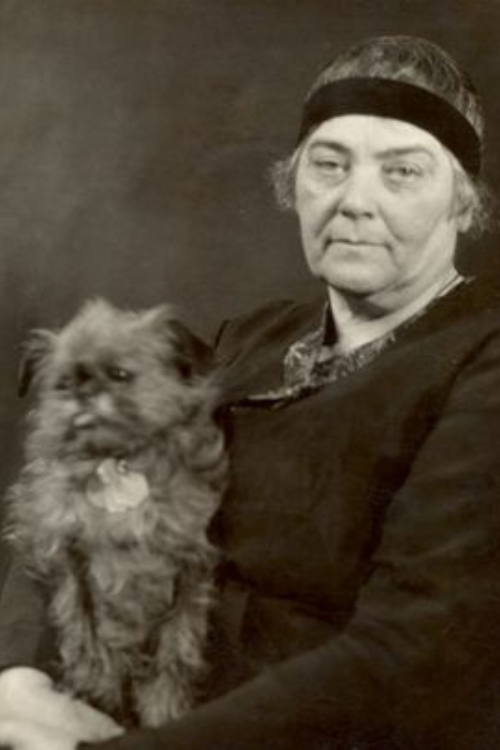
Though Ginger Pop and the Griffons that followed could never replace Billie, they brought Carr a different kind of companionship—lighter, more manageable, but just as affectionate. These dogs became her housemates, her muses, and her sanity as she navigated the difficulties of age, illness, and artistic rejection.
The House of All Sorts may have housed dozens of tenants and hundreds of dogs, but these two—Billie and Ginger Pop—left the deepest marks. They are woven into the very fabric of Carr’s work and legacy: not just animals, but companions, muses, and reflections of her own untamed spirit.
Emily Carr’s journey with dogs began in grief and grew into necessity—but through it all, her connection to animals remained profoundly emotional. Billie, the noble sheepdog, had walked beside her through youth and artistic emergence. Ginger Pop, the scrappy Griffon, curled beside her as she wrote her way into literary fame.
This period of her life is vividly described in her 1944 book The House of All Sorts, where she humorously and poignantly recounts the chaos and joys of running a boarding kennel, along with stories of tenants and neighbours. While it was never her primary passion, the dog business played an essential role in supporting Carr during a financially difficult phase and gave her material for her later autobiographical writings.