Emily Carr and Walt Whitman: Kindred Spirits in Nature and Spirit
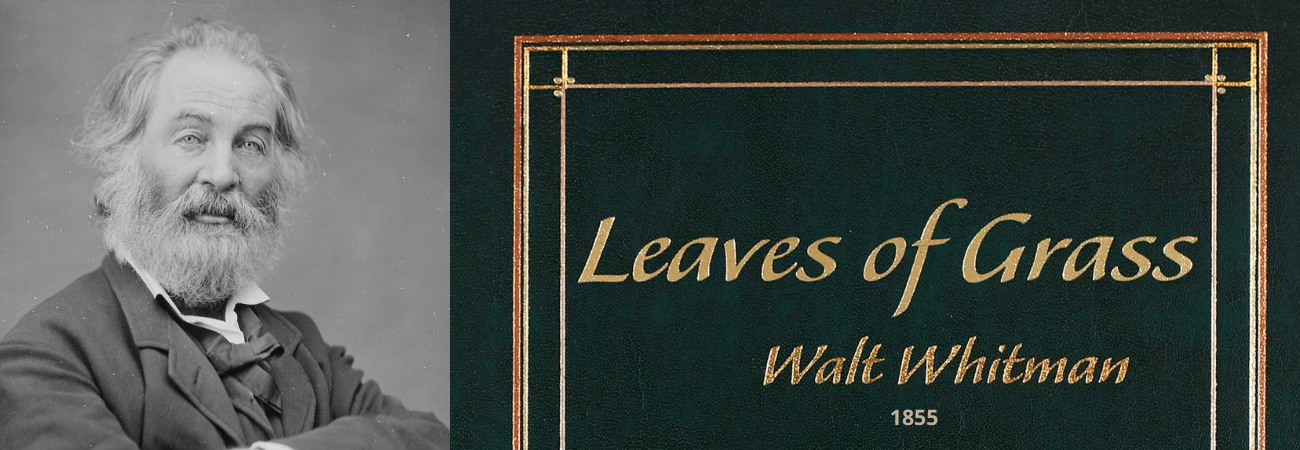
Emily Carr’s lifelong search for a language big enough to hold the forests and skies of the West Coast found an important companion in the poetry of Walt Whitman. Whitman’s expansive voice — bodily, earthy, mystical, and democratic — offered Carr a model for speaking of nature as alive and ensouled rather than merely picturesque. This post explores how Whitman’s writing intersected with Carr’s artistic and spiritual development: how it supported her independence, deepened her sense of the sacred in nature, and helped her fuse painting and writing into a single expressive calling.
For Carr, Whitman was a liberating permission-giver. As a woman artist in a colonial, Victorian society suspicious of artistic unconventionality, she often felt judged, lonely, and out of step. Whitman’s celebration of the outsider and his insistence that each person must trust the authority of their own experience resonated deeply. His exuberant “I” — unapologetic, searching, and self-affirming — helped legitimize Carr’s own unruly path: her rejection of polite subjects, her willingness to live simply, and her commitment to an inner calling that few around her fully understood. Whitman’s poetry helped Carr feel less isolated in her intensity.
Whitman also shaped Carr’s spiritual outlook. His sense that the divine pulses through the natural world aligned with her own wordless reverence for trees, sky, ravens, and wind. Rather than a distant or church-bound deity, Whitman offered a spirituality grounded in everyday life and in the body’s encounter with the world. Carr’s journals and later writings echo this: she writes of “God in the woods,” of trees as “people,” of painting as a form of prayer. Whitman didn’t give her these intuitions, but he gave them a language, and his cosmic inclusiveness supported her move from conventional religion toward a personal, nature-centered faith.
In her prose — especially in Klee Wyck, The Book of Small, and Hundreds and Thousands — we can feel Whitman’s influence in cadence and attitude as much as in idea. Carr’s sentences stretch, list, chant, and pile images the way Whitman’s lines do; her writing often moves associatively rather than formally, driven by felt rhythm and perception. She writes not as a distant observer but as a participant in the life she describes. This is Whitmanesque: the writer immersed, porous, open to experience, refusing sharp boundaries between self and world.
Whitman’s emphasis on unity — the interweaving of all beings in a great, living whole — paralleled Carr’s mature painting. In her late forest canvases, trunks, branches, wind, and light swirl into large, breathing forms. These works do not simply depict trees; they suggest energy, process, and connectedness. Whitman’s declaration that “the leaf of grass is no less than the journey-work of the stars” finds a visual counterpart in Carr’s vision of cedar and sky as manifestations of the same living force. Through Whitman, Carr found encouragement to trust such visionary seeing, and to let both her words and her brushstrokes speak from that deep sense of oneness.
Whitman & Carr: Paired Quotes
1. On the Spirit / Presence in Nature
Whitman: “I believe in the flesh and the appetites, seeing, hearing, feeling, Body and soul, I do not separate them.” — Leaves of Grass
Carr: “I felt the Great Spirit behind me—blowing through the trees, reaching out to me.” — Klee Wyck
Comment: Both emphasize an inseparable connection between self and the natural world, a holistic perception of life.
2. On Individuality and Self-Expression
Whitman: “I celebrate myself, and sing myself, For every atom belonging to me as good belongs to you.” — Leaves of Grass
Carr: “I would rather be ashes than dust! I would rather my spark should burn out in a brilliant blaze than it should be stifled by dry-rot.” — The Book of Small
Comment: Both assert the importance of living fully and authentically, embracing one’s unique existence.
3. On the Mystery and Voice of Nature
Whitman: “I am large, I contain multitudes.” — Song of Myself
Carr: “I wanted to know the forest that had been there for a thousand years, to hear it breathe.” — Klee Wyck
Comment: Whitman’s expansive self mirrors Carr’s desire to immerse herself in the life and history of the forest.
4. On the Living Energy Around Us
Whitman: “I dote on myself, there is that lot of me and all so luscious, Each moment and whatever happens thrills me with joy.” — Leaves of Grass
Carr: “The trees are lifting their arms in blessing, the branches shaking out the music of the wind.” — Klee Wyck
Comment: Both celebrate vitality—Whitman through joyful consciousness, Carr through the sentient energy of nature.
5. On the Interconnectedness of Life
Whitman: “I believe in you my soul, the other I am must not abase itself to you, And you must not be abased to the other.” — Leaves of Grass
Carr: “I am living among trees and the trees speak to me, they tell me their lives.” — The House of All Sorts
Comment: The dialogue between self and other is present in both; for Whitman, it’s an internal, spiritual interplay, while for Carr, it’s a dialogue with the living world.
Whitman’s Influence on Emily Carr’s Paintings
While Whitman’s influence is more about attitude and vision than direct illustration, several of Emily Carr’s mature works also strongly echo his ideas of unity, vitality, and the sacredness of nature. Three especially evocative examples are:
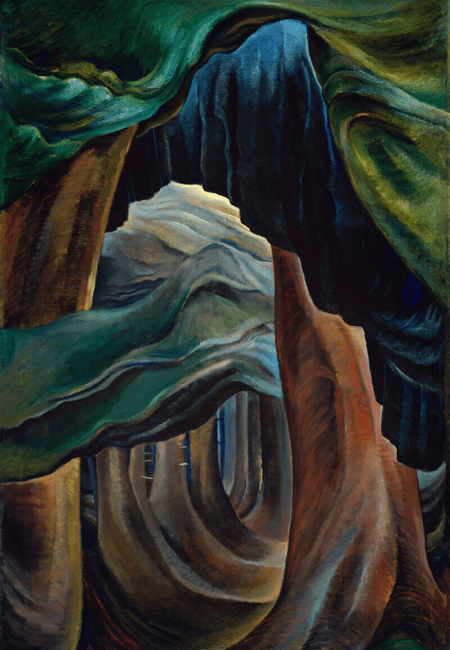
1. Forest, British Columbia (1931–32)
This painting dissolves individual tree forms into sweeping, rhythmic movements of trunk and sky. The forest feels like a single, breathing organism rather than a collection of separate parts — very much in line with Whitman’s sense that everything participates in one great life. The viewer is not outside the forest looking in, but inside its energy field, immersed the way Whitman’s speaker immerses himself in the natural world.
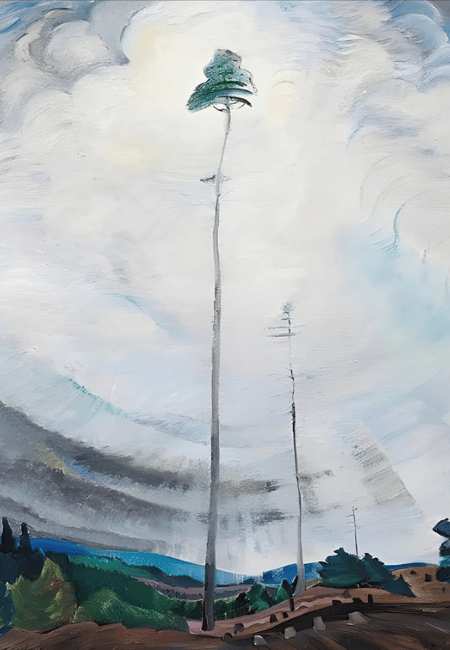
2. Scorned as Timber, Beloved of the Sky (1935)
The solitary, storm-battered tree standing defiantly against the sky is almost a visual manifesto of Whitmanesque individuality. It evokes the dignity of the outcast and the resilience of the “single self” that refuses conformity. At the same time, the upward surge of the form links the earthly and the cosmic — Whitman’s body-soul union translated into paint. The painting affirms worth outside social approval, a theme both Carr and Whitman cherished.
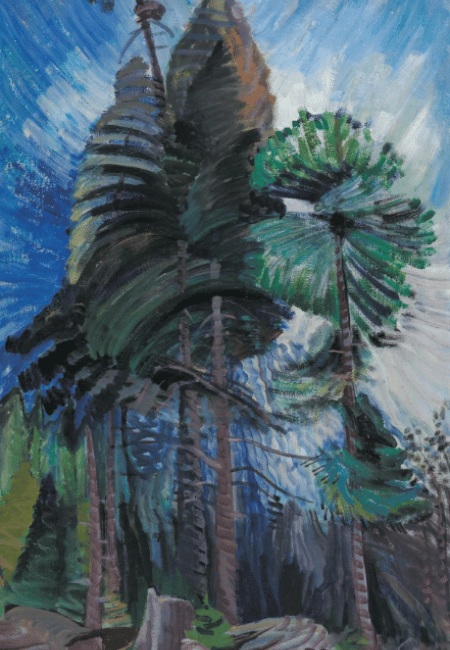
3. Fir Tree and Sky (1935)
In this painting, the upward thrust of the trees and the open sky above suggest both individuality and interconnectedness — the singular vertical forms rooted in earth yet reaching into light. This mirrors Whitman’s poetic vision of the self as both unique and part of a vast, living cosmos, where the divine is encountered in the natural world rather than apart from it.
These three paintings share Whitman’s core intuitions: nature as sacred, individuality as heroic, and the living world as one vast, interconnected presence.
Walt Whitman and Emily Carr, though separated by continent and medium, share a remarkable vision of life and nature. Whitman writes, ‘I believe in the flesh and the appetites, seeing, hearing, feeling, Body and soul, I do not separate them,’ and Carr echoes this when she recalls, ‘I felt the Great Spirit behind me—blowing through the trees, reaching out to me.’ Both see the world as alive, inseparable from our own being.
Whitman celebrates individuality: ‘I celebrate myself, and sing myself, For every atom belonging to me as good belongs to you.’ Carr, too, asserts the urgency of living fully: ‘I would rather be ashes than dust! I would rather my spark should burn out in a brilliant blaze than it should be stifled by dry-rot.’ Their work reminds us to embrace our unique existence boldly.
Whitman says, ‘I am large, I contain multitudes,’ while Carr seeks the deep, timeless life of the forest: ‘I wanted to know the forest that had been there for a thousand years, to hear it breathe.’ Both express awe at the vastness of life—Whitman inwardly, Carr outwardly.
And where Whitman delights in the vitality of the present—‘Each moment and whatever happens thrills me with joy’—Carr sees that same energy in the world around her: ‘The trees are lifting their arms in blessing, the branches shaking out the music of the wind.’
Finally, Whitman explores the dialogue of self: ‘I believe in you my soul, the other I am must not abase itself to you, And you must not be abased to the other,’ and Carr experiences a similar communion with nature: ‘I am living among trees and the trees speak to me, they tell me their lives.’
Both Whitman and Carr invite us to recognize the sacredness of life, the energy in the world, and our deep connection to it—through the self, through nature, and through the courage to feel and to create.”
Here’s more background on Walt Whitman if you want to refresh your knowledge: https://www.worldhistory.org/Walt_Whitman/