Emily Carr and Edythe Hembroff: A Friendship That Shaped a Legacy
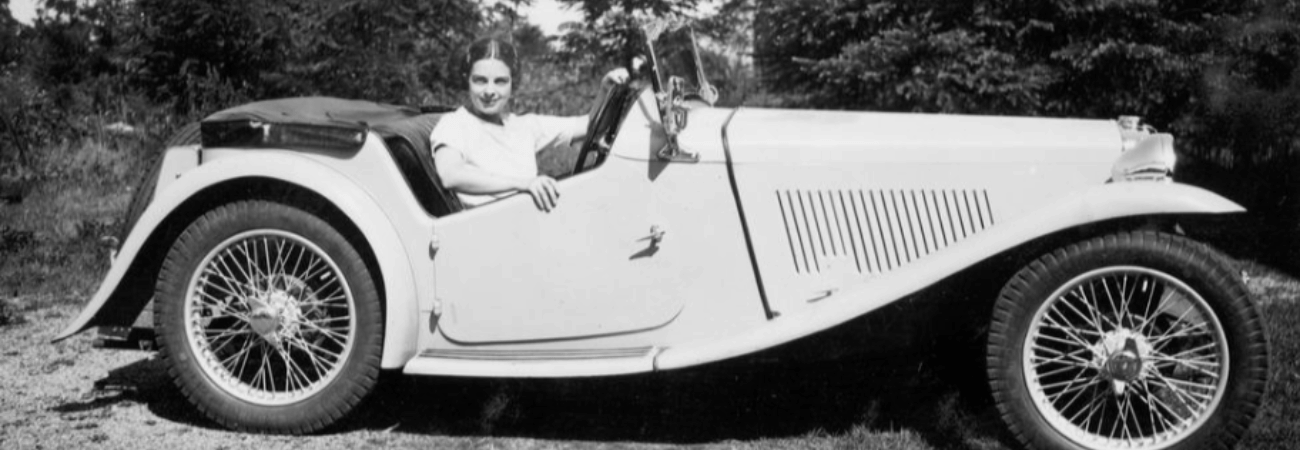
When Emily Carr met the young artist Edythe Hembroff in 1930, Carr was nearing the end of her painting years. Her health was fragile and money scarce, yet her artistic vision remained fierce and some of her best artwork was yet to come. In Edythe, she found a kindred spirit: intelligent, observant, and deeply sympathetic to her struggles. Their friendship, part mentorship and part creative partnership, became one of the most meaningful of Emily’s later years — and one that helped shape how she would be remembered.
A Young Artist Seeks Out Her Mentor
Edythe Hembroff was born in Moose Jaw, Saskatchewan in 1906 and raised in Victoria by a prosperous family, was the eldest of three daughters. She attended Victoria High School where she was a classmate of Max Maynard. She was nearly forty years younger than Emily Carr when they met in 1930. Like her, she had studied art in San Francisco, London and Paris, like many women artists of her generation, she also faced limited recognition in British Columbia’s small and male-dominated art world that rejected ‘modern’ painting.
When Hembroff returned to Victoria in 1930, an announcement on the society page about a gown she had hand-painted led to a phone call and a garden tea party invitation from Carr. Now at 58, was becoming recognized, including by the Group of Seven, while Edythe at 23, was just beginning her career.
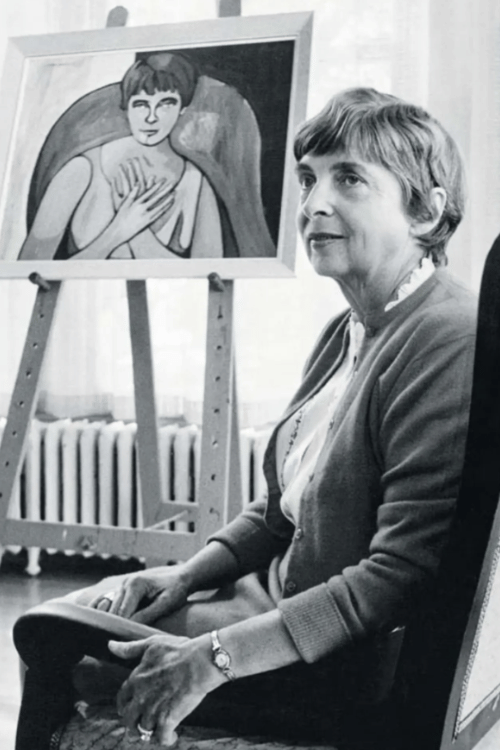
Carr, who could be wary of strangers, was intrigued by Hembroff’s sincerity. From their first encounters, it became obvious that Edythe was no casual admirer. She took painting seriously, and more importantly, she respected Carr’s independence and intensity. Soon she was invited into Emily’s daily orbit — one of only a few people Emily allowed into her private life at the House of All Sorts, her boarding house/studio in James Bay and to bunk together in rugged circumstances during three lengthy sketching trips that produced some of their best work.
Hembroff first exhibited with the Island Arts and Crafts Society (IACS) in 1930. Her painting “Nu”, an oil-on canvas shown at a Paris exhibition, also in 1930, won a major award at the Art Institute of Seattle later the same year. ”Nu”was one of her four paintings displayed in the “Modern Room,” organized by Max Maynard as a component of the annual exhibition of the IACS in 1932, with the intent of introducing modern trends in art to the traditionist art scene in Victoria. Other contributors to the “Modern Room” included Jack Shadbolt, Ina Uhthoff, Max Maynard and Emily Carr.
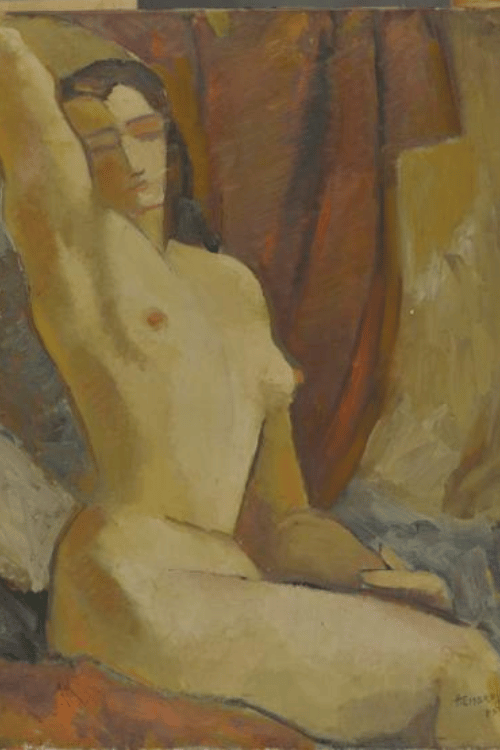
‘Nu” was one of her four paintings displayed in the “Modern Room,” organized by Max Maynard as a component of the annual exhibition of the IACS in 1932, with the intent of introducing modern trends in art to the traditionist art scene in Victoria. Other contributors to the “Modern Room” included Jack Shadbolt, Ina Uhthoff, Max Maynard and Emily Carr. Pictured here, Nude (1930).
Sketching Trips Before and After The Elephant
In May 1931, Carr invited Hembroff on their first of three lengthy sketching trips, this one a three week stay at Edythe’s family summer cottage in Cordova Bay, their second to Goldstream Flats in September. This time they rented an unused garage for $5 a month, 12 miles from Victoria on the Old Island Highway. Though short on comfort and a mile’s walk to good sketching sites hauling gear and accompanied by pets, the trip was productive. In May 1932, their last lengthy sketching trip together was spent in Mrs. Vickers two room tumbledown hunting lodge located in the Sooke hills, 24 miles from Victoria.. There they had to haul water and chop wood.
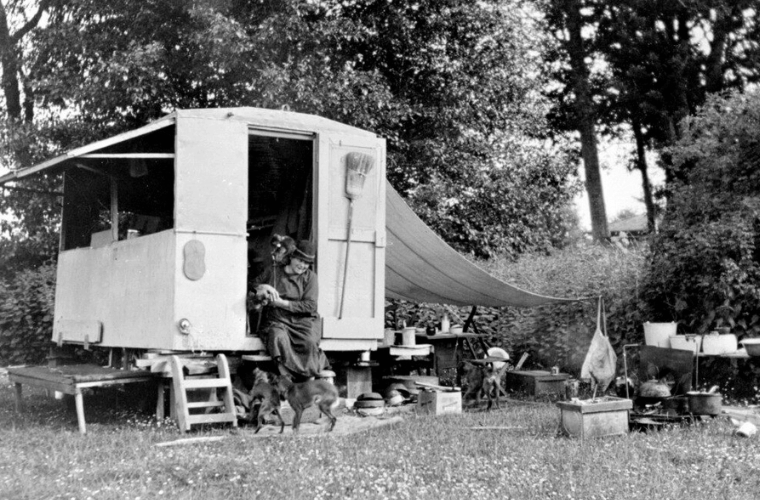
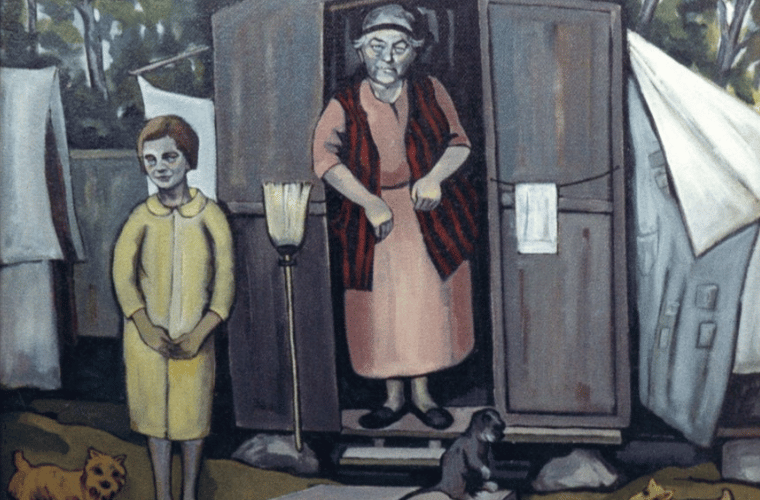
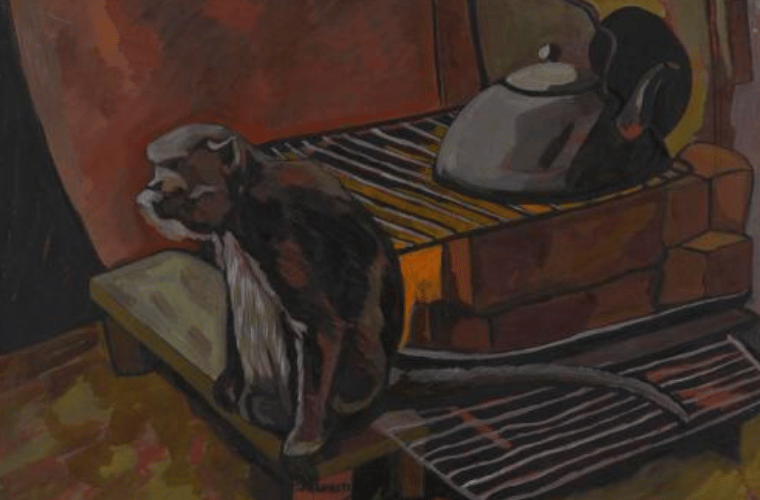
After Carr purchased the Elephant, her travelling painting caravan in 1933, they were limited to daily sketching sessions as the caravan could not accommodate another person. Hembroff would drive out to where the Elephant was parked and they would spend the entire day painting, Carr in her fervent shorthand of movement and form, Edythe quietly sketching nearby. Hembroff served as a helper, companion, critic and occasional chauffeur. Carr often sketched until she was exhausted, then rested while Hembroff made tea or cared for her dogs, other assorted animals and her pet monkey, Woo.
Edythe as Emily’s Publicist
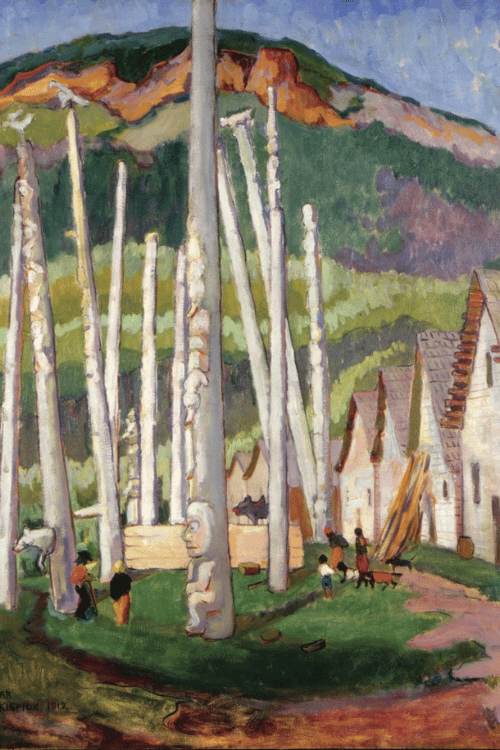
Hembroff and her first husband Frederick Brand, a mathematics professor at UBC, already a fan of Carr’s paintings both vigorously promoted Carr’s work by organizing exhibitions on campus and instigating the acquisition of Kispiox Village 1912 by the provincial government in 1933 for $166, the first Carr artwork purchased by the provincial government.
Frederick Brand had come to know Emily having spent a summer living with his sister in her House of All Sorts during his studies in Princeton. His connection to Emily would lead to Sedgewick promoting her first book of short stories, Klee Wyck (1941), as a CBC radio broadcast the English professor gave of some of her stories a broadcast that would be continued by Ira Dilworth, the book’s editor, and at that time the director of CBC Radio’s B.C. (Dilworth would go on to retire as the Director of CBC’s English network in 1958.)
In 1942, Brand enlisted and was posted to RCAF headquarters in Ottawa where Hembroff-began work as an examiner for the German PoW Censorship Section, Department of National War Services. Her supervisor was Dr. Julius Schleicher, a Pole whom she eventually married after her divorce from Brand. During her 20 years in Ottawa she never touched a paintbrush. She continued to correspond with Emily until her death in March 1945. She continued to correspond with Carr until her friend’s death in March 1945.
After Emily Carr’s Death and Beyond
When Emily Carr died, Hembroff was devastated. For nearly a decade she had been part of Emily’s intimate circle — the listener, the helper, the fellow artist who had witnessed Emily’s late flowering. Their friendship was so close, Carr sometimes signed her letters to her as “Mom.” Her biographer, Christina Johnson Dean, notes that she trusted her Edythe so much, she allowed her to sign paintings on her behalf. After the funeral, Hembroff writes, “a great silence had fallen over the Island.”
After returning to Victoria, with her second husband Julius in 1961, Hembroff-Schleicher wrote her first book on Emily, entitled “M.E: A Portrayal of Emily Carr,”, published in 1969. It was also the first biography published on Emily. Unlike other more scholarly publications that would follow by Maria Tippett’s, Emily Carr: A Biography (1979), Doris Shadbolt’s, The Art of Emily Carr (1979). Paula Blanchard’s The Life of Emily Carr (1987), and Susan Crean’s The Laughing One, A Journey to Emily Carr (2001), Hembroff’s earlier book is written in the first person, reading more like a memoir than a traditional biography — which makes it all the more engaging. Like Carr herself, Hembroff wrote the two books decades after the events she describes. The cover of her first book is one of two portraits of Carr painted by Hembroff.
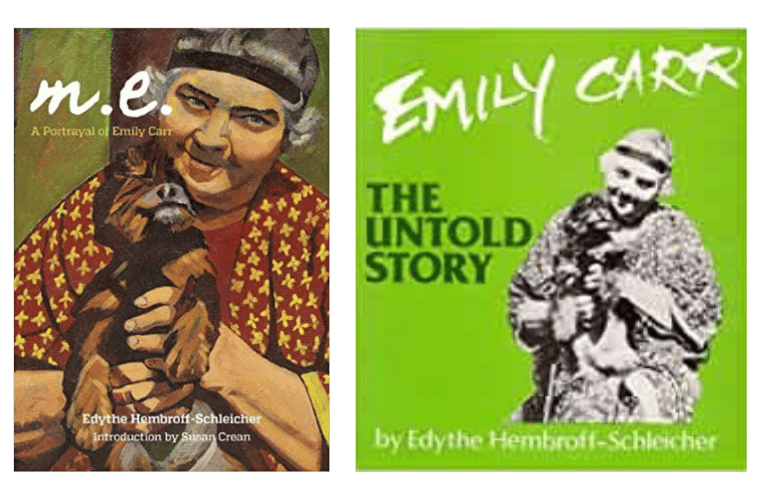
In 1974, Hembroff was appointed by the provincial government as a special consultant on Emily Carr. With the support of a Canada Council grant and other government funding, she researched Carr’s life and followed her earlier biography with a sequel, “Emily Carr, the Untold Story” in 1978. Intended to “set the record straight”, Hembroff attempts to correct errors reported on Carr’s life and career that had been published, sometimes made by Emily herself. She also writes her second book from a fly on the wall point of view.
In 1981 Hembroff organized a partial re-creation of Max Maynard’s 1932 “Modern Room” at the Emily Carr Gallery on Wharf Street, Her catalogue, written for this event, is now a collector’s item. Over the next two decades, she became one of Emily’s most devoted interpreters, determined to record the private side of a woman who had lived with such fierce individuality. Her two biographies offer vivid, first-hand, no holds barred portraits of Emily’s daily life — her humour, her stubbornness, her moments of despair and joy.
These are not academic biographies but intimate recollections, filled with the warmth and insight of a friend who had shared the road, the campfire, and the long silences of creative work. Through them, Hembroff helped humanize Carr, showing her not just as an icon of Canadian art but as a complex woman — funny, lonely, fiercely honest, and forever searching. Hembroff’s first book includes 12 letters sent by Carr to Hembroff in the late 1930s, sometimes signing her letters “Mom.” In her second book, she writes that she was profoundly affected by Emily’s philosophy of painting and her feeling for trees, nature, animals, and religion.”
Edythe Hembroff-Schleicher lived long enough to see Emily Carr’s reputation soar. When others mythologized Carr as a lonely mystic of the forest, Edythe reminded readers that she was also a down to earth, witty, practical, and sometimes exasperatingly human. Hembroff died in Victoria as a widow in 1994 at the age of 87. Her occupation was noted as “Retired – Painting/Writing.”
The University of Victoria Legacy Art Gallery holds seven of Hembroff’s more recent paintings. Her work is also held in the permanent collections of the Art Gallery of Greater Victoria, tthe Vancouver Art Gallery and the BC Archives and others.