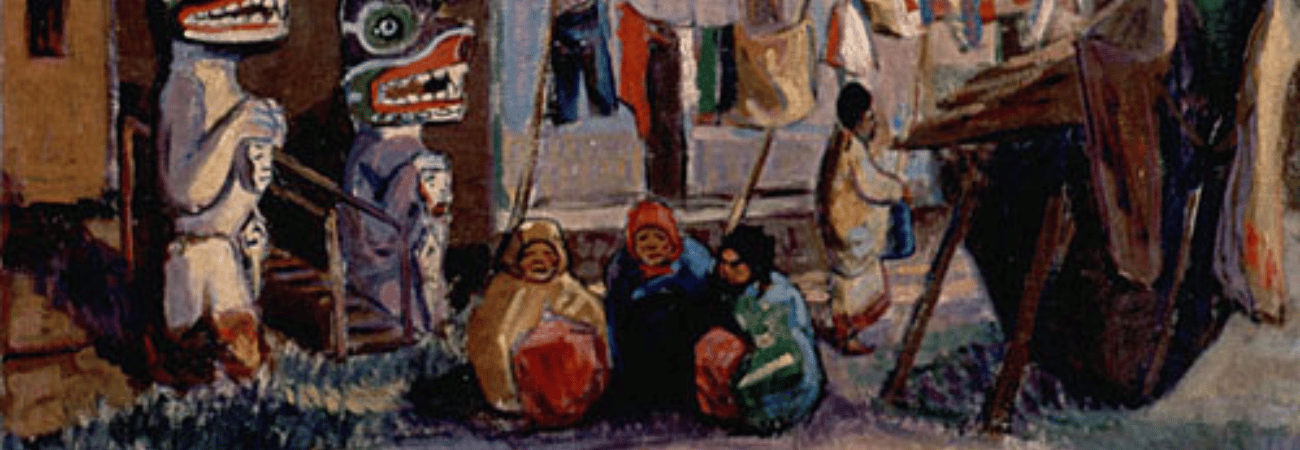
Emily Carr occupies a complicated, enduring place in Canadian cultural history. Celebrated as a visionary modernist painter and a fiercely original writer, she is also a figure whose life’s work is inseparable from her encounters with Indigenous peoples and cultures of the Northwest Coast. Her relationship to Indigenous communities was shaped by deep admiration, personal intimacy, colonial assumptions, and the constraints of her era. Nowhere are these tensions more visible than in Klee Wyck,…
Emily Carr wrote sporadically throughout her life, but in 1928 she drove herself relentlessly in both painting and writing. But a heart attack in 1937 and her doctor’s orders forced her to curtail her painting. She began to focus more on her writing. By then, she had take two short stories writing courses. The first by correspondence from the Palmer Institute in Los Angeles in 1926 and the second at Victoria Summer School in…
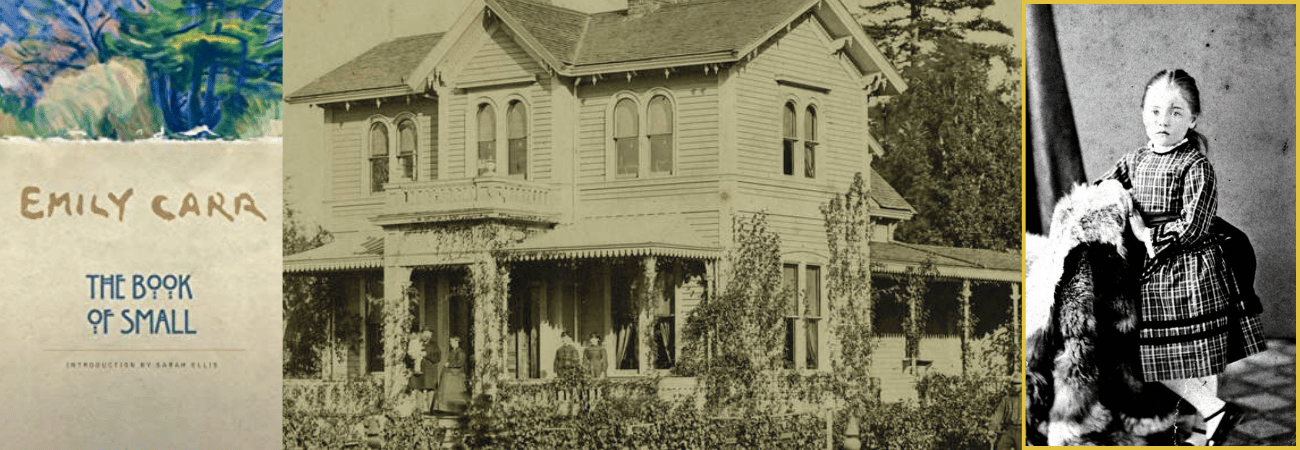
The Book of Small is a collection of thirty-six word sketches in which Emily Carr–four decades later–relates anecdotes about her life as a young girl in the frontier town of Victoria. She notes: “There were a great many things that I only half understood, such as saloons and the Royal Family and the Chain Gang.” The young Emily, who gave herself the nickname “Small,” was an intense, observant and sensitive yet rebellious child, who…