Emily Carr, Paul Kane and Langdon Kihn – Documenting Indigenous Peoples and the Pacific Northwest
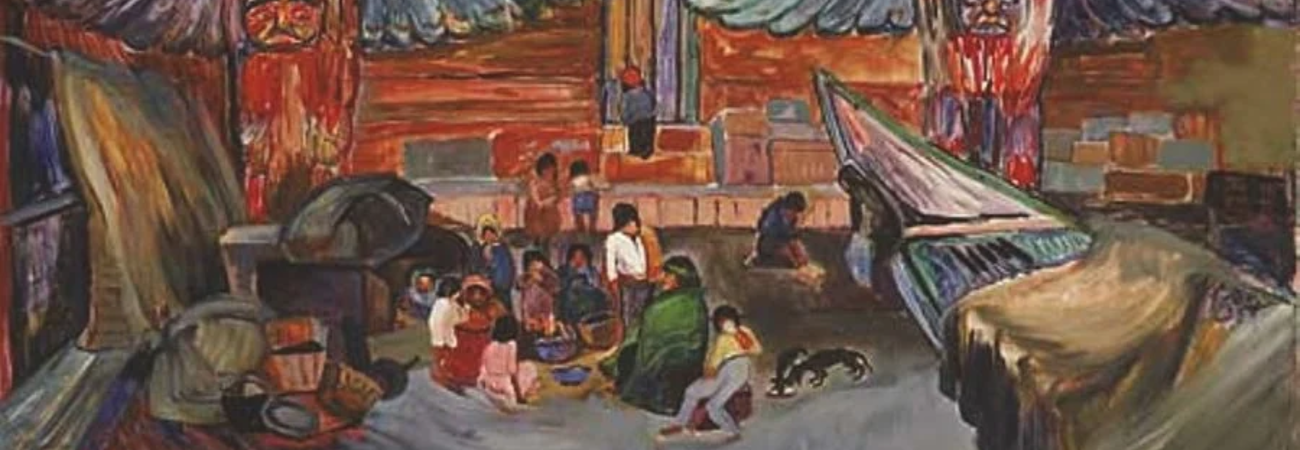
Emily Carr was not the only artist interested in documenting Indigenous peoples, their cultures and artistic traditions in western Canada and the Pacific Northwest during the late nineteenth and early twentieth centuries. Two other artists, Paul Kane (1810–1871) and Langdon Kihn (1898–1957), also devoted considerable attention to portraying Indigenous people, recording their cultural practices and capturing aspects of their traditional ways of life.
Although all three artists shared an interest in preserving a visual record of Indigenous cultures, their backgrounds, motivations, artistic approaches and relationships with the region were quite different. Their work also coincided with a growing public fascination with Alaska and the Pacific Northwest, where Indigenous villages, monumental totem poles and spectacular coastal scenery were increasingly attracting tourists, artists, photographers and writers.
By the late nineteenth century, Alaska had developed a substantial tourist industry, attracting visitors interested in its spectacular scenery, glaciers, wildlife and Indigenous communities. Steamship excursions along the Inside Passage carried passengers from Seattle, Portland and other American ports northward along the British Columbia coast to Alaska. Stops at coastal communities allowed tourists to see Indigenous villages, purchase locally made baskets and carvings, and photograph the people and their surroundings. The introduction of railway connections into the Yukon and Alaska further expanded opportunities for travel.
By the early twentieth century, tourism was also growing along the British Columbia coast. Steamship companies and railway operators, particularly the Canadian Pacific Railway, recognized the commercial appeal of the region’s scenery and Indigenous cultural heritage. Totem poles became familiar images in travel brochures, postcards and promotional material. Indigenous artists and craftspeople also participated in the growing tourist economy, producing carvings, baskets and other objects for visitors.
The increased demand for Indigenous cultural objects had consequences: poles were sometimes purchased or removed from their original village settings and transferred to museums, parks and private collections around the world. For artists travelling through the region, this growing interest in Indigenous culture provided both an opportunity to record what they encountered and a complicated context in which Indigenous artistic traditions were increasingly being presented to outside audiences as remnants of a vanishing past.
Paul Kane: Recording Indigenous Peoples and Their Ways of Life
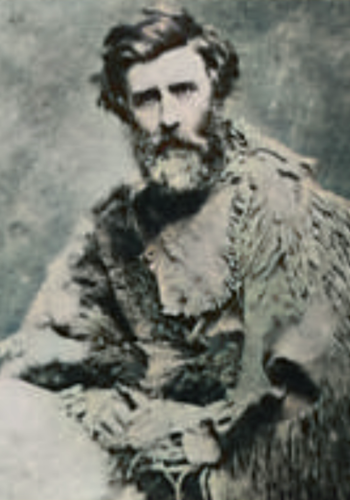
Paul Kane’s interest in documenting Indigenous peoples preceded the development of British Columbia’s tourist industry. Born in Mallow, County Cork, Ireland, in 1810, Kane immigrated to Canada with his family as a child and established himself as a painter in Toronto. Inspired partly by the work of American artist George Catlin, who had travelled extensively through Indigenous communities in the United States, Kane developed an ambitious project to create a visual record of Indigenous peoples across British North America. He died in Toronto in 1871, the year of Carr’s birth.
Between 1846 and 1848, Kane travelled thousands of miles along routes associated with the Hudson’s Bay Company. His journey took him across the Prairies, through the Rocky Mountains and into the Pacific Northwest, including parts of present-day British Columbia, Washington and Oregon. He travelled by canoe, York boat, horseback and on foot, making sketches and watercolours of the people, landscapes, dwellings, clothing, ceremonies and everyday activities he encountered. His field studies eventually provided the source material for approximately 100 large oil paintings completed in his Toronto studio.
Kane was particularly interested in recording the appearance and customs of Indigenous peoples before he believed their traditional ways of life would disappear. His work is now an important historical resource, offering visual evidence of nineteenth-century Indigenous communities and their material culture. He occasionally combined figures, clothing and cultural details from different communities, while introducing romanticized settings and compositions influenced by European academic painting.
Kane’s project was therefore both documentary and interpretive. He was creating a visual record of a vast territory and its Indigenous inhabitants, but he was also presenting that world through the artistic conventions and expectations of his own time.
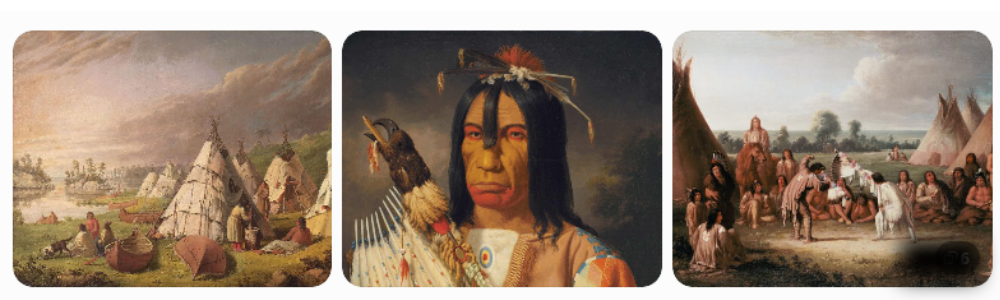
Langdon Kihn: the Individual as Subject
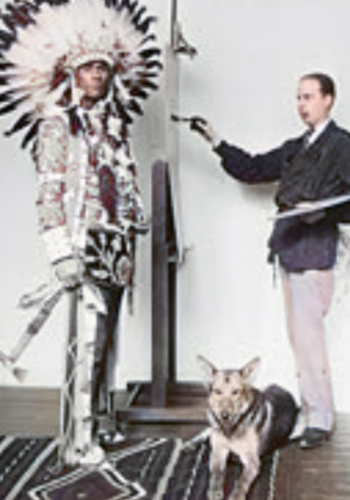
More than half a century after Kane’s western travels, American artist W. Langdon Kihn began his own extensive exploration of Indigenous communities. Born in Brooklyn, New York, in 1898, Kihn studied under German-born artist Winold Reiss, who was known for his portraits of Indigenous peoples. In 1919, Kihn accompanied Reiss to the Blackfeet Reservation in Montana, an experience that helped establish the direction of his artistic career for the rest of his life. He died in Connecticut in 1957.
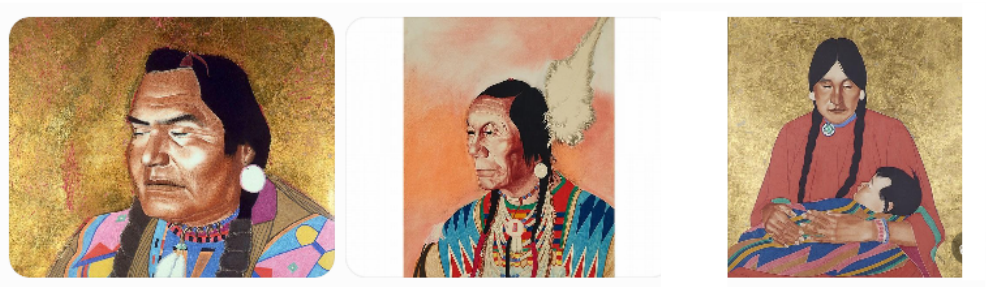
Kihn became particularly interested in individual portraiture, seeking to record the faces, clothing and distinguishing characteristics of the people he encountered. His work took him through the United States and northwestern Canada, where he painted members of numerous Indigenous communities. His travels were also supported by commercial commissions. In 1922, Canadian Pacific Railway publicity agent Murray Gibbon arranged travel opportunities for him to promote the Kootenay region, and Kihn subsequently received commissions to produce paintings of Indigenous subjects. Nowadays he would be considered on illustrator and graphic designer.
An important development in his career came through his association with Canadian ethnologist Marius Barbeau. In 1924, Barbeau invited Kihn to accompany him on fieldwork along the Skeena River in British Columbia, where he painted members of the Gitxsan and Wet’suwet’en communities. Kihn produced 63 paintings and sketches during the expedition. His portraits recorded individuals wearing or holding culturally significant objects, providing visual material that complemented Barbeau’s ethnographic research.
Kihn’s paintings subsequently appeared in Barbeau’s publications, including The Downfall of Temlaham (1928), a work incorporating Gitxsan oral traditions. Barbeau recognized that Kihn’s colourful and direct approach to portraiture could communicate aspects of Indigenous life that photographs and written descriptions could not convey as effectively.
Kihn also undertook an extensive project for National Geographic, beginning in 1935, which continued for approximately two decades. His work culminated in the 1955 exhibition Indians of the Americas. Unlike Carr, whose early Indigenous subjects were predominantly village settings, totem poles and architecture, Kihn concentrated on the individual people who inhabited these communities. His contribution was an extensive collection of portraits that brought Indigenous faces and cultural traditions to a wide North American audience.
Emily Carr: the Beginning of a Lifelong Interest
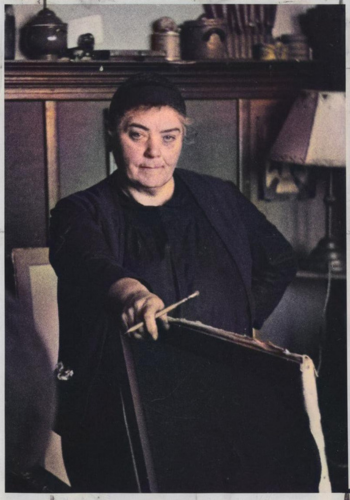
Emily Carr’s interest in Indigenous art and culture began with a journey that would profoundly influence the direction of her life and work. By that time she had taken painting lessons throughout her childhood, won awards at local fairs and attended art school for three years in California. In 1907, she travelled to Alaska on a steamship with her older sister Alice. They visited Sitka, where Carr encountered monumental Indigenous totem poles for the first time. The experience made a lasting impression.
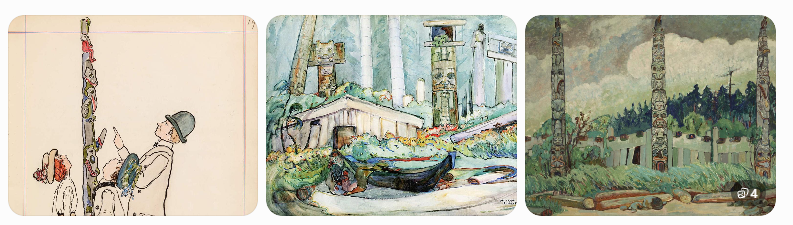
In her account of the journey, Sister and I in Alaska, she described the carved figures and their elaborate symbolism, recognizing that the poles were far more than decorative objects. They represented histories, family identities, cultural traditions and the stories of the people who had created them.
Carr was particularly struck by their artistic qualities. She admired the powerful forms, the distortion of human and animal figures, the intricacy of the carving and the visual language through which stories and identities were communicated. She came to regard the poles as extraordinary works of art and cultural monuments. One can understand her appreciation by comparing their significance to that of the ancient Egyptian pyramids: monumental achievements of human creativity that embody the history, beliefs and accomplishments of a civilization. This is an analogy for their artistic and cultural stature, rather than a claim that the two traditions served the same purpose.
On returning to British Columbia, Carr decided that she wanted to paint totem poles in their original village settings and assemble as complete a visual record as she could. She was concerned that the poles were deteriorating, being sold to collectors or removed from their communities for museum collections. Like many people of her generation, she believed that Indigenous cultures were disappearing and that she had a responsibility to record their artistic heritage before it was lost.
Her first journeys after Alaska took her to Indigenous communities along the British Columbia coast. She returned to Alert Bay and travelled to other communities on Vancouver Island, continuing her work in 1908 and 1909. Following a period of study in France, she resumed the project with renewed determination.
Her 1912 northern expedition was particularly important. Carr travelled to Indigenous villages along the coast, including communities in Haida Gwaii, and journeyed up the Skeena River. She visited places including Tanoo, Cumshewa and Gitwangak, producing watercolours, sketches and paintings of totem poles, village settings, longhouses and other cultural features. These journeys provided the foundations for much of her early Indigenous subject matter.
In 1913, she exhibited approximately 200 paintings and drawings at Dominion Hall in Vancouver and gave lectures about totem poles and Indigenous art. She hoped that the provincial government would acquire her collection so that the works could be preserved as a historical and artistic record. In her correspondence with the provincial government, she described the poles as “real Art treasures of a passing race.” Her exhibition, however, did not result in the institutional support she had hoped for, and the collection was not purchased.
Marius Barbeau: Bringing Artists and Indigenous Culture Together
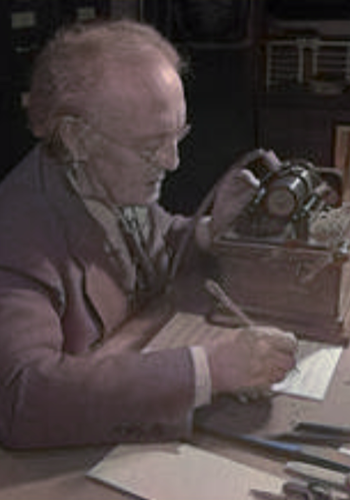
An important figure connecting the work of Kihn and Carr was Marius Barbeau, the Canadian ethnologist and folklorist who worked at the National Museum of Canada (now the Canadian Museum of History). Barbeau recognized the value of visual art as a means of recording Indigenous cultural traditions and believed that paintings could communicate aspects of Indigenous life that photographs and written ethnographic descriptions could not adequately convey. He was born in Ste-Marie-de-Beauce, Quebec in 1883 and died in Ottawa, Ontario in 1969.
Barbeau played a particularly direct role in Kihn’s travels and professional development. Through his connections with the Canadian Pacific Railway, Kihn obtained opportunities to travel and paint Indigenous subjects. In 1924, Barbeau invited him to accompany him on an expedition to the Skeena River region, where Kihn produced his 63 paintings and sketches of Gitxsan and Wet’suwet’en people. Barbeau subsequently used Kihn’s work in his publications, including The Downfall of Temlaham, published in 1928. The collaboration provided Kihn with access to remote communities and a valuable professional connection, while giving Barbeau an accomplished artist whose paintings complemented his research.
Barbeau’s relationship with Carr was different. Her interest in Indigenous art and her travels had begun independently, with the 1907 Alaska journey and her subsequent expeditions through British Columbia. He did not initiate her interest or organize her early travels. Rather, his importance was in helping bring Indigenous art and the work of contemporary artists to wider public attention. In 1927, Carr’s paintings were included in the landmark Exhibition of Canadian West Coast Art: Native and Modern, organized by National Gallery of Canada director Eric Brown, with Barbeau’s involvement.
The exhibition brought together Indigenous cultural objects and paintings by contemporary artists, including Carr, Kihn, A.Y. Jackson and Edwin Holgate. It was an important moment in establishing a place for Northwest Coast Indigenous art within the broader discussion of Canadian art.
Barbeau also brought the work of these artists together in The Downfall of Temlaham. Published in 1928, the book included colour illustrations by Kihn, Carr, Jackson, Holgate and Annie D. Savage. The inclusion of both Carr and Kihn in the same publication provides an interesting example of their different artistic approaches to Indigenous subject matter.
In The Downfall of Temlaham (1928), Marius Barbeau recounts the conflict between Gitksan traditions and European colonial authority. Through the story of Kamalmuk and his wife Sunbeams, he describes the 1888 Skeena River uprising, while interweaving Gitksan legends about Temlaham, their ancestral homeland, and its eventual destruction.
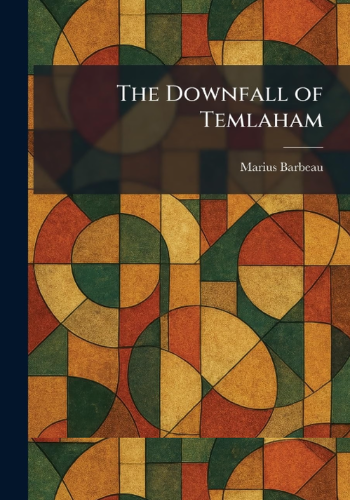
The Downfall of Temlaham is a seminal work that captures the epic oral traditions and historical narratives of the Gitxsan and Tsimshian peoples of British Columbia. Blending ethnographic detail with mythic storytelling, the narrative centers on the legend of Temlaham-a mountain paradise and ancestral home-and chronicles the events leading to its decline. The work explores the profound cultural shifts and tragic conflicts that emerged as Indigenous traditions encountered the pressures of colonial expansion. This highly regarded book has been in print since its publication in 1928 by Macmillan Company of Canada in Toronto.
Three Artists, Three Different Perspectives
Although Kane, Kihn and Carr shared an interest in documenting Indigenous peoples and their cultures, their artistic objectives were not identical. Kane sought to create a comprehensive visual record of Indigenous life across a vast geographical area during the mid-nineteenth century. His work emphasized portraits, ceremonies, customs, clothing and everyday activities, as well as landscapes. Kihn, working in the twentieth century, concentrated particularly on individual portraiture, recording the appearance and cultural identity of the people he encountered. His paintings were widely circulated through books, exhibitions, publications and posters making him one of the better-known portrait artists working in this field during his lifetime.
Carr’s approach was different in both its subject matter and its artistic development. Although she painted Indigenous people, her principal interest was in the monumental artistic traditions of the Northwest Coast: the totem poles, carved house fronts, village sites, longhouses and canoes. She wanted to record these works in their original settings, where their relationship to the community and surrounding landscape could be understood. She recognized that the poles were not simply interesting objects for tourists or museum collections. They were sophisticated works of art with cultural, historical and spiritual significance.
The three artists also approached their subjects through the artistic conventions of their respective periods. Kane’s work reflected nineteenth-century European academic and Romantic traditions. Kihn’s portraits combined realism with the influence of his teacher Winold Reiss. Carr, following her studies in France and her exposure to Post-Impressionism, developed a much more modernist approach, using colour, simplified forms and increasingly expressive brushwork to convey her response to the subjects she painted.
There were also limitations to their documentary ambitions. All three worked within a colonial society that frequently regarded Indigenous cultures as disappearing and assumed that outside artists and scholars had a responsibility to preserve their images and traditions. Their paintings must therefore be considered both as artistic achievements and as interpretations shaped by the attitudes of their time. Indigenous cultures were not simply remnants of the past. The communities, their artistic traditions and their cultural knowledge continued, and continue today, through Indigenous artists, carvers, families and cultural leaders.
The Art Gallery of Greater Victoria’s 1999 exhibition, To the Totem Forests: Emily Carr and Her Contemporaries Interpret Coastal Villages (1900–1950), is particularly useful in understanding these differences. It brought together works by Carr, Kihn, A.Y. Jackson, Walter J. Phillips, Edwin Holgate and George Pepper, allowing visitors to compare how different artists interpreted some of the same Indigenous communities and cultural subjects.
Emily Carr: Painting the Land of Her Birth
A final distinction that is fundamental to understanding Emily Carr’s place in this history. Unlike Kane, who was born in Ireland, and Kihn, who was born in Brooklyn, Carr was born in Victoria, British Columbia, in 1871. The Indigenous villages, forests, coastlines and mountains she travelled through were part of the larger landscape of her birthplace and home. She was not simply visiting a distant territory to document its people and customs. She was exploring the land in which she had grown up, a landscape that she increasingly came to regard as the source of her artistic identity. Although Kane made Canada his home from childhood and Kihn worked extensively in both the United States and Canada, their journeys were those of artists travelling through territories beyond their places of birth.
Carr’s relationship with British Columbia was more deeply rooted in a personal connection to its land and people. Her initial objective was to preserve a visual record of Indigenous artistic achievements, particularly the totem poles in their original village settings, but her larger ambition gradually became something more encompassing: to express the character, vitality and spiritual power of the West through her painting. She wanted to contribute to the development of a distinctly Canadian art, one that represented the country rather than imitating European traditions. As she wrote in her later years, her ambition was not simply to make pictures or become a great artist, but to use art as a means of expressing herself and making visible what gripped her in nature. In that sense, her Indigenous paintings and her later forest and landscape paintings belong to the same larger artistic undertaking. She was painting the country of her birth, trying to give visual expression to the land she loved and to establish the artistic importance of Canada’s western landscape within the national story.