Ira Dilworth and Emily Carr: The Friendship That Gave Voice to a Writer
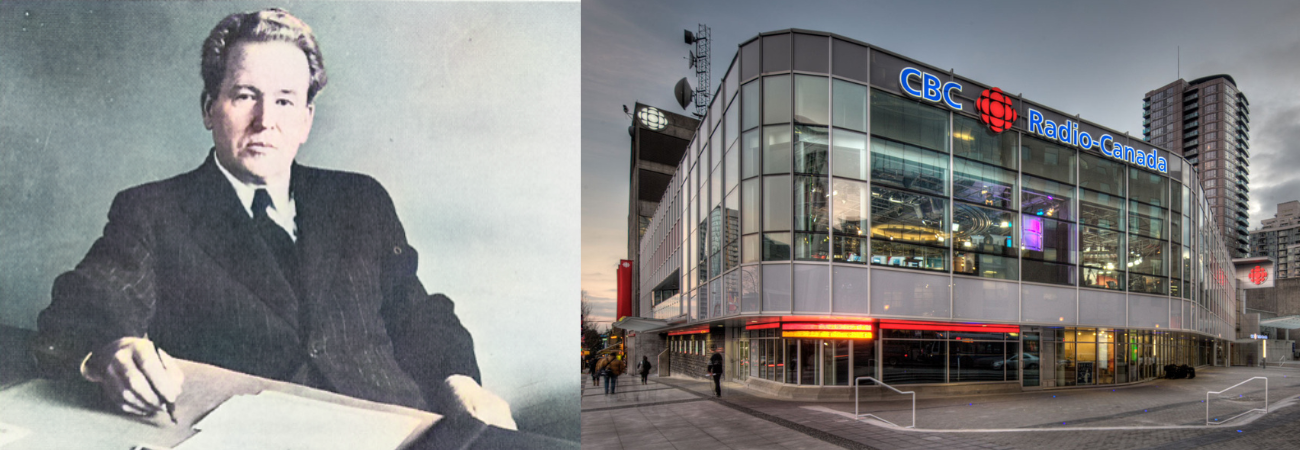
An educator, broadcaster, editor and devoted friend, Ira Dilworth helped Emily Carr discover a second career as a writer. Their relationship, which developed during the final five years of her life, was one of the most important personal and professional friendships of her later years. But Dilworth’s contribution to the arts and Emily Carr’s legacy did not end with her death. As her literary executor, he became the person responsible for bringing much of her unpublished writing to the public.
Before Emily Carr: The Making of Ira Dilworth
Ira Dilworth (1894–1962) was already an established and respected figure in British Columbia’s educational and cultural circles long before he became closely associated with Emily Carr. He was not an art-world personality who happened to take an interest in a painter. Rather, he was a man of considerable literary ability, broad cultural interests and strong convictions about the importance of education, music, literature and the arts.
Born in High Bluff, Manitoba, in 1894, Dilworth grew up in a family whose circumstances eventually brought him west to British Columbia. His early years included life on his father’s ranch in the Okanagan, where the practical demands of ranch work were rather different from the intellectual life he hoped to pursue. Books, music and literature held a much greater attraction for him than the rough-and-ready life of a cattle ranch.
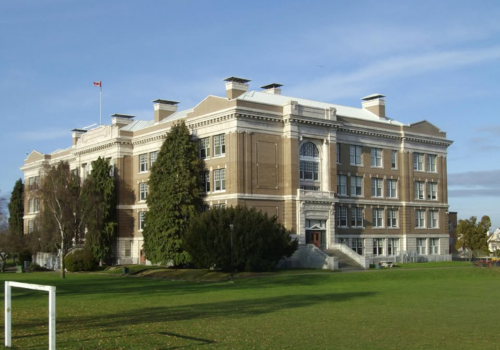
The family eventually moved to Victoria, where the young Dilworth found an environment much more suited to his interests. He entered Victoria High School in 1909 and proved to be an exceptionally capable student.
He graduated in 1911 and went on to McGill University, where he completed his studies in 1915 with First Rank Honours in English and French.


He returned to Victoria and joined the teaching staff of Victoria High School. His academic ambitions, however, continued. With leaves of absence from teaching, he pursued graduate studies at Harvard University, earning a master’s degree in 1920 and undertaking further research there in 1924–25.
Dilworth’s academic training gave him a formidable grounding in English literature, but his interests extended well beyond the classroom. He believed that schools should expose students to music, drama and the wider cultural world. This conviction would become a defining feature of his career.
The Educator and Cultural Leader in Victoria
In 1926, at the relatively young age of 32, Dilworth became principal of Victoria High School, succeeding H. H. Smith. He was the first graduate of the school to return as its principal, an achievement that reflected both his academic accomplishments and his standing in the local educational community.
His years as principal were distinguished by an energetic effort to expand the cultural life of the school. Music and drama were not to be treated as occasional entertainments or extracurricular diversions. Dilworth wanted them to become an integral part of education. He encouraged musical appreciation, theatrical productions and a wider engagement with literature and the arts.
After leaving Victoria High School in 1934, he taught English at the University of British Columbia. His academic career brought him into contact with a wider network of writers, scholars and cultural figures in the province.

From 1938 to 1940 he was the director of the Bach Choir. In 1941, he became a founding member of the Federation of Canadian Artists. He also helped to organize the Vancouver Community Arts Council, and in 1945 became its first president.
An interesting detail of Dilworth’s Victoria years is that he was not entirely unfamiliar with Emily Carr even before their professional relationship developed. He grew up within a block from her home on Simcoe Street, later known as the House of All Sorts. Their lives had therefore intersected geographically before they became friends.
That earlier proximity is worth remembering. The relationship between Carr and Dilworth did not emerge from two complete strangers meeting in the literary world. They had some connection to the same Victoria community, although their eventual friendship would develop through a quite different set of circumstances.
From the University to the CBC
In 1934, Dilworth left Victoria for Vancouver to take up a position as associate professor of English at the University of British Columbia. He taught there until 1938, earning a reputation as an inspiring lecturer, particularly on the Romantic poets. He was also deeply interested in music and became involved in Vancouver’s musical community, including directing the Bach Choir.
His next appointment would change the course of both his career and Emily Carr’s literary life.

In 1938, Dilworth was recruited by the Canadian Broadcasting Corporation to become its regional representative in British Columbia. The CBC was still a relatively young national institution, having been established in 1936, and it was developing its identity and programming across the country.
Dilworth had no previous professional experience in radio and was initially reluctant to abandon his academic career. However, CBC general manager Gladstone Murray persuaded him that his knowledge of literature, music, drama and the arts could make a valuable contribution to Canadian broadcasting.


He accepted the position and quickly became an influential figure in the development of CBC programming in British Columbia. He was particularly interested in bringing serious music, literature and cultural programming to a wider audience. He helped establish the CBC Vancouver Orchestra and encouraged the broadcast of Canadian writers and artists.
Ira Dilworth’s Career at the CBC (1938–1962)
Ira Dilworth’s CBC career spanned approximately 24 years, taking him from regional broadcasting in British Columbia to senior national administrative positions in Montreal and Toronto.
This chronology distinguishes his formal appointments from the broader responsibilities he subsequently assumed.
| Period | Position | Location and responsibilities |
|---|---|---|
| 1938–1946 | Regional Director / Regional Representative, British Columbia | Based in Vancouver, Dilworth managed CBC operations in British Columbia. His responsibilities included regional programming, administration and the development of cultural broadcasting. |
| 1946–1947 | General Supervisor, CBC International Service | Transferred to Montreal to oversee the International Service, which broadcast Canadian programming overseas. His appointment was announced in July 1946 for a two-year term, although he moved into the position in 1947. |
| 1947–1950 | General Supervisor, International Service | Continued overseeing Canada’s international broadcasting activities from Montreal. He suffered a heart attack during this period, which interrupted his work. |
| 1950–mid-1950s | National Director of Program Planning and Production | Transferred to Toronto. He assumed national responsibilities for program planning and production across the CBC’s English-language services. |
| Mid-1950s | Director for Ontario | Took on responsibility for CBC operations in Ontario, in addition to his senior national responsibilities. |
| Mid-to-late 1950s | Director, English Networks | Held a senior position overseeing the CBC’s English-language networks. |
| Final years, approximately 1958–1962 | Advisory capacity | As his health deteriorated, he moved away from active executive responsibilities and served in an advisory role until his death in November 1962. |
Dilworth’s CBC career began in 1938, before his close working relationship with Carr developed. His position gave him the means to introduce her writing to a national radio audience. His later senior appointments, particularly in international broadcasting and national program production, demonstrate that he was an influential Canadian cultural administrator in his own right, not simply an editor who helped a local artist publish her books.
This was an important aspect of Dilworth’s character. He believed that broadcasting could do more than entertain. It could educate, introduce audiences to new ideas and provide a national platform for people whose creative work might otherwise remain relatively unknown.
It was this philosophy that would bring him into Emily Carr’s life.
The Beginning of the Carr–Dilworth Relationship
Although Dilworth and Carr had some earlier connections through Victoria, their meaningful professional relationship began through her writing in 1939.
By this time, Carr was in her late sixties. Her reputation as a painter was growing, particularly following the National Gallery of Canada’s 1927 exhibition of West Coast Indigenous art, but she was becoming increasingly restricted by ill health. The heart attack she suffered in 1937 had changed her life. Painting outdoors, travelling to remote communities and carrying her painting equipment into the forest were becoming increasingly difficult.
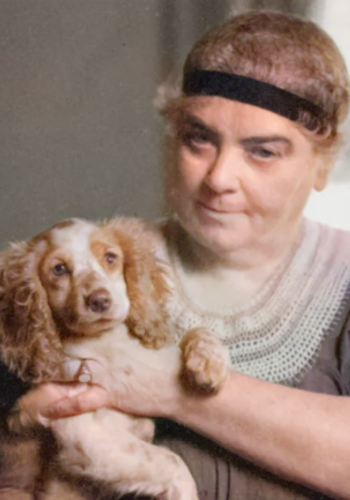
Writing offered another way to express herself. Carr had kept journals for years and had taken writing courses, including a correspondence course in 1926–27 and a short-story course in Victoria in 1934. She had also been encouraged by friends to write about her travels, experiences and memories.
However, her manuscripts had not always been well received. Some of the people who had previously offered editorial advice had discouraged her, and she was understandably reluctant to entrust her work to another editor.
The introduction to Dilworth came through people in her literary circle, particularly Ruth Humphrey, one of the women who had encouraged and critiqued her writing, and George Sedgewick, head of the English department at UBC. Humphrey brought Carr’s manuscripts to Vancouver and showed them to Dilworth. He recognized their literary potential and began corresponding with Carr in June 1939.
His interest was genuine. He saw something in her writing that went beyond its historical value or its descriptions of Indigenous communities and landscapes. He recognized her distinctive voice: the humour, sharp observation, directness and unusual ability to bring people and places to life.
Dilworth arranged for Carr’s stories to be broadcast on CBC Radio. In July 1940, he began reading them to radio audiences, and he personally read many of her pieces. This was an important breakthrough. Carr’s writing was reaching people who might never have encountered her paintings or visited a gallery.
It also gave Carr something she had not previously enjoyed to the same extent: an audience for her words.
The Making of Emily Carr the Author

Dilworth’s contribution went considerably beyond broadcasting Carr’s stories. He became her literary adviser, editor, publishing representative and, increasingly, her most trusted confidant.
He had the educational background to recognize the problems in her manuscripts, particularly her spelling, punctuation and grammar. But he also understood that correcting these shortcomings should not mean changing her personality or diminishing the originality of her writing.
This distinction was important to Carr. She had a strong sense of ownership over her work and did not want someone else rewriting her stories to make them conform to conventional literary expectations.
Dilworth appears to have understood this from the beginning. His editorial approach was restrained. He corrected grammatical errors, suggested occasional changes and helped organize the manuscripts, but he did not attempt to replace Carr’s distinctive narrative voice with his own.
Carr came to trust his judgement. She even gave him considerable freedom to make editorial decisions, writing in May 1942: “Cut out what & where you think fit, don’t feel you have to ask me first.”
The first major result of their collaboration was Klee Wyck, published by Oxford University Press in Toronto in 1941. Dilworth helped bring the manuscript to the publisher, negotiated on Carr’s behalf and worked with her on preparing the book for publication.
The title, Klee Wyck, was derived from the name given to Carr by Indigenous people at Ucluelet, commonly translated as Laughing One. The book consisted of sketches and recollections based largely on her earlier journeys to Indigenous communities on the Northwest Coast.
Its reception was remarkable. In 1942, Carr received the Governor General’s Literary Award for the book. For a woman already in her seventies, whose reputation had largely rested on her painting, this was a remarkable second achievement.
It is worth emphasizing that Carr had not suddenly become a writer because Dilworth entered her life. She had been writing for many years. What he provided was the editorial expertise, encouragement, publishing connections and professional support that allowed her literary talent to reach a much wider audience.
The success of Klee Wyck was followed by The Book of Small in 1942, a collection of autobiographical stories based on her childhood and family life in Victoria. Dilworth spent considerable time working with Carr on this manuscript, helping her select and organize the material.

Her third book, The House of All Sorts, appeared in 1944. Drawing on her experiences as a landlady at her James Bay home, it revealed another side of Carr: her comic observations, her eccentric tenants and her sometimes exasperating experiences managing a boarding house.
A Friendship That Went Beyond Literature
Perhaps the most interesting aspect of the Carr–Dilworth relationship is how deeply personal it became.
Their close friendship developed between approximately 1940 and 1945, although their correspondence had begun earlier. They exchanged an extraordinary number of letters, sometimes writing several times a week. Their surviving correspondence provides an unusually intimate record of their relationship and of Carr’s final years.
The letters reveal a friendship built on affection, intellectual companionship, mutual trust and a shared interest in literature and the arts. Dilworth visited Carr regularly in Victoria, and their discussions extended well beyond the practical business of editing manuscripts.
Carr was by then in her seventies and increasingly troubled by heart disease and strokes. Her physical limitations were frustrating, particularly for someone whose life had been so closely connected to outdoor painting and travel. Dilworth provided intellectual stimulation and companionship at a time when her world was becoming physically smaller.
He also offered something that was perhaps even more important: he took her seriously.
Carr had spent much of her life feeling misunderstood, particularly in Victoria, where her unconventional personality and artistic ambitions did not always fit comfortably within the expectations of respectable society. Dilworth recognized her intelligence and individuality. He was not simply helping an elderly painter write some interesting reminiscences. He was engaging with a remarkable creative mind.
Carr’s letters show just how much she valued him. In one particularly revealing passage, she described her affection as something like a mother’s love, while suggesting that his love for her alter ego, Small, was rather like a father’s. She then described their friendship as being “as deep as an ocean.”
This reference to Small is significant. Small was Carr’s affectionate name for the child she had once been, and the character became central to her autobiographical writing. Through their correspondence, Carr and Dilworth developed a shared emotional attachment to this younger version of herself.
Their relationship was affectionate and intimate, but it should not be confused with a conventional romantic partnership. Carr herself described it in terms of friendship and familial affection. The surviving letters reveal a remarkable closeness between two people who found in each other a rare intellectual and emotional understanding.
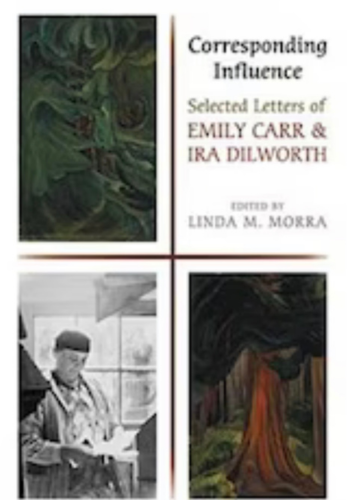
Linda M. Morra’s scholarly book, Corresponding Influence: Selected Letters of Emily Carr and Ira Dilworth, published in 2006, is particularly valuable for understanding this relationship. It brings together letters that illuminate both the professional collaboration and the personal attachment that developed between them.
Dilworth’s Life Beyond Emily Carr
While his friendship with Carr was an important part of his life, Dilworth’s own career continued to develop on a national scale.
In 1946, he left British Columbia to take up the position of general manager of the CBC’s International Service. This was a particularly challenging period for the corporation. Broadcasting had become an increasingly important instrument of Canadian cultural identity, but it was also subject to political pressures and competing ideas about what public broadcasting should accomplish.
Dilworth believed strongly in the independence of cultural and intellectual programming. His commitment to serious music, literature and informed public discussion sometimes brought him into conflict with those who wanted broadcasting to serve narrower political or commercial interests.
After experiencing health problems, he returned to domestic broadcasting in Toronto. He subsequently served as director of program production, director for Ontario and, in 1956, director of the CBC’s English-language networks.
His influence on Canadian broadcasting was considerable. He was remembered as a quiet, thoughtful and sometimes rather austere administrator, but one with a genuine commitment to the arts and to the development of Canadian cultural life.
His career also reflected an interesting progression. He began as a teacher who wanted to introduce young people to literature, music and drama. At the CBC, he found a much larger audience for those same interests. His work with Emily Carr was a natural extension of his belief that Canadian artists and writers deserved to be heard.
After Emily’s Death: Becoming Guardian of Her Literary Legacy
When Emily Carr died on March 2, 1945, Dilworth was entrusted with one of the most important responsibilities of her estate: he became her literary executor.
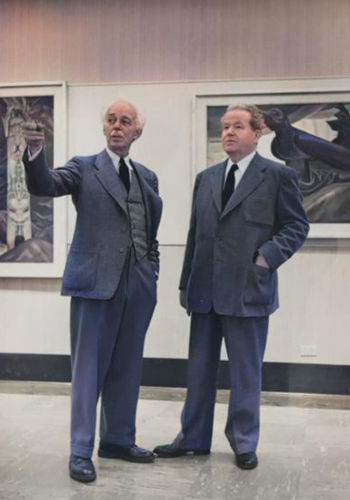
Carr had already made arrangements for the preservation of her paintings through the Emily Carr Trust, with Lawren Harris and William Arnold Newcombe serving as trustees of the artwork. Dilworth’s responsibility was different. He was entrusted with her manuscripts, journals, autobiographical writings and other literary papers.
It was a responsibility Carr had deliberately placed in his hands because she trusted his judgement and understood that he respected her writing.
She had expressed her concerns about leaving her manuscripts with someone who might not understand them. Her correspondence makes it clear that she considered her writings almost like children, requiring the care of someone who knew and appreciated them.
Dilworth honoured that trust.
His first major undertaking after her death was preparing Growing Pains: The Autobiography of Emily Carr, published in 1946. Carr had been working on the autobiographical manuscript during her final years, but she had not completed it. Dilworth had to work with the material she left behind, organizing and preparing it for publication.
The book provided readers with a much fuller understanding of Carr’s childhood, family, artistic development and experiences in Victoria. It also helped establish the autobiographical foundation upon which much subsequent Carr scholarship would be built.
In 1953, Dilworth arranged the publication of two additional volumes, Pause: A Sketch Book and The Heart of a Peacock. These collections drew on Carr’s remaining literary papers and included recollections, sketches and stories that might otherwise have remained unpublished.
His work was not simply a matter of sending manuscripts to a publisher. He had to make decisions about selection, arrangement, editing and presentation. In doing so, he helped determine how future generations would encounter Carr as a writer.
There was also a continuing responsibility to preserve the material itself. Carr’s journals and manuscripts represented an extraordinary record of her artistic life, her travels, her observations of the natural world and her relationships with the people around her.
Dilworth continued to protect and organize these papers until his own death in 1962.
His niece and heir, Phyllis Inglis, subsequently assumed responsibility for the remaining literary material. She edited Carr’s journals, which were published in 1966 under the title Hundreds and Thousands: The Journals of Emily Carr.
This publication was particularly important because it gave readers access to Carr’s private reflections on painting, art, nature, spirituality and the development of her artistic vision. It remains one of the most valuable primary sources for understanding her life and work.
The Lasting Importance of Ira Dilworth
Ira Dilworth died in Vancouver in 1962, having devoted much of his professional life to education, broadcasting and the advancement of Canadian cultural activities.
He is remembered principally today for his association with Emily Carr, although his contributions to British Columbia’s educational and cultural institutions deserve considerably more recognition.
His relationship with Carr was unusual because it brought together two people from rather different generations and professional backgrounds. She was an independent, unconventional painter who had spent decades struggling for recognition. He was an academically trained educator and cultural administrator who had built a career around encouraging others to appreciate literature, music and the arts.
What they shared was a deep respect for creative work and a belief in the importance of individual expression.
It is tempting to think of Dilworth simply as the man who helped Emily Carr become a published author. That would underestimate his contribution. He recognized the literary qualities of her work, provided the professional support necessary to bring it to publication, encouraged her during a difficult period of her life and, after her death, protected and promoted her written legacy.
There is also an important distinction between the two sides of Carr’s legacy. Lawren Harris played a major role in advancing her reputation as a painter, particularly through the National Gallery exhibition of 1927 and his continuing support of her artistic career. Dilworth performed a comparable role in establishing her reputation as a writer.
Without Harris, Carr’s paintings might have taken much longer to achieve national recognition. Without Dilworth, much of her writing might have remained in manuscript form, scattered among her personal papers and known only to a handful of people.
His influence extended well beyond the publication of three books during her lifetime. The autobiographical writings, stories and journals that appeared after her death have become indispensable to anyone researching Carr’s life.
Perhaps the greatest tribute to Dilworth is that he understood something about Emily Carr that not everyone around her appreciated: she was not simply an eccentric Victoria painter or a woman with interesting stories about her travels. She was a remarkably original creative thinker whose observations, humour, emotional honesty and understanding of the natural world deserved a permanent place in Canadian literature.
Ira Dilworth helped make that possible.