Emily Carr at 100: How the 1971 Centennial Exhibition Changed the Way Canada Saw Her
The 1971 Centennial Exhibition of Emily Carr was a particularly important exhibition in the history of Carr scholarship and in the Vancouver Art Gallery’s presentation of her work. It was much more than a commemorative birthday exhibition: it helped establish the framework through which Carr was understood for the next several decades. The official title was Emily Carr: A Centennial Exhibition Celebrating the One Hundredth Anniversary of Her Birth.
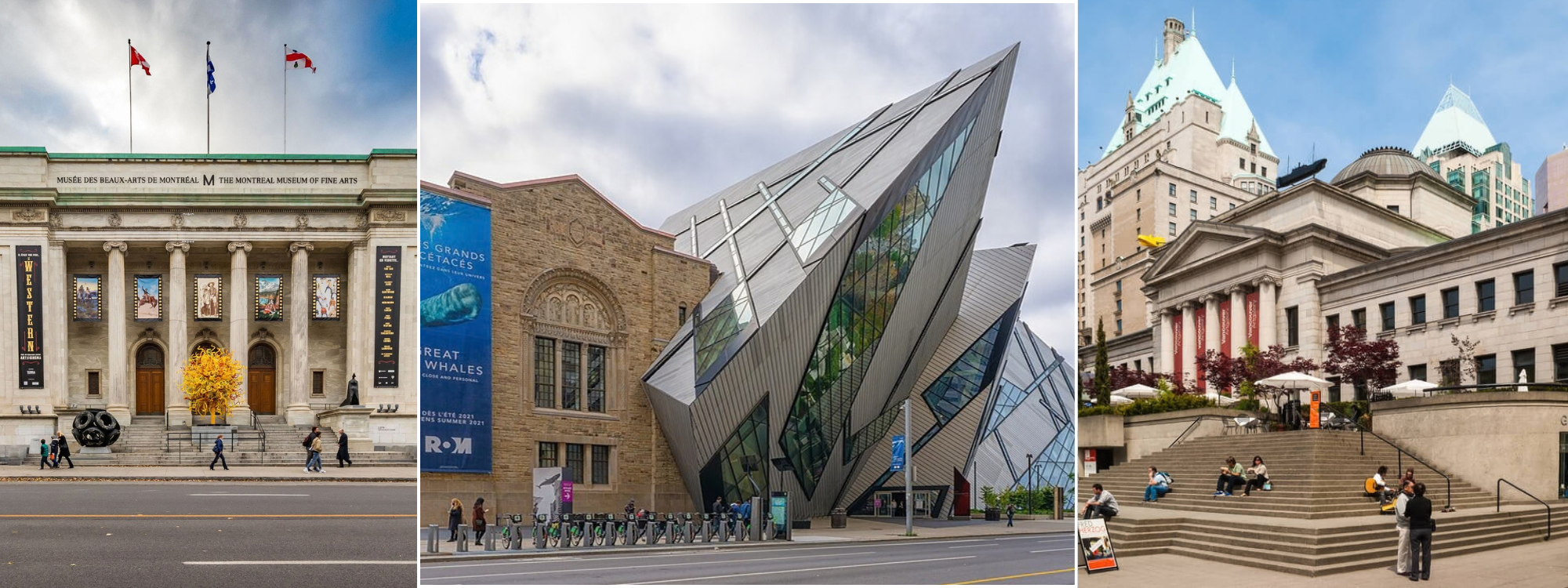
It was organized by the Vancouver Art Gallery and opened in Vancouver on May 18, 1971, running until August 29, 1971. It subsequently travelled to the Montreal Museum of Fine Arts and the Royal Ontario Museum.
The exhibition records give the following itinerary:
| Venue | Dates |
|---|---|
| Vancouver Art Gallery | May 18–August 29, 1971 |
| Montreal Museum of Fine Arts | September 24–November 14, 1971 |
| Royal Ontario Museum, Toronto | February 15–March 15, 1972 |
Doris Shadbolt was the key figure
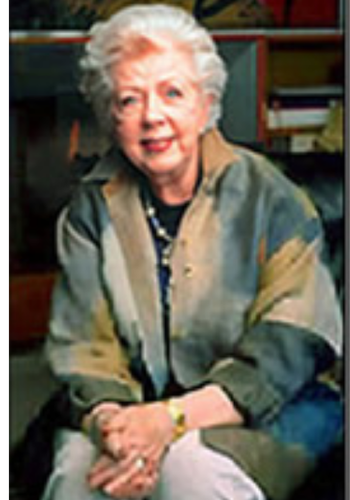
The exhibition catalogue was written by Doris Shadbolt, who was then one of the Vancouver Art Gallery’s most important curatorial figures and was becoming the leading interpreter and advocate for Emily Carr. (See post on Doris Shadbolt)
This is significant. The 1971 exhibition effectively represents Shadbolt’s major mid-century synthesis of Carr’s career. The catalogue begins with a biographical account and then presents and analyses the works selected for the exhibition. It also contains a chronology, exhibition history and bibliography. The original catalogue was 96 pages.
The catalogue was sufficiently important that it was reprinted in a revised edition by J. J. Douglas in 1975, with the same 96-page format.
What makes the exhibition especially important
This exhibition deserves particular attention because it marks a transition in Carr’s reputation.
By 1971, Carr was no longer simply the eccentric Victoria painter who had been rediscovered by Lawren Harris and the Vancouver modernists in the 1920s and 1930s. She had become an important figure in the Canadian art canon. The Centennial Exhibition presented her career as a coherent artistic achievement.
The exhibition also came at an interesting point in the development of Carr scholarship:
- the 1945 National Gallery/Art Gallery of Toronto exhibition had introduced Carr to a much broader Canadian audience;
- the 1951 Emily Carr Memorial Galleries at the Vancouver Art Gallery had cemented her importance in Vancouver;
- the 1960s saw increasing publication and scholarly attention, including Hundreds and Thousands in 1966;
- and the 1971 Centennial Exhibition brought these developments together in a major retrospective framework.
This exhibition is a useful landmark between the early posthumous celebration of Carr and the much more critical scholarship that emerged after her death. One indication of its importance is that it travelled across Canada rather than remaining a Vancouver commemorative event.
The catalogue itself is an important historical source
The catalogue written by Doris Shadbolt contains:
- Shadbolt’s interpretation of Carr’s life and career;
- reproductions of all the works; from the first work in the catalogue, a pen and ink sketch of “Rock Bay Bridge, Victoria” (1895) to the last “Cedar” (1942).
- catalogue entries with dates, dimensions and collections drawn from
- a detailed biography
- an exhibition chronology;
- a bibliography;
- and the numbering of works in the Centennial Exhibition from 1 – 120.
The catalogue is the key to reconstructing the exhibition
The catalogue is:
Doris Shadbolt, Emily Carr: A Centennial Exhibition Celebrating the One Hundredth Anniversary of Her Birth, Vancouver Art Gallery, 1971.
It is 96 pages, with illustrations, photographs, a chronology, exhibition history and bibliography. The exhibition was organized by the Vancouver Art Gallery and opened there May 18, 1971.
The catalogue is not merely a commemorative publication. It is essentially Doris Shadbolt’s authoritative statement about Emily Carr in 1971. She would go on to publish the seminal book The Art of Emily Carr, a biography, and a sketchbook of Carr’s travels along the Pacific West Coast and visits with many Indigenous villages.
The sequence tells us something important about Shadbolt’s organization
The numbering appears to follow Carr’s artistic chronology as the exhibition begins with early and First Nations-related work:
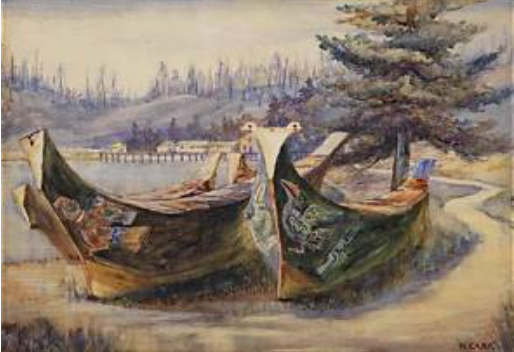
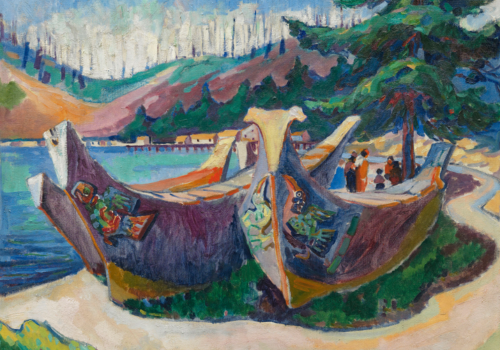
No. 10 — War Canoes, Alert Bay, 1908 watercolour
No. 35 — War Canoes, Alert Bay, 1912
oil on canvas
Then we move progressively through Carr’s career:
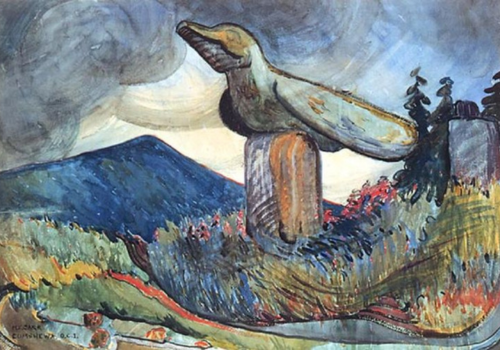
No. 45 — Cumshewa (1912)
watercolour
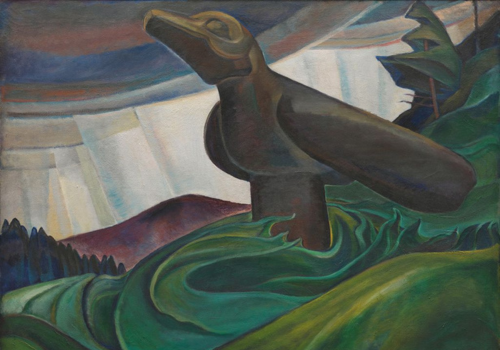
No. 62 – Big Raven (1928)
oil on canvas
and eventually into her mature forest paintings:
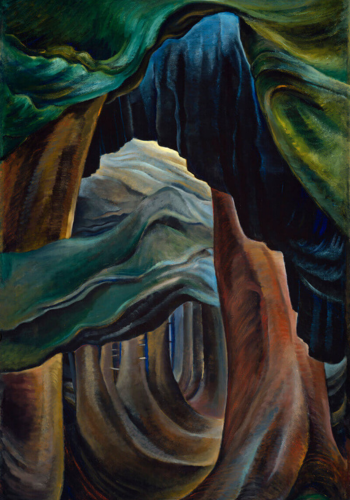
No. 72 – Forest, British Columbia (1932)
oil on canvas
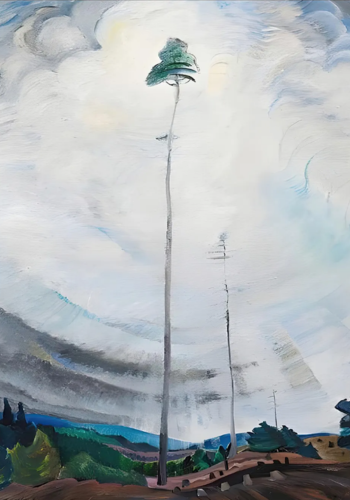
No. 108 – Scorned as Timber, Beloved of the Sky (1936)
oil on canvas
In other words, Shadbolt was presenting Carr’s career as an artistic development, rather than organizing the exhibition simply around themes or subjects such as “totem poles,” “landscape” and “forests.”
Shadbolt was presenting Carr as a modernist
This may be the most important thing about the 1971 exhibition. By this point Shadbolt’s interpretation of Carr was very different from the way she had often been presented in popular accounts—as the eccentric Victoria woman who painted Indian villages and British Columbia forests.
The Centennial exhibition places enormous emphasis on artistic development.
The later National Gallery scholarship provides a useful window into this interpretation. Charles Hill, curator of Canadian art at the National Gallery, writing in 1975 cites Shadbolt’s 1971 catalogue when discussing Carr’s development from her earlier documentary work toward the mature forest paintings. He cites, for example, Shadbolt’s catalogue numbers 45 and 62 for Cumshewa and Big Raven.
Hill also discusses Carr’s transition to her new medium of oil on paper in the early 1930s and specifically cites Shadbolt’s catalogue.

No. 89. Young Pines and Sky (1933)
oil on paper
That tells us that Shadbolt’s catalogue was already being treated by National Gallery researchers as a serious art-historical source within only a few years of its publication.
This is precisely where later scholarship—including Gerta Moray’s Unsettling Encounters—would challenge aspects of the established Carr narrative. The 1971 exhibition still belongs to the period in which Carr’s First Nations imagery was largely interpreted through the lens of her artistic development and her search for a uniquely West Coast modernism.
That makes 1971 an excellent “before” point for a discussion of the later critical reassessment of Carr’s representations of Indigenous peoples.
The exhibition was also part of a much bigger Carr moment in 1971
The Centennial exhibition did not occur in isolation. On February 12, 1971, Canada Post issued a 6-cent Emily Carr commemorative stamp, based on Big Raven. Then, three months later, the Vancouver Art Gallery opened the Centennial exhibition.
So 1971 effectively became a national Emily Carr centennial year.
And this was happening at a fascinating moment in Canadian art history. Carr was being transformed from a significant regional painter into one of the figures through whom Canadian modernism and Canadian identity were being defined.
The Art Canada Institute’s chronology places the 1971 exhibition squarely within this trajectory: after the 1951 Emily Carr Memorial Galleries at the VAG and the 1962 Newcombe Collection exhibition, and before the major 1979 Emily Carr: The Mature Years exhibition that travelled to London and Paris.
With this exhibition Emily Carr became a Canadian artist of national importance.
1945 — Carr dies, still primarily a West Coast figure.
1951 — VAG establishes the Emily Carr Memorial Galleries.
1966 — Hundreds and Thousands gives Canadians access to Carr’s own voice and journals.
1971 — Centennial Exhibition presents Carr as a major Canadian modernist.
1975 — National Gallery’s Canadian Painting in the Thirties incorporates the 1971 interpretation into national art history.
1979 — Shadbolt’s The Art of Emily Carr and Maria Tippett’s Emily Carr: A Biography deepen and broaden the Carr literature.
1990 — Shadbolt’s National Gallery retrospective revisits Carr’s career.
2006 — Moray’s Unsettling Encounters begins a much more critical examination of Carr’s representations of Indigenous peoples.
The 1971 Centennial Exhibition marked a decisive moment in Emily Carr’s journey from regional artist to nationally recognized figure in Canadian art. It presented Carr’s work to a national audience as a significant and evolving contribution to Canadian modernism.