How Marius Barbeau Helped Launch Emily Carr’s Career
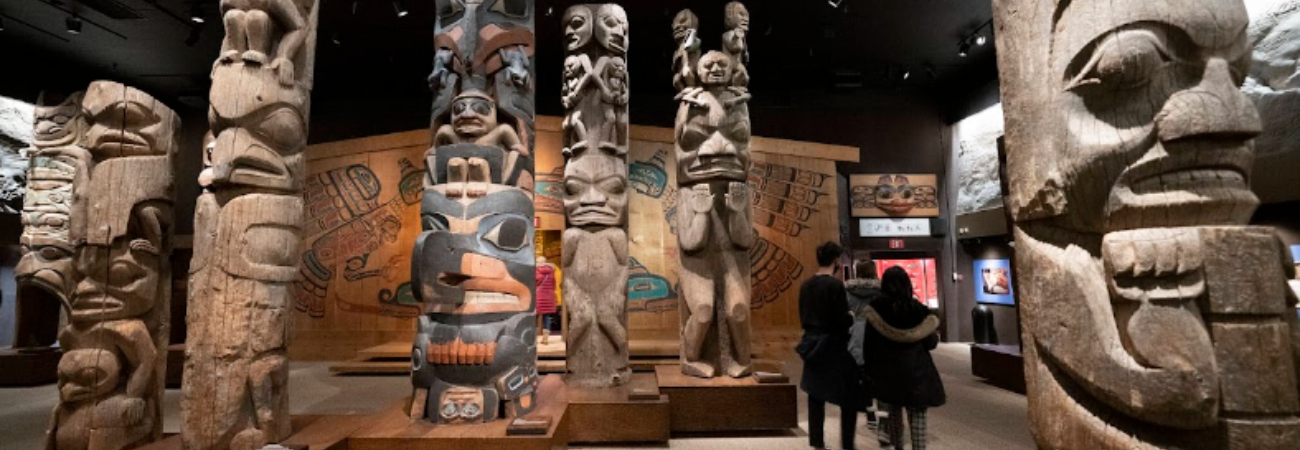
The relationship between Marius Barbeau and Emily Carr was one of the most consequential in Canadian art history. Although they were never close personal friends, Barbeau became one of her earliest and most influential champions at a pivotal moment in her life. After decades of artistic struggle, financial hardship, and professional isolation, Carr was 56 years old when she finally caught the break that transformed her career and long eluded her.
How the two of them met
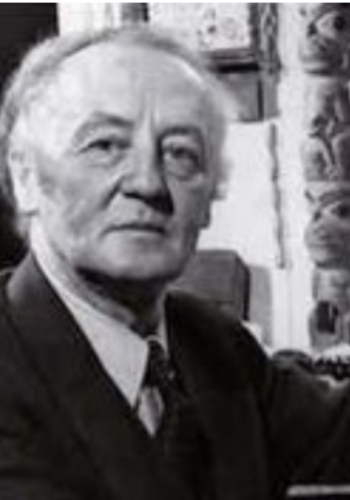
Marius Barbeau (1883–1969) was one of Canada’s pioneering anthropologists, ethnologists, folklorists, and museum scholars. After joining the Geological Survey of Canada in 1911—later the National Museum of Canada—he devoted more than five decades to documenting the languages, oral traditions, songs, carvings, and ceremonial art of First Nations communities, particularly on the Northwest Coast.
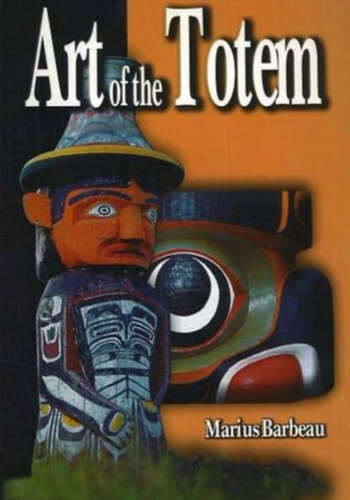
One of Barbeau’s most influential publications, this two-volume work published in 1950 documented the monumental poles of the Northwest Coast, including their designs, histories, meanings, and the traditions of the communities that created them. It remains an important historical record of Northwest Coast Indigenous art, although modern scholars have reassessed some of his interpretations through Indigenous perspectives.
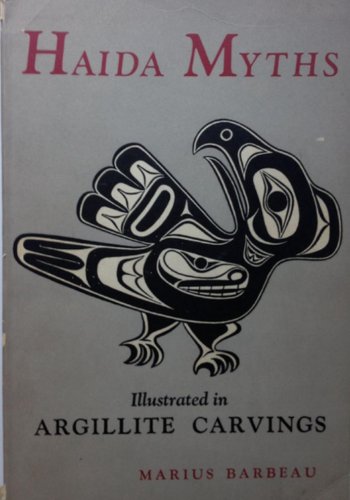
This book, published in 1953, collected and presented Haida stories and traditions recorded by Barbeau during his extensive fieldwork on the Northwest Coast. It reflects his interest in preserving oral histories, mythology, and the connections between storytelling, art, and cultural identity.
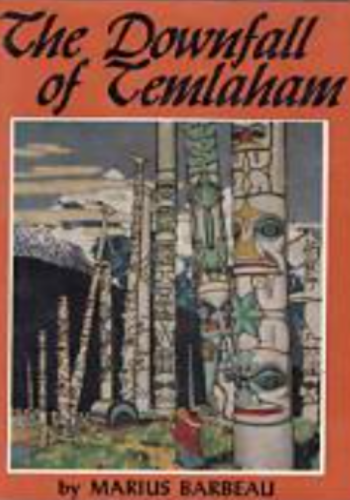
Based on Tsimshian oral traditions collected by Barbeau, this was one of his most widely known works. It presents the story of the legendary Tsimshian village of Temlaham and helped introduce Northwest Coast Indigenous narratives to a broader Canadian audience.
During his fieldwork among the Tsimshian, he learned of Emily Carr’s paintings of Indigenous villages and totem poles, reportedly through his long-time Tsimshian collaborator, William Beynon. Intrigued, he visited Carr in Victoria in the early 1920s. At the time, Carr was living at the House of All Sorts, operating a boarding house, making pottery and hooked rugs, and painting very little. She had largely disappeared from Canada’s art world after years of financial struggle and professional isolation.
Barbeau recognized Carr’s importance
Barbeau immediately appreciated that Carr had created an extraordinary visual record of Indigenous villages and monumental poles at a time when many were disappearing through neglect, removal, or government policies. He purchased several of her paintings and became convinced they deserved national recognition. More importantly, he believed her work belonged alongside Indigenous art in telling the story of the Northwest Coast.
The turning point: 1927
Barbeau’s greatest contribution was persuading Eric Brown, Director of the National Gallery of Canada, to visit Carr’s Victoria studio. Brown was organizing the landmark Exhibition of Canadian West Coast Art: Native and Modern in Ottawa in 1927, with Barbeau serving as co-curator. Acting on Barbeau’s recommendation, Brown travelled west, visited Carr several times, and selected many of her paintings for the exhibition.
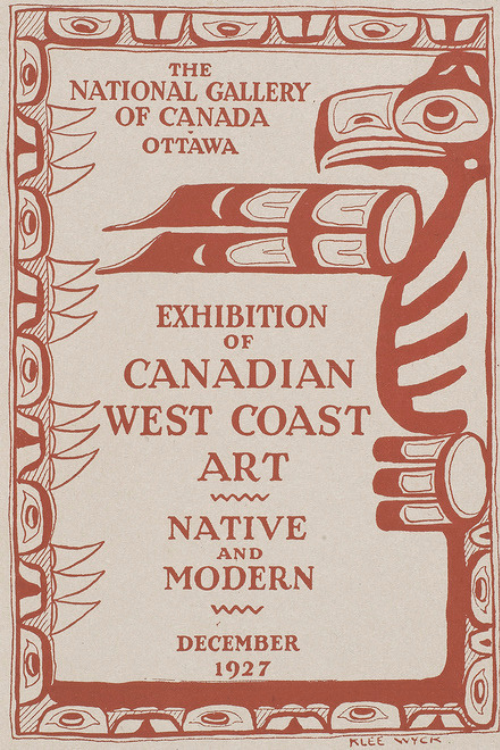
The 1927 exhibition Canadian West Coast Art: Native and Modern was a landmark moment in Canadian art history, bringing together the artistic traditions of Indigenous peoples of the Northwest Coast with the emerging modernist movement in Canada. other decorative objects featuring designs inspired by Northwest Coast Indigenous motifs. In addition to her creating the exhibition catalogue cover, 26 of her paintings were on display. At that time, she had largely stopped painting and supported herself through dog breeding, selling her pottery and hooked rugs to tourists and through outlets such as Canadian Pacific Railway shops.
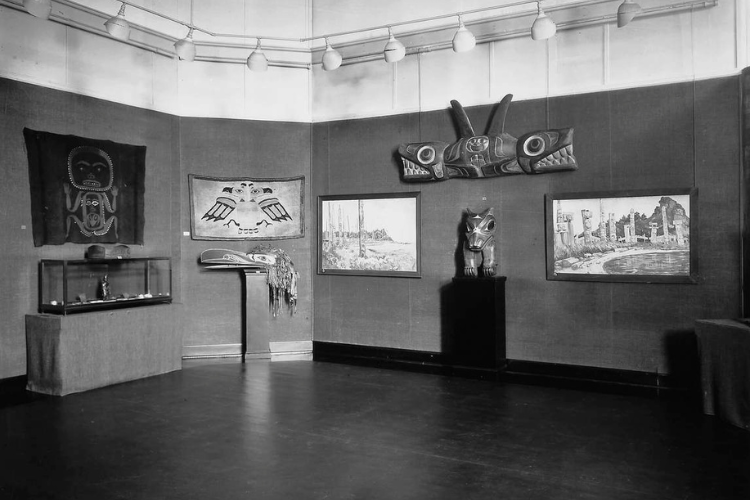
The inclusion of her pottery and hooked rugs is significant because it showed the breadth of Carr’s creative practice during a difficult period in her life. Although she is now celebrated primarily as a painter, these crafts sustained her financially and kept her engaged with Indigenous artistic traditions during the years before her artistic revival. The exhibition’s recognition of both her paintings and handcrafted objects helped establish Carr as an important West Coast artist and set the stage for the dramatic transformation of her career after 1927.
The exhibition changed Carr’s life.
For the first time, she travelled east to Ottawa, Toronto, and Montreal, where she met members of the Group of Seven, including Lawren Harris, A.Y. Jackson, Arthur Lismer, and J.E.H. MacDonald. Their encouragement renewed her confidence after nearly fifteen years of artistic isolation and inspired the bold, expressive landscapes for which she is now famous.
Shared interests—and important differences
Carr and Barbeau shared a deep admiration for the artistic achievements of Northwest Coast Indigenous peoples. Both believed these monumental carvings deserved recognition within Canadian culture.
However, they approached Indigenous culture differently.
- Barbeau worked as an ethnologist whose goal was to document cultures he believed were disappearing. His writings often reflected the early twentieth-century “vanishing race” theory that Indigenous cultures were destined to disappear—a view now widely rejected.
- Carr sought an emotional and spiritual response to Indigenous villages and monumental poles. While her work also reflected aspects of the “vanishing” narrative common in her era, her paintings increasingly became personal interpretations of the relationship between culture, memory, and the natural world rather than straightforward documentation. Modern scholars have critically reassessed both Barbeau’s and Carr’s perspectives in light of Indigenous scholarship.
Did they remain close?
After Carr’s breakthrough in 1927, Barbeau purchased one of her paintings.
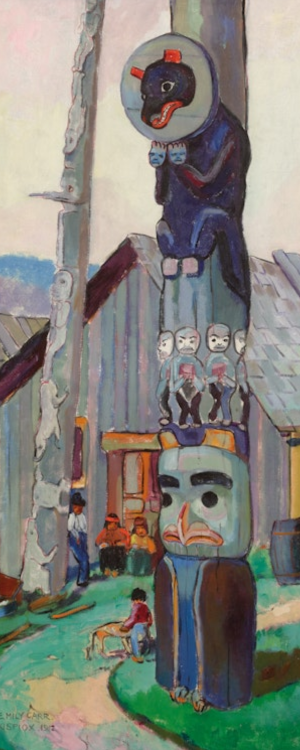
The Totem of the Bear and the Moon (1912)
Originally titled Kispayaks Totem Poles when exhibited in the 1927 Exhibition of Canadian West Coast Art: Native and Modern, it was acquired directly from Emily Carr by Barbeau in June 1928. It depicts a Gitxsan (then often written “Gitksan” or “Kispayaks”) totem pole from the Kispiox area of the Upper Skeena River and reflects Carr’s early efforts to document Northwest Coast Indigenous villages and monumental poles.
It was put on sale for the first time in 2022 by Cowley Abbott Auction.
Auction estimate:
$2 Million – $3 Million
Sold for: CAD $3,120,000
Barbeau remained a supporter, but he was no longer the central figure in her artistic life. That role shifted to Lawren Harris and other modernist painters, whose ideas encouraged Carr to move beyond documentary paintings of villages toward her powerful forest paintings of the 1930s.
Nevertheless, without Barbeau’s intervention, it is quite possible Carr would have remained relatively unknown outside British Columbia for many more years.
Why their relationship matters
Barbeau’s support had lasting consequences:
- He discovered and promoted Carr’s work nationally.
- He introduced her to Eric Brown and the National Gallery.
- He helped secure her place in the 1927 exhibition that transformed her career.
- He indirectly connected her to the Group of Seven.
- His belief in her work helped launch the final—and greatest—eighteen years of her artistic career.
As an ethnologist, Marius Barbeau sought to preserve the artistic and cultural traditions of Indigenous peoples. Emily Carr, through her paintings, transformed that legacy into a powerful expression of modern Canadian art. Together, they forged an important bridge between anthropology and art. By championing Carr’s work, Barbeau unintentionally helped launch the career of one of Canada’s greatest modern painters.
Their collaboration culminated in the landmark 1927 Exhibition of Canadian West Coast Art: Native and Modern, which brought Indigenous art and modern painting together in a way that permanently reshaped the course of Canadian art forever more.