Emily Carr and Nellie McClung: Two Pioneering Women of Victoria
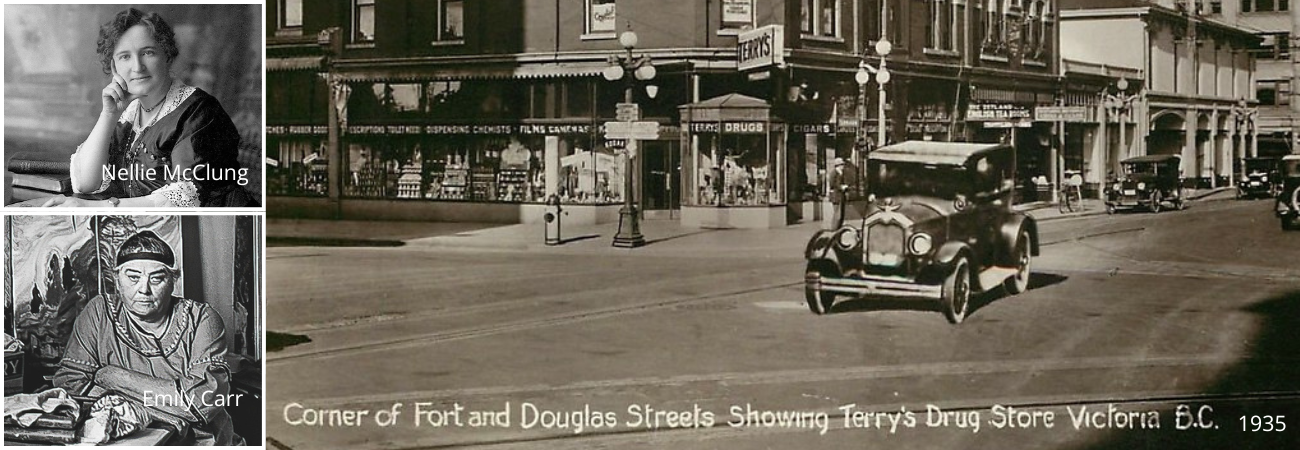
In the early decades of the 20th century, Victoria was home to two extraordinary women whose lives and work would leave enduring marks on Canadian society: Emily Carr (1871–1945), the pioneering painter and writer, and Nellie McClung (1873–1951), the social reformer, suffragist, and politician. Though they shared a city and era, their paths, ambitions, and legacies were strikingly different, reflecting the multiple ways women of their generation could influence the world.
Early Life and Family Background
Emily Carr was born on December 13, 1871, in Victoria, into a well-established middle-class family. Her father, Richard Carr, was a man of conservative values, a store owner who emphasized order and propriety, while her mother, Emily Saunders, struggled with health issues and died when Emily was just a young teenager. Her father died two years later. Emily’s childhood in Victoria was marked by both privilege and constraint. She grew up in a house filled with Victorian decor and a strong sense of British colonial values, yet she often felt stifled by the expectations placed upon her as a young woman in a patriarchal society. This tension between personal aspiration and social expectation would profoundly shape her later work as an artist and writer.
Nellie McClung, born on October 20, 1873, in Ontario, moved to Manitoba in her youth with her family, before eventually settling in in the Gordon Head community in Victoria in 1934 where she lived until she died in 1951. Nellie’s upbringing contrasted with Emily’s in significant ways. Her family was deeply involved in community life, and she grew up in a household that valued education, civic engagement, and moral responsibility. Unlike Emily, Nellie experienced the early loss of a parent with resilience that translated into a sense of social mission. She was encouraged to question authority and to speak up—a nurturing of independent thought that would propel her into leadership roles within the women’s suffrage movement.
Both women came from relatively comfortable backgrounds, yet their family circumstances shaped their ambitions differently. Emily’s constrained domestic environment instilled in her a restless drive to seek freedom through art and travel, while Nellie’s supportive, socially-minded family encouraged her to pursue public life and activism.
Education and Formative Experiences
Education played a pivotal role in shaping the trajectories of both Carr and McClung, though in markedly different ways. Emily Carr showed an early aptitude for art, but her opportunities were limited by both geographic and societal constraints. After her father’s death, she traveled to San Francisco to study painting more seriously. Her quest for artistic mastery took her across Canada and to Europe, including a significant period in France where she encountered modernist movements that challenged her early, more conventional style. These experiences allowed Carr to develop a unique artistic voice that synthesized European techniques with the landscapes and Indigenous culture of the Pacific Northwest.
Nellie McClung’s education was equally important, though it emphasized rhetoric, teaching, and civic responsibility rather than visual arts. She trained as a teacher at Manitoba’s normal school system, which prepared women for public service roles at a time when their options were limited. McClung’s education instilled in her not only literacy and critical thinking skills but also a keen awareness of societal inequities. Her professional training as an educator exposed her to the struggles of working-class women and children, providing both motivation and credibility for her later campaigns for women’s suffrage, temperance, and social reform.
Where Carr’s education took her across continents, fostering an inward-looking, creative exploration, McClung’s grounded her in social networks and civic engagement, preparing her for public oratory and legislative work. Both approaches, however, required determination and defiance of conventional expectations for women.
Careers and Accomplishments
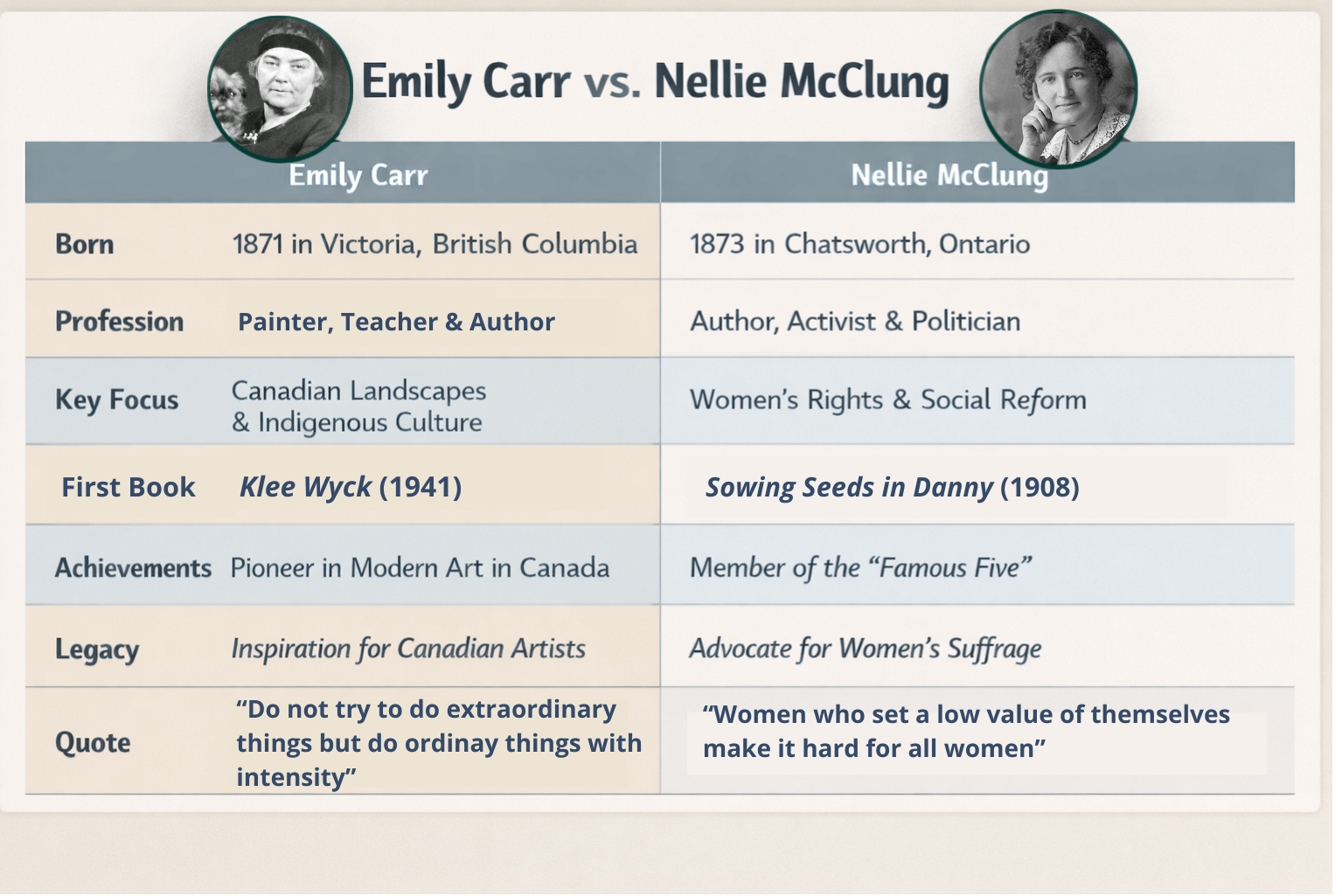
Emily Carr’s career as an artist was unconventional and often solitary. She is best known for her vivid depictions of the forests, landscapes, and Indigenous villages of British Columbia. Her style evolved from early, somewhat traditional European influences to a bold, expressive modernist approach, capturing the spiritual essence of the land. Carr also broke barriers as a female artist in a male-dominated field, gaining recognition late in life but ultimately achieving national and international acclaim. Beyond painting, Carr wrote extensively, producing memoirs and reflections that revealed a deeply philosophical and often spiritual approach to art. Her books, including Klee Wyck (1941), earned literary awards and remain a vital part of Canadian cultural history.
Nellie McClung, by contrast, carved her legacy in the political and social realm. She was a central figure in the women’s suffrage movement in Canada, instrumental in the “Persons Case” of 1929, which legally recognized women as “persons” eligible to serve in the Senate. McClung’s accomplishments also included founding social programs, advocating for temperance, and promoting education and welfare reforms. A gifted orator and writer, she published novels and essays that combined storytelling with advocacy, reaching broad audiences and inspiring political change. Unlike Carr, whose recognition came primarily through her art and writing, McClung’s impact was tangible in legislation, public policy, and shifts in social consciousness.
Personal Life and Social Context
Emily Carr’s unmarried status allowed her independence to travel, paint, and immerse herself in the study of Indigenous cultures without the domestic expectations of marriage. Her diaries and letters reflect both the freedom and loneliness that came with this choice. She often described herself as being at odds with conventional society, yet she drew rich inspiration from her solitary pursuits and the natural world around her.
While Nellie McClung did marry and raise five children, her public life often took precedence, a balancing act she managed with determination and pragmatism. McClung’s personal life underscored her broader philosophy that women could—and should—participate fully in public life, challenging societal norms about domesticity and female dependence.
Both Prolific Authors
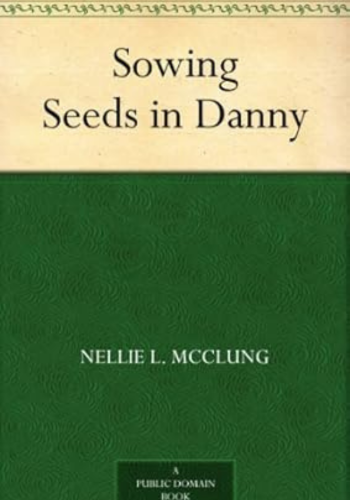
Nellie McClung’s writing is deeply rooted in her commitment to social reform and the fight for women’s rights in Canada. As one of the Famous Five, she was not only an activist but also a prolific author, publishing novels, essays, and memoirs that combined wit, sharp observation, and moral conviction. Her fiction often explores small-town life, highlighting the struggles and triumphs of women, while her autobiographical works provide vivid accounts of her experiences campaigning for suffrage and social justice.
McClung’s prose is clear, engaging, and accessible, reflecting her desire to reach a wide audience and inspire change, whether through the humour of her early novels like Sowing Seeds in Danny (1908) or the passionate arguments in In Times Like These. Across her 37 fiction and non-fiction books, a consistent thread is her keen eye for character, her critique of societal norms, and her belief in the power of ordinary people to effect meaningful change.
Emily Carr’s writing, by contrast, emerges from a life immersed in the natural and spiritual world rather than the public sphere of politics. Her books, including Klee Wyck (1941) and The Book of Small (1942), blend memoir, travel writing, and philosophical reflection, capturing her encounters with Indigenous communities and the forests of British Columbia. Unlike McClung’s outward-looking focus on social activism, Carr’s prose is lyrical, introspective, and meditative, shaped by her painterly sensibility. Her words often evoke the rhythms, textures, and sacredness of the landscape, giving readers a sense of the spiritual connection she felt with the natural world.
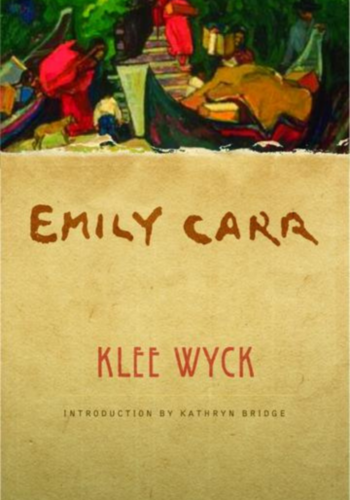
While both women were prolific and deeply reflective in their writing, McClung’s work is primarily concerned with social action and the dynamics of human society, while Carr’s celebrates personal exploration, artistic vision, and communion with nature, creating a complementary but very different literary legacy. They both won awards for their first book and they both continued to write up until the end of their lives.
Both Immortalized in Bronze
Another connection between Emily Carr and Nellie McClung is uniquely celebrated through the work of Edmonton sculptor Barbara Patterson, whose artistry links two iconic Canadian women in the public imagination. Patterson first gained national attention with her creation of the Famous Five statue, unveiled in 2000 on the grounds of Parliament in Ottawa, which prominently featured Nellie McClung alongside her four fellow advocates for women’s suffrage: Henrietta Muir Edwards, Louise McKinney, Irene Parlby and Emily Murphy. This work not only commemorated McClung’s pivotal role in advancing women’s voting rights but also highlighted the broader struggle for gender equality in Canada.
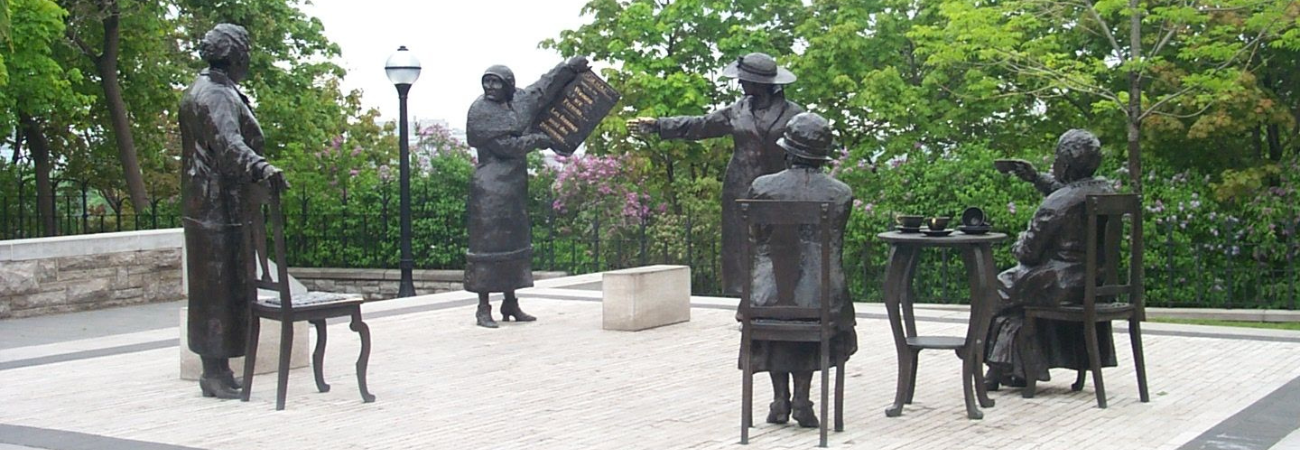
A decade later, Patterson was commissioned to capture another trailblazing figure through her bronze sculpture Our Emily, installed in 2010 in front of the Empress Hotel in Victoria which immortalized Emily Carr. Through these two public works, Patterson bridges the worlds of activism and artistic innovation, celebrating McClung’s political courage and Carr’s cultural vision while underscoring the enduring impact of women who shaped Canada’s history.

Legacy and Lasting Influence
The legacies of Emily Carr and Nellie McClung continue to resonate in Canada and beyond. Emily Carr is celebrated as one of Canada’s foremost painters, whose works capture the spiritual and ecological richness of British Columbia. Carr’s influence extends to contemporary art and literature, inspiring generations of artists to explore national identity, Indigenous culture, and the natural environment with empathy and creativity.
Nellie McClung’s legacy is equally profound but different in character. She is remembered as a trailblazer for women’s rights, her contributions to the legal recognition of women as full citizens forming a cornerstone of Canadian feminist history. Schools, awards, and commemorations across Canada honour her life and work, and her writings continue to inform discussions about civic engagement, equality, and social responsibility. Where Carr shaped Canada’s cultural imagination, McClung reshaped its legal and political framework.
An intriguing overlap is that both women were deeply attuned to the land and society around them. Carr’s paintings celebrated the physical and spiritual landscape of British Columbia, while McClung’s activism was rooted in understanding the societal “landscape” and advocating for structural changes. Both were observers and interpreters of their world, translating insight into enduring contributions.
Despite differences in medium and method, both women leveraged creativity and intellect to challenge social norms and elevate their causes. They also shared a unique bond through the city of Victoria, a place that nurtured their talents while shaping their perspectives on art, society, and gender.