Emily Carr, Her Young Friends & The “Modern Room”
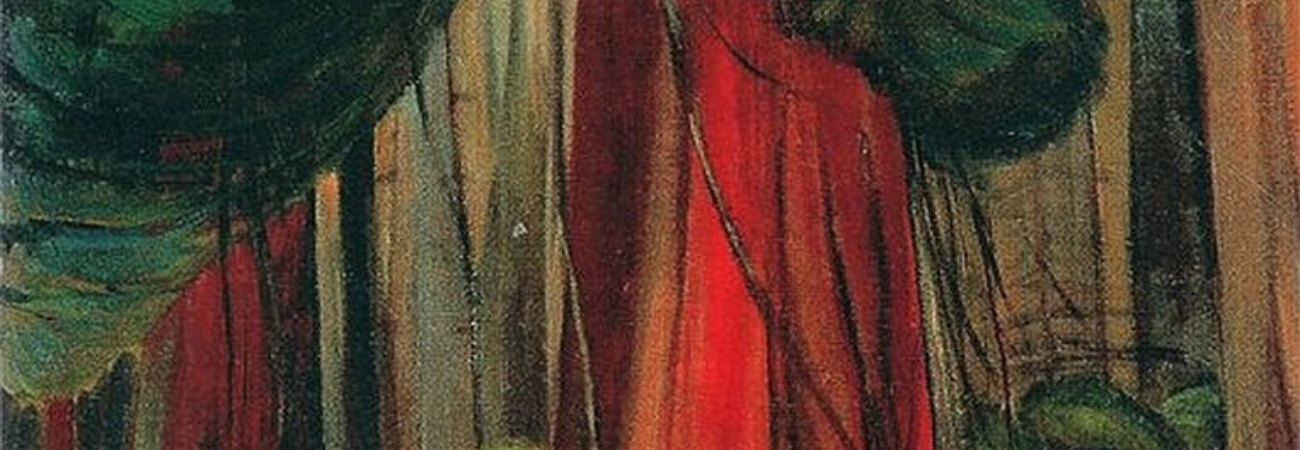
The Island Arts and Crafts Society in Victoria, BC, formed in 1909, played a pivotal role in shaping the region’s cultural landscape, particularly with its groundbreaking 1932 exhibition. One of the most memorable aspects of this event was the inclusion of the “Modern Room,” a space dedicated to showcasing for the first time ‘modern art’ in Victoria, a radical departure from the more traditional works that dominated at the time.
The exhibition featured works from some of Canada’s most prominent artists, including Emily Carr, Max Maynard, Jack Shadbolt, Edythe Hembroff-Scheicher, and Ina Uhthoff.
These artists, known for their bold experimentation with form, colour, and subject matter, challenged the conventions of Canadian art in the early 20th century. Carr’s emotionally charged landscapes, Maynard’s abstract explorations, Hembroff’s nudes, Uhthoff’s technical versatility and Shadbolt’s expressive compositions all contributed to a new artistic language that was ahead of its time.
The exhibition’s “Modern Room” was a shock to many attendees, who were more accustomed to the classical and conservative art styles that were popular in Victoria at the time. The works displayed in this room were perceived as unconventional, even unsettling by some, pushing boundaries and defying expectations of what art should look like.
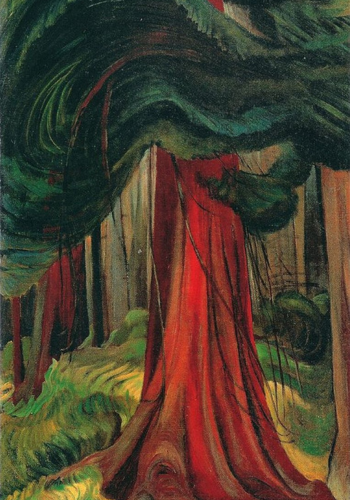
Emily Carr’s involvement in the exhibition was significant. She had been pushing a modernist aesthetic for years — largely ignored locally even after her national recognition in the late 1920s — and the Modern Room offered a rare platform in Victoria where her more expressive and progressive painting approach could be positioned together with kindred voices.
The reception, even from many Society members, was mixed and sometimes hostile. At that time, popular taste in art was ultra-conservative. The British landscape watercolour tradition was still embedded. Even in the 1950s, Colin Graham , the first director of the Art Gallery of Greater Victoria and Ina Uhtoff, an AGVV board member faced resistance when showing “modern art” in AGGV exhibitions. Up until the inclusion of the “Modern Room” in 1932, only Emily Carr and Max Maynard had received national attention.
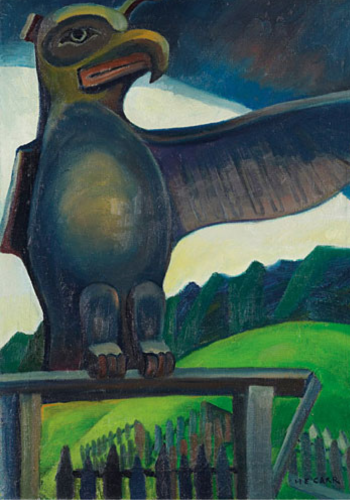
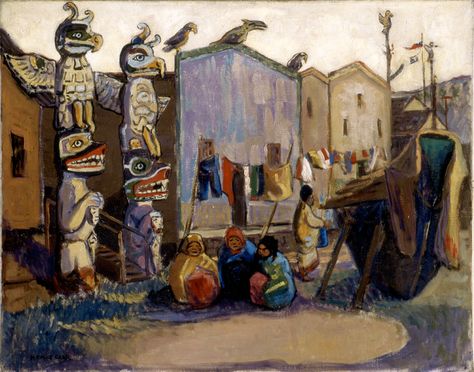
By 1930, Carr’s subject matter was evolving from Indigenous to forest themes and the “Modern Room” displayed examples of both. By 1932, Carr was deep into her mature “forest interior” period — large canvases of towering trees, swirling skies, and compressed space, often painted in strong greens and blues with animated brushwork. These works would have contrasted sharply with the gentler watercolours and traditional landscapes that dominated the main galleries of the Island Arts and Crafts Society exhibition.
Max Maynard, the vice president of the Islands Arts & Craft Society who had been exhibiting with them since 1928 had previously exhibited in Seattle and at the National Gallery prior to 1932. “The Modern Room” was Jack Shadbolt’s first exhibition. Neither of them had previous formal art training but they avidly studied the work of the Group of Seven, discussed art and literature, and went on sketching trips together. They admired Carr’s interpretation of the west coast landscape and tried to strike up a friendship with her but she regarded them more as competitors than friends.
Edythe Hembroff-Schleicher, a younger Victoria artist, became part of Carr’s circle in the 1930s and 1940s and often visited her, encouraging both her painting and writing. They had much in common having attended the same art schools in London and France. Carr trusted her deeply. After Carr’s death in 1945, Hembroff-Schleicher helped preserve her legacy by cataloguing her work and writing the memoir M.E. in the Life of Emily Carr, offering a personal portrait of the artist.
Ina D. D. Uhthoff and Emily Carr shared a supportive friendship within Victoria’s early 20th-century art community. Uhthoff, a younger artist and influential teacher at the Victoria School of Art, admired Carr’s bold modernist approach and helped foster appreciation for her work locally. While their styles differed—Uhthoff working more within traditional landscape painting and Carr pushing toward expressive modernism—they respected one another’s dedication to art and contributed together to the growth of Victoria’s artistic culture.
The 1932 Modern Room can be seen as a local modernist moment in Victoria’s art history: a conscious effort to carve out space for newer art languages, with Carr as a central figure — even though her work still struggled against the dominant conservative tastes of the Island Arts and Crafts Society. It also prefigured broader changes in Victoria’s art scene, including later efforts toward a dedicated public art gallery — something Carr herself hoped for and discussed in her writings during this period.
Together, they exhibited 24 paintings in the Modern Room.
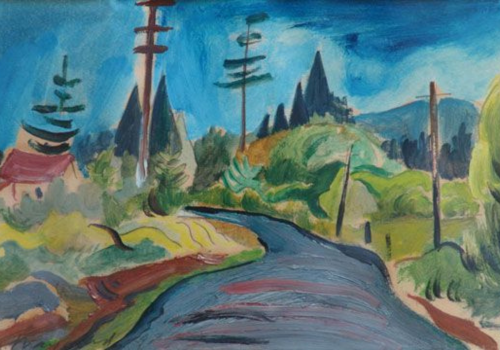
Max Maynard (b. India, 1903 | d. Victoria, 1932), born in India of missionary parents came to Victoria in 1912. In 1927, he met fellow spirit in Jack Shadbolt, who also taught art in an elementary school. They were frequent visitors to Emily Carr’s studio. Maynard had exhibited four times with the Island Arts and Crafts Society, serving as its vice-president in 1932. Shadbolt had never exhibited anywhere before.
Jack Shadbolt (b. England, 1909 | d. Burnaby, 1998), born in England moved with his family to Victoria in 1912. Shortly after his exhibition in the “Modern Room” in 1932, he left Victoria to travel in the United States, he returned to Canada and joined the faculty of the Vancouver Art School in 1937, teaching painting and drawing until 1966.
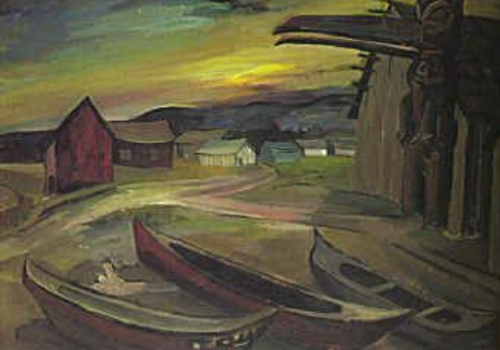
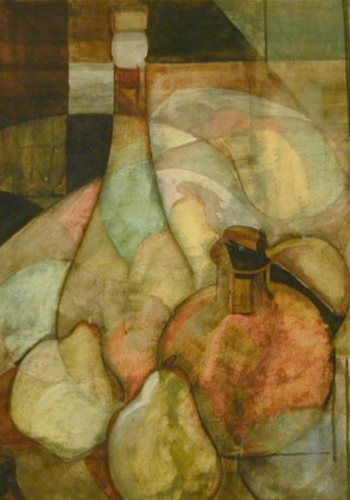
Ina Uhthoff (b. Germany, 1889 | d. Ontario 1971), a key figure in the cultural history of Victoria was a younger contemporary of Emily Carr, Uhthoff was a single parent, an artist, teacher, and art critic for the Times Colonist. Born in Scotland she trained at the Glasgow School of Art came to Canada in 1913 and lived in the Kootenays. Founder of the Victoria School of Art and prime mover in the founding of the Art Gallery of Greater Victoria. Her work is in the permanent collection at the Art Gallery of Greater Victoria, the Maltwood Art Museum & Gallery, the Vancouver Art Gallery and the Glenbow Museum.
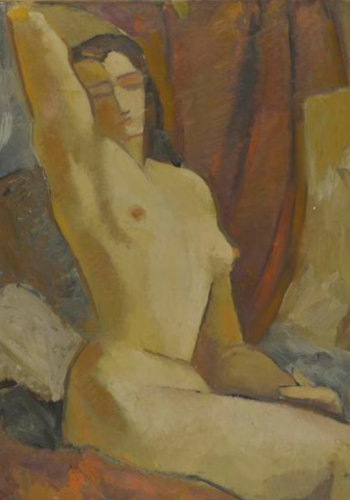
Edythe Hembroff-Schleicher exhibited four paintings in the “Modern Room.” After Carr’s death in 1945, Hembroff-Schleicher played a crucial role in preserving her reputation: she helped catalogue Carr’s paintings and writings, worked with curators and publishers, and wrote the memoir M.E. in the Life of Emily Carr, which remains one of the most intimate firsthand accounts of Carr’s personality, working habits, and struggles. Emily Carr, Ina Uhthoff and Hembroff-Schleicher were the only women in the show. In 1981, she organized a recreation of the Island Arts and Crafts Society’s Modern Room Exhibit at the Emily Carr Gallery in Victoria. Her catalogue, written for this event, is now a collector’s item.
The 1932 Modern Room can be seen as a local modernist moment in Victoria’s art history: a conscious effort to carve out space for newer art languages, with Carr as a central figure — even though her work still struggled against the dominant conservative tastes of the Island Arts and Crafts Society. It also prefigured broader changes in Victoria’s art scene, including later efforts toward a dedicated public art gallery — something Carr herself hoped for and discussed in her writings during this period.
Despite the controversy, the event was a turning point for modern art in Victoria, offering a
glimpse into the future of Canadian art. The exhibition not only helped to elevate the profile of these pioneering artists but also marked a significant moment in the history of the Island Arts and Crafts Society, cementing its legacy as a champion of innovation and artistic progress in the region to this day operating now as the Victoria Sketch Club.