Not Friends, Not Rivals: Emily Carr and Sophie Pemberton in Early Victoria
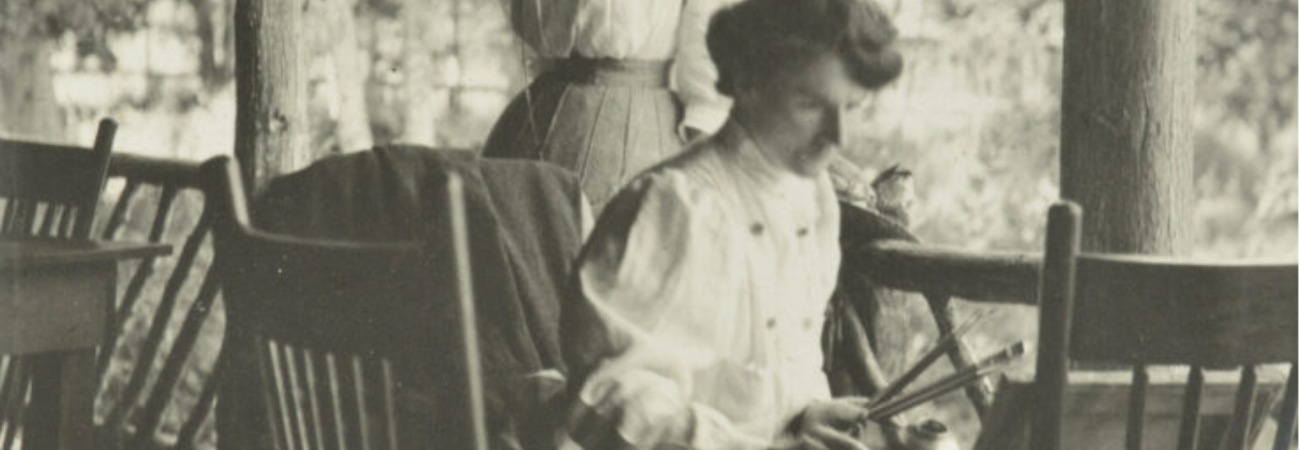
Sophie Pemberton (1869-1959) and Emily Carr (1871-1945) are often mentioned together as early professional women artists from Victoria, yet their relationship is best understood not as a close friendship, but as a series of parallel trajectories shaped by the same place, the same small artistic community, and profoundly different temperaments and circumstances.
Their lives overlapped repeatedly—sometimes directly, sometimes obliquely—and taken together they reveal much about what it meant to pursue art from Vancouver Island at the turn of the twentieth century.
Shared Beginnings in Late-Nineteenth-Century Victoria
Pemberton was two years older than Carr, born into privilege, educated abroad, and supported—financially and emotionally—by a powerful family network. Carr, by contrast, struggled for independence from a conservative household, scraped together funds for training, and endured long stretches of obscurity and self-doubt. Yet both women began in the same physical and cultural landscape: late-nineteenth-century Victoria, a colonial city still defining itself, where art was encouraged as refinement but rarely embraced as a profession.
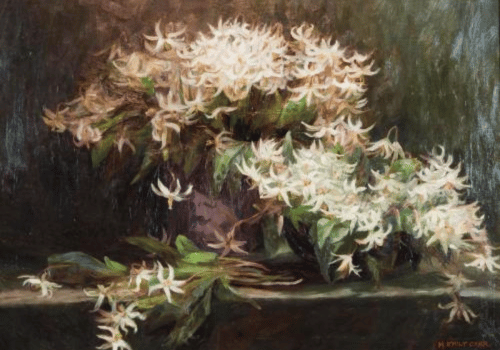
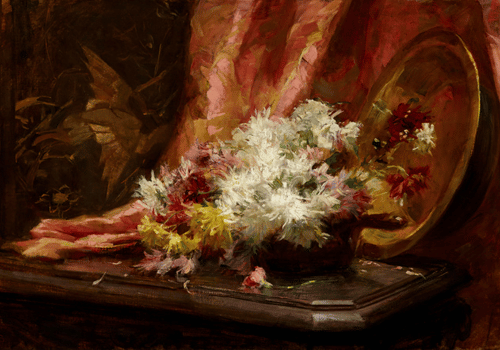
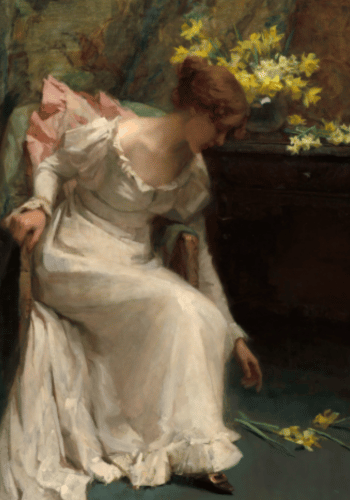
Both shared the same childhood art teacher, Emily Woods, both attended the same church, the Church of Our Lord, and both were charter members of the Island Arts and Crafts Club founded in 1909 (later the Island Arts and Crafts Society). They both started out by painting in a conservative, conventional and realistic style:
The Island Arts and Crafts Club: A Common Institution, Different Experiences
The Club promoted artists and exhibitions in Victoria—bringing together local painters, sculptors, and craft-makers. Pemberton participated actively in its activities and exhibited her work with the Society in the 1910s and early 1920s, helping to establish its annual shows as important local artistic events. Her involvement extended across multiple years, with her paintings shown in Island Arts and Crafts Society exhibitions in 1916, 1921, and 1922, demonstrating her ongoing engagement with and support for the emerging artistic community in Victoria even as she balanced an international career and later life abroad and back home.
Carr’s relationship with the Island Arts and Crafts Club was more complex and reflected both her early participation in the city’s art community and her later frustration with its conservative tastes. Her own writings reveal a degree of critical distance: she found the club’s exhibitions and attitudes narrow and dismissive of innovation, and felt that its conservative art world did not embrace her evolving, bolder artistic expression. Nonetheless, her involvement places her within Victoria’s early organized arts scene even as her later trajectory pushed beyond the confines of the Island Arts and Crafts Society.
Painting Outdoors: Women, Landscape, and Respectable Freedom
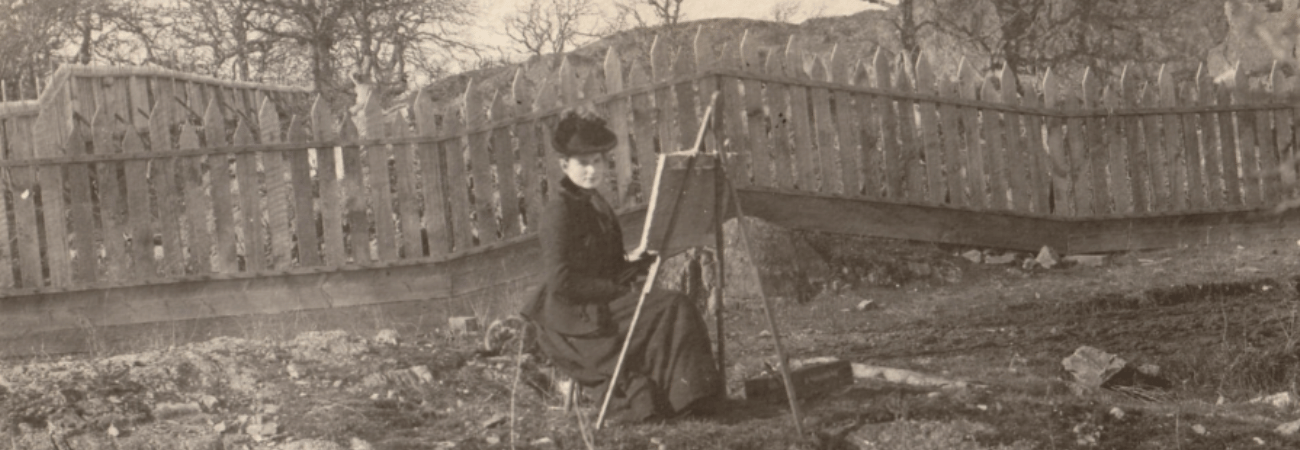
As young women, both sketched outdoors around Victoria and the surrounding countryside. En plein air painting was one of the few socially acceptable ways for women to engage seriously with art, and small groups of young female artists—often organized by Josephine Crease—ventured together to Cowichan Bay, Shawnigan Lake, and wooded areas north of the city. Emily Carr’s early ink and watercolour sketches from the mid-1890s suggest that she likely participated in these outings. Sophie Pemberton, already technically advanced, was doing the same kind of fieldwork—observing, recording, and learning how to translate the Island landscape into paint.
Temperament and Distance in a Close Community
Despite these shared beginnings, there is little evidence that Carr and Pemberton were close socially in Victoria. Their personalities were quite different. Pemberton was polished, cosmopolitan, and socially adept; Carr, by her own account, felt awkward, impatient with convention, and often at odds with Victoria society. When Carr later wrote from England that she “had not seen Sophie yet,” the remark hints less at estrangement than at how loosely connected even a small art community could be once its members scattered abroad.
Leaving the Island: Timing, Opportunity, and International Exposure
What mattered more than personal closeness was timing. Pemberton left Victoria early and decisively, pursuing advanced training in London and Paris throughout the 1890s. By the time Carr was teaching children and saving pennies for her own education, Pemberton was already exhibiting at the Royal Academy of Arts and winning prizes at the Académie Julian. In this sense, Pemberton functioned as a quiet precedent: proof that a woman from Victoria could succeed internationally, even if Carr did not—or could not—follow the same path at the same moment.

Diverging Styles and Ways of Seeing
Their artistic development also diverged stylistically. Pemberton was grounded in academic realism and portraiture, later loosening her approach through Impressionist and early modern influences. Carr, after her delayed exposure to post-Impressionism in France, moved more radically toward expressive form and spiritual intensity. Yet Pemberton’s landscapes of Vancouver Island from the first decade of the twentieth century reveal a sensitivity to atmosphere, light, and mood that prefigures Carr’s later “fresh seeing.” In this respect, Pemberton was ahead of the local curve, introducing European-trained ways of looking at the West Coast landscape before they were widely understood or accepted.
Service, Institutions, and Art in Civic Life
Their artistic development also diverged stylistically. Pemberton was grounded in academic realism and portraiture, later loosening her approach through Impressionist and early modern influences. Carr, after her delayed exposure to post-Impressionism in France, moved more radically toward expressive form and spiritual intensity. Yet Pemberton’s landscapes of Vancouver Island from the first decade of the twentieth century reveal a sensitivity to atmosphere, light, and mood that prefigures Carr’s later “fresh seeing.” In this respect, Pemberton was ahead of the local curve, introducing European-trained ways of looking at the West Coast landscape before they were widely understood or accepted.
A Quiet Turning Point: Pemberton, Carr, and National Recognition
Their most consequential connection came quietly and indirectly. In 1921, after decades abroad, Sophie Pemberton returned briefly to British Columbia and visited Emily Carr. When Pemberton later encountered Harold Mortimer-Lamb in Vancouver, she spoke enthusiastically about Carr’s work. Mortimer-Lamb, a respected critic and tastemaker, then visited Carr himself and was deeply impressed. He alerted Eric Brown, director of the National Gallery of Canada, setting in motion the chain of events that led to Carr’s national—and eventually international—recognition.
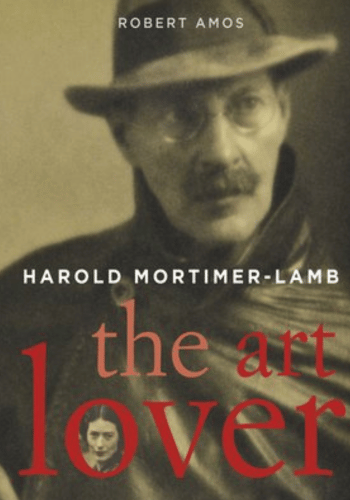
This moment is easy to overlook, yet it is pivotal. Pemberton, already established and secure in her reputation, used her cultural authority to amplify Carr’s work at precisely the right moment. She did not position herself as a mentor, nor did she seek credit. But without that conversation—without Pemberton’s informed endorsement—Carr’s “discovery” might have come later, or differently, or not at all.
Two Responses to the Same Challenge
In the end, Sophie Pemberton and Emily Carr represent two distinct responses to the same challenge: how to be a serious artist from a remote place at a time when women were rarely encouraged to try. Pemberton’s career demonstrates what was possible with education, resources, and mobility. Carr’s career reveals the cost of forging a path without those advantages. Together, they shaped the artistic identity of Vancouver Island—Pemberton through international example and institutional support, Carr through visionary transformation.
Rethinking Legacy: What Their Connection Reveals
Understanding their connection enriches both stories. It reminds us that Carr did not emerge from isolation, and that Pemberton’s legacy extends beyond her own canvases. In their different ways, both women helped pull the Island Arts and Crafts Society into the modern world.
Kathryn Bridge – Sophie Pemberton, BC’s first professional artist
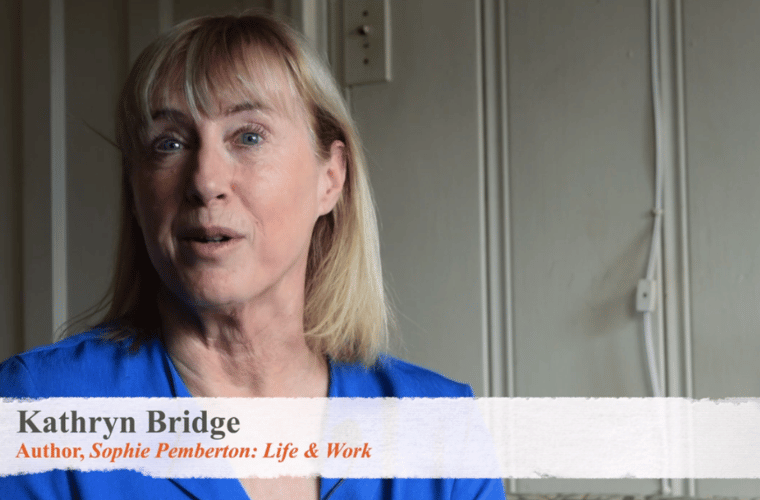
Sophie Pemberton and Emily Carr will be featured among the Remarkable Women Resting at Ross Bay Cemetery on a special guided tour marking International Women’s Day, March 8, 2026.