Beyond Canada: dOCUMENTA (13) and the Rise of Emily Carr’s International Reputation

Paintings by Emily Carr received international attention for the first time in one of the biggest and most influential art exhibitions in the world. In an unprecedented event for a Canadian painter, seven oil on canvas paintings by Carr from the Vancouver Art Gallery’s collection were included at dOCUMENTA (13) in Kassel, Germany in 2012. During its 100-day run dOCUMENTA attracted more than 750,000 people who paid to see works by more than 70 artists from 55 countries.
Held every five years, dOCUMENTA is known for selecting cutting-edge contemporary artists and under-acknowledged historical artists, introducing them to a wider audience. While dOCUMENTA isn’t a sporting competition, its impact on the art world has been compared to that of the Olympics in sport.
It’s extraordinarily important for Emily Carr for her work to be seen in this international context,” said Kathleen Bartels, director of the VAG at that time. “In British Columbia, we think she’s ours and not known like she should be. This is an opportunity for the art community and hundreds of thousands of visitors who go to dOCUMENTA to be familiar with Emily Carr. “The fact that these stellar works are from the Vancouver Art Gallery collection is something we’re extraordinarily proud of.
During her life, Emily Carr toiled under often supremely difficult conditions: poverty, isolation, ridicule – artistic and otherwise. Her talent was often not recognized, or acknowledged. But she persevered, “an isolated little old woman on the edge of nowhere,” as she once referred to herself.
Although work by painters such as Jean-Paul Riopelle have been included in previous dOCUMENTAs while they were alive, Carr is the first Canadian painter to be shown at the exhibition in Kassel posthumously, not Tom Thomson, not any members of the Group of Seven.
“It’s stupendous to see her work in dOCUMENTA,” said Daina Augaitis, chief curator and associate director at the Vancouver Art Gallery, which provided seven Carr works for the exhibition. “It really is the ultimate in the art world.” “She’s on the world stage here,” she said from Kassel. “It really is the ultimate in the art world.” dOCUMENTA(13), placed an emphasis on female modernists from the early part of the 20th century, who in many ways have paved the way for the contemporary artists generally associated with dOCUMENTA.
dOCUMENTA is also unique because of the secrecy around revealing participating artists. The exhibition has a history of keeping the full list of artists secret until its big announcement. The secrecy has extended across the globe to the VAG, according to the gallery’s senior curator Ian Thom.
Only a small group of people in the gallery knew Carr paintings were heading to Europe. All communication was one-to-one phone calls and emails. It took months before the VAG was told the exhibition’s title which is the unusual and long The dance was very frenetic, lively, rattling, clanging, rolling, contorted and lasted for a very long time.
The secrecy extended to installing Carr’s paintings in Kassel. Thom spent 19 1/2 hours in transit accompanying the Carrs as they were shipped from the VAG and hung in the Neue Galerie. He said he met some Australian art officials who were installing the work of an Australian artist at the gallery. Despite being prodded, Thom wouldn’t name the artist.
Thom has no idea why dOCUMENTA requires such secrecy.
You’ll have to ask them that,” he said in an interview at the VAG after his return. “I can only assume that it is because dOCUMENTA is an extraordinarily big deal. The reality is that some people’s careers have been made by being in dOCUMENTA.
In selecting works, artistic director Carolyn Christov-Bakargiev was helped by a team of curators around the world. In Canada, it was Kitty Scott, the director of visual arts at The Banff Centre.
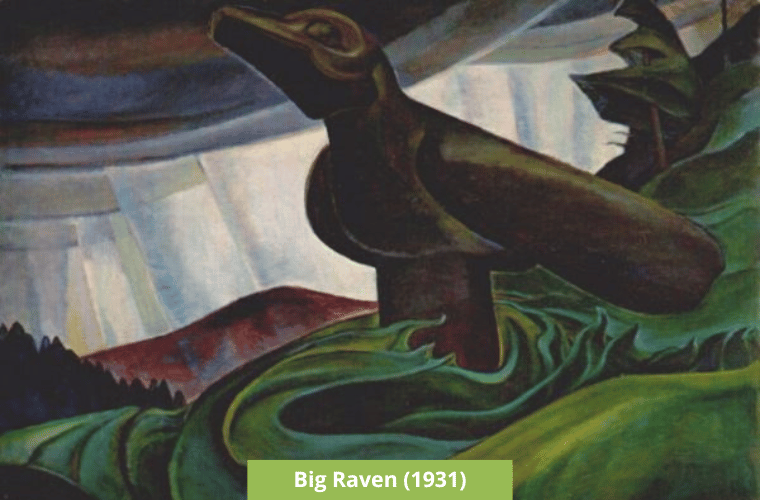
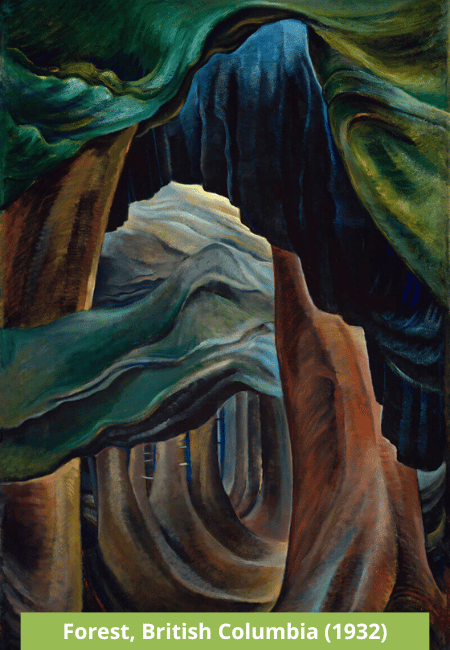
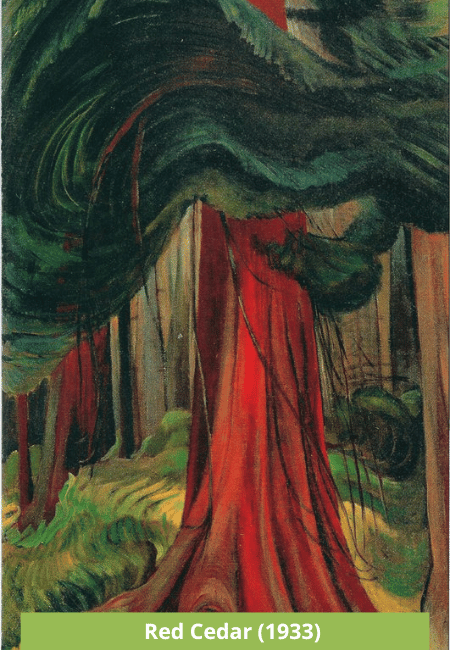
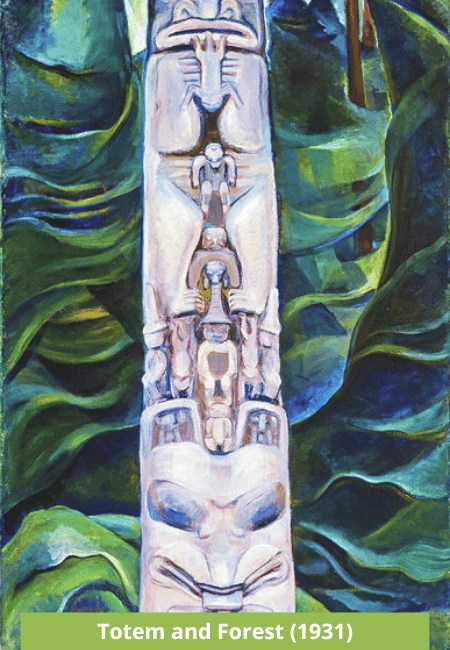
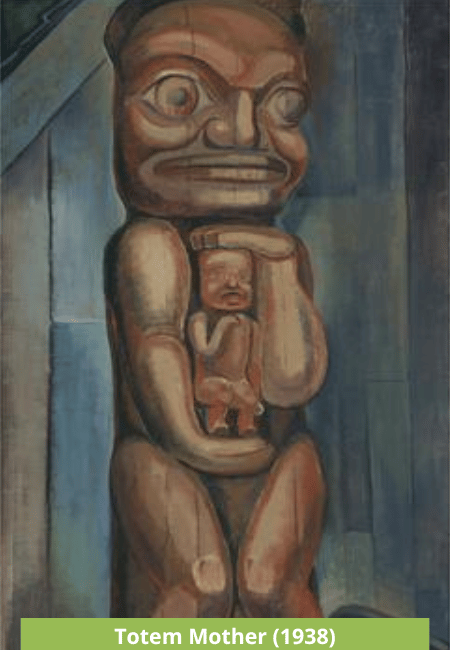
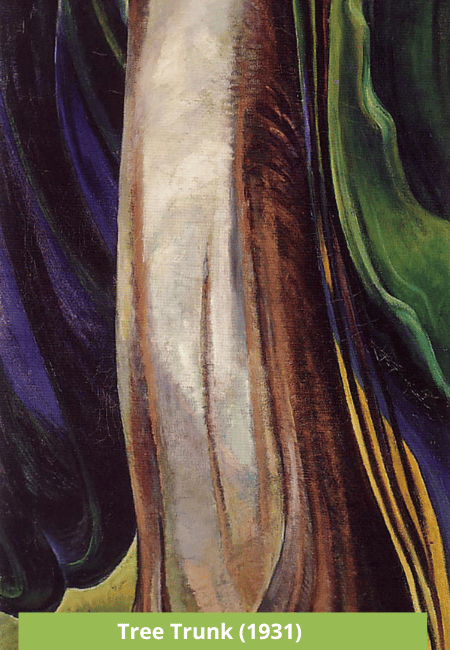
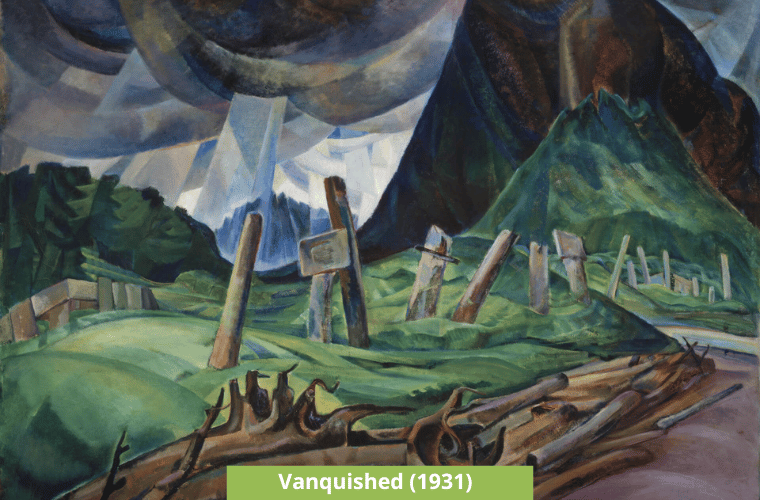
Thom said the Carr paintings that dOCUMENTA selected depict both first nations and the forest. They were all painted after 1927 when Carr met Lawren Harris and the Group of 7 and was included in a major exhibition of native and modern art at in the National Gallery in Ottawa.
Carr, who had virtually stopping painting for 15 years, became rejuvenated by the encounter with modernist painting and gradually started moving to what Thom called her late, great subject matter — the forest.
“I think what Carolyn Christov-Bakargiev is interested in is in people, particularly women, who were engaging with modernism in some way and were outside of the mainstream — on the periphery of the world,” Thom said. “Emily Carr was clearly one of those people on the periphery of the world.”
Thom said while there have been a number of attempts to get Carr into the international big time like the U.S. artist Georgia O’Keeffe, it hasn’t happened — at least not yet. This may be one of the ways she gets introduced to a much larger audience,” he said.
Certainly the Germans and Austrians have been extraordinarily fascinated by first nations’ culture. I think they will be interested in those pictures and also how she looks at the natural world of B.C.
Carr paintings exhibited at dOCUMENTA (13) were Big Raven, Totem Mother, Vanquished, Totem and Forest, Forest, British Columbia, Red Cedar and Tree Trunk.
dOCUMENTA 13 ran from Saturday, June 9 to Sunday, September 16, 2012.