Discipline and Inspiration: How Richard Carr Shaped Emily Carr’s World View
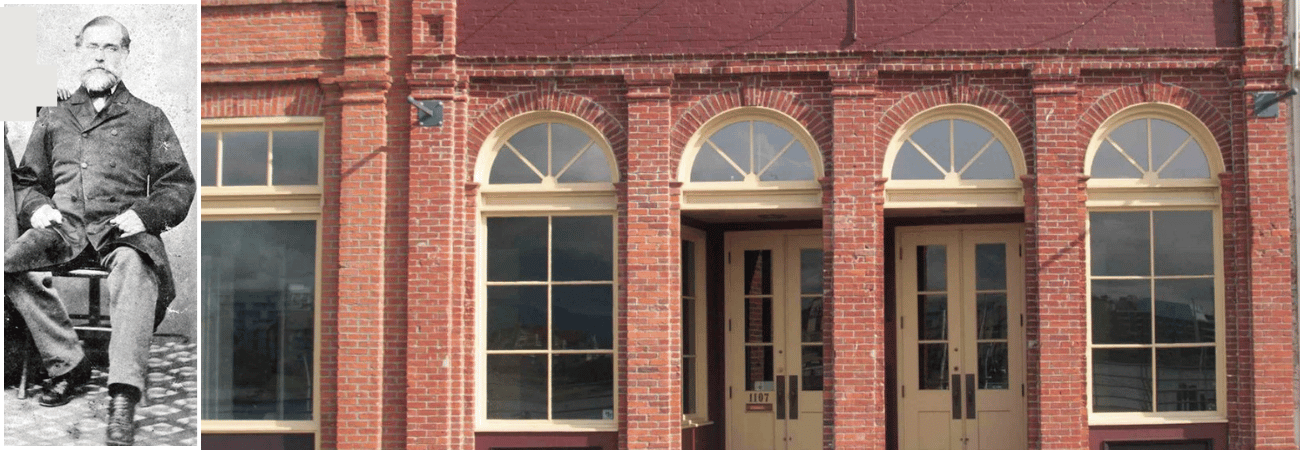
Emily’s father, Richard Carr was born in Beckley, England on July 16, 1818, the youngest of thirteen children. His father Thomas Carr was a tradesman and did not provide any formal schooling for Richard. When he was 19, Richard sailed on a ship to the New World, America. Homesick for his own kind of people, Richard became restless, moving through the Americas, staying no longer then eight weeks in one place. Rumors of a gold rush brought him to California in 1848.
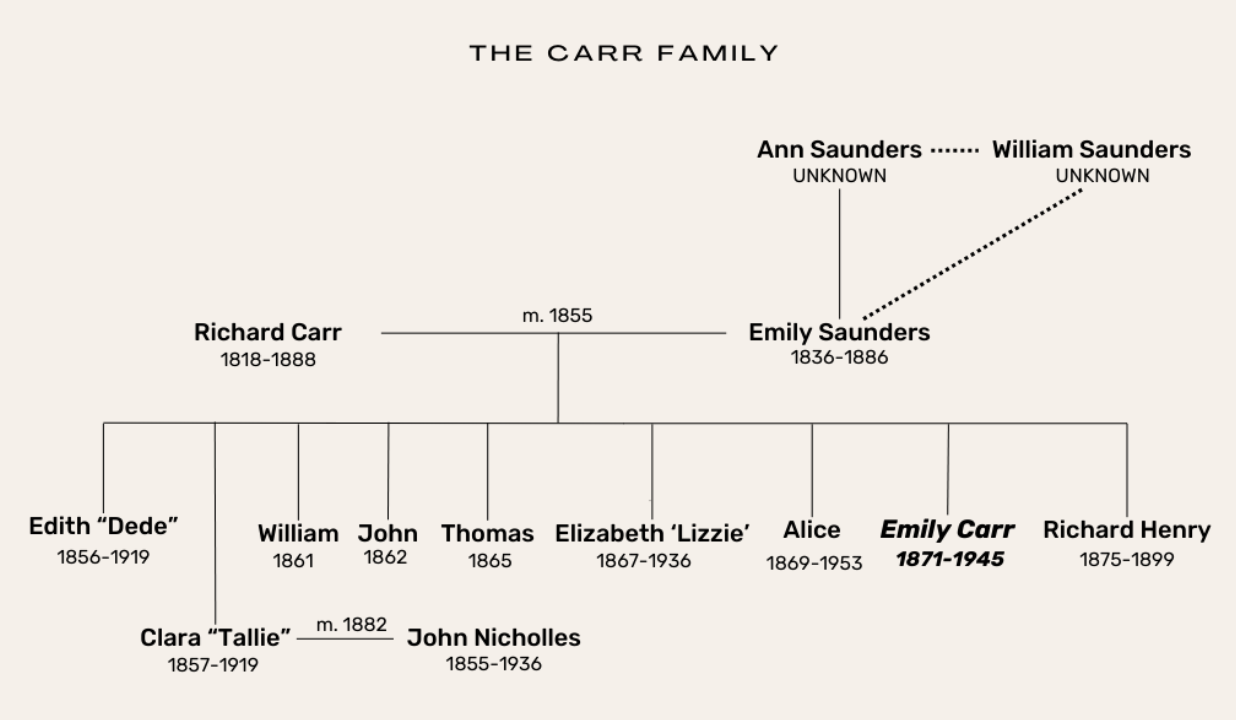
California was good to him, he became prosperous and when he was 37 he met his 18 year old future wife, Emily Saunders in San Francisco. They returned to England to marry in her home parish on January 18, 1855. Returning to California to live for the next five years they started their family with daughters Edith and Clara. Then in 1861, his wife’s health started to fail. Feeling the need to return to England, Richard packed up his family and four ship loads of California wheat and flour and returned to England. The return to England was not as successful as originally expected, the damp climate was not good for Emily’s health and she lost two infant sons to poor health. Also, Richard grew bored of retirement.
Two years after returning to England the Carr’s sailed to Victoria. Richard purchased 4 1/2 acres of land in James Bay, Victoria and had a large house built for his family, now a fully restored provincial and National Heritage site at 207 Government Street. He also opened up a wholesale goods store on Wharf Street, not far from home. Emily (Saunders) Carr lost a third son before giving birth to Elizabeth, Alice, Emily and Richard Henry. The sisters would go on to live into their 60s. Young Richard died at the age of 24 at a tuberculosis sanitarium in San Francisco.
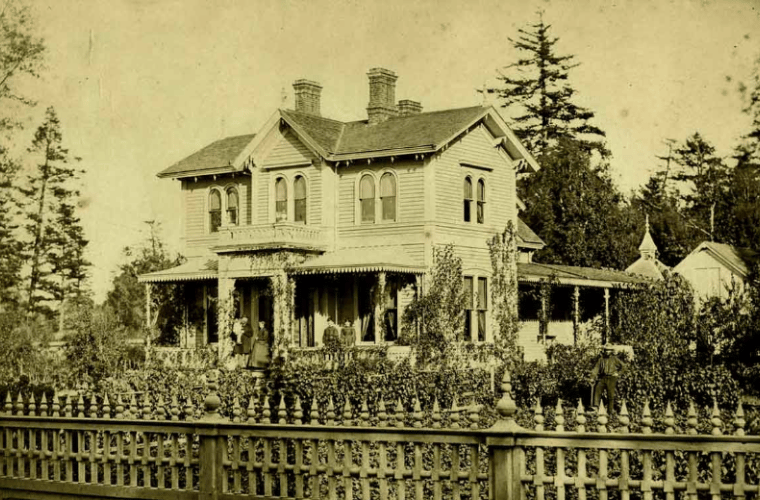
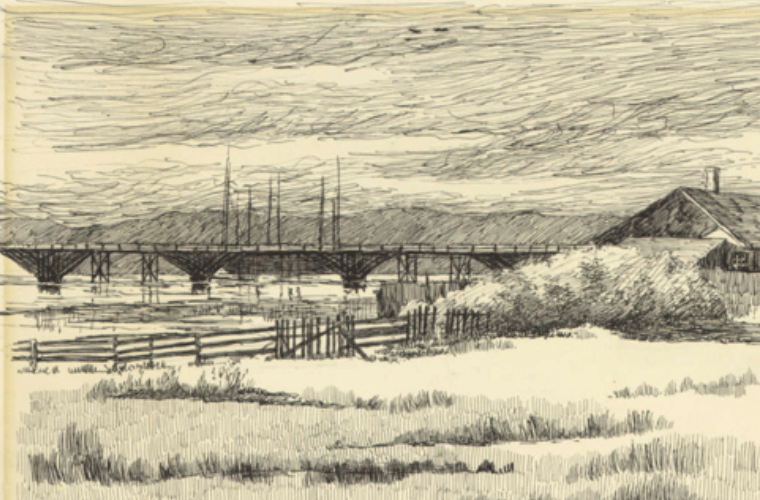
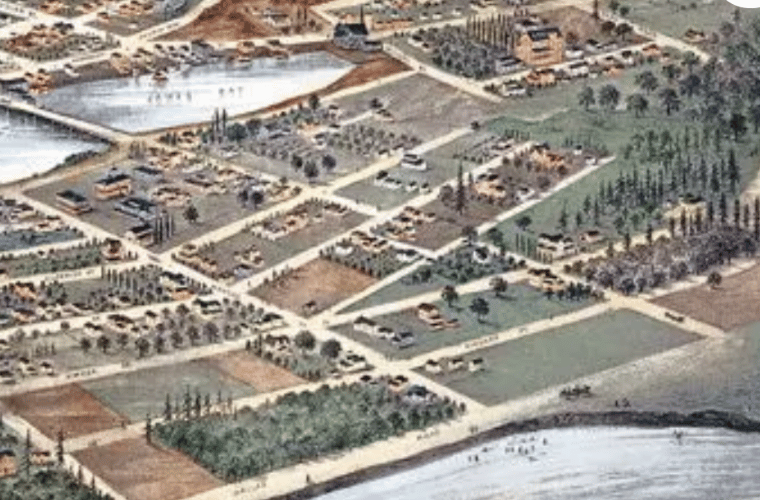
When Richard Carr arrived in Victoria in 1863 with his wife, Emily Saunders Carr, and their two eldest children, he brought with him all the convictions of a stern English patriarch. A merchant by trade and an evangelical by faith, he intended to transplant a small piece of Victorian order into the rough colonial edge of British Columbia. His store on Wharf Street sold imported goods to settlers, miners, and naval men, and his home—solid, respectable, and English in every detail—stood as a bastion of propriety in a town still finding its shape.
Inside their home, life was ruled by Richard Carr’s unwavering sense of duty and moral certainty. The Carr household revolved around Scripture readings, cleanliness, thrift, and obedience. According to Emily:
Our childhood was ruled by Father’s un‑bendable iron will, the obeying of which would have been intolerable but for Mother’s patient polishing of its dull metal so that it shone and reflected the beauty of orderliness that was in all Father’s ways… Father was ultra‑English, a straight, stern autocrat. No one ever dreamt of crossing his will. … Father insisted that I be at his heels every moment that he was at home. I helped him in the garden … He let me snuggle under his arm … I held his hand during the walk to and from church. This all seemed to me fine until I began to think for myself — then I saw that I was being used as a soother for Father’s tantrums; like a bone to a dog, I was being flung to quiet Father’s temper. … His soul was so bitter that he was even sometimes cruel to me.
Richard Carr viewed the world through the eyes of an English Protestant settler—a man convinced of his rightness and of Britain’s civilizing mission. He regarded the Indigenous peoples of the region with the mixture of condescension and distance typical of his time. To him, they were part of the wilderness that needed to be subdued, along with the forests and the unpredictable tides. He traded with Indigenous people when they came into town, but he saw their cultures as something “other,” and their presence as a challenge to the Christian order he tried to uphold in his family and community.
Emily, though steeped in his moral world, felt the pull of another truth—the quiet power of the land and the people who belonged to it. As a child, she observed what her father dismissed. Later, as an artist, she would turn toward the very subjects he had ignored or misunderstood: the forests, the villages, the totem poles, and the spiritual vitality of the First Nations cultures of the Northwest Coast. In doing so, she was not just painting landscapes—she was reclaiming a vision her father’s generation had failed to see.
Amid this strict household, a pivotal incident known to Emily as “the brutal telling” profoundly shaped her. As she recounted in her writings (Growing Pains, The Book of Small), this episode involved her father attempting to educate her about sexual matters. Rather than offering calm guidance, he delivered the lesson with severity, fear, and moral weight so intense that Emily later described it as “brutal.” The encounter was more than embarrassing—it was frightening, shaming, and alienating. The authority with which he spoke made intimacy, desire, and the natural curiosity of adolescence feel dangerous, wrong, or to be feared.
The impact on Emily’s psyche was lasting. This early confrontation with the control and moral rigidity of male authority likely shaped her cautious approach to relationships and her skepticism toward conventional marriage. Emily never married (neither did any of her other sisters marry but one, Clara), and her life was marked by independence, self-reliance, and a deep devotion to her art.
Scholars have suggested that experiences like the brutal telling contributed to her ambivalence toward intimate partnerships and her preference for solitude in the forests she loved. In a sense, the lesson her father intended to instill—a warning about sexuality—may have propelled her instead into a life where creative and spiritual pursuits took precedence over conventional domestic roles.
“Forgive Father — I just couldn’t for spoiling all the loveliness of life with that bestial brutalness of explanation filling me with horror instead of gently explaining the glorious beauty of reproduction the holiness & joy of it.”
When Richard Carr died in 1888, Emily was sixteen. His death left the family bereft of financial security, but it also freed her from the moral strictures that had governed her childhood. Yet she carried his voice with her—the rhythms of the Bible, the insistence on truth, the gravity of purpose. These qualities, stripped of their authoritarian edge, later became the backbone of her creative life. In her art, she turned moral fervour into spiritual vision, transforming the language of commandment into the language of revelation.
In The Book of Small and Growing Pains, Emily looked back on her father with a mixture of anger, pity, and reluctant admiration. She understood that his rigidity came from fear—the fear of disorder, of moral decay, of the unfamiliar world around him. He had come to a place where everything he valued—faith, empire, hierarchy—was being tested by a vast new landscape and by cultures older than his own. In trying to master that world, he imposed mastery at home. Emily, in contrast, sought to reconcile it. Her art became a lifelong dialogue with her father’s ghost, a way of turning punishment into understanding, repression into reverence.
In her memoirs, Emily’s recollections of her father are complex: she admires his intelligence, his seriousness, and his moral passion, yet she also mourns the moments of cruelty and misunderstanding. The brutal telling stands as a symbol of the collision between authoritarian control and a child’s developing curiosity, between repression and the freedom that would define Emily Carr’s life. From that moment of fear and shame, she emerged independent, fiercely creative, and spiritually attuned—a woman whose vision could see beauty and sacredness in the world that her father, in his time-bound rigidity, could not appreciate.
Read more about Emily’s father in her story Father’s store from The Book of Small: https://emilycarrchronicles.ca/fathers-store.