The House That Emily Built: The House of All Sorts
In many cities around the world, the homes of famous artists and writers are saved and cherished. The artist Frida Kahlo’s “Blue House” in Mexico City, for example, is now a museum open to the public. As is Claude Monet’s home and garden in Giverny, France. In Victoria, Canada, you can visit Carr House, the birthplace and childhood home of beloved artist, Emily Carr, who painted scenes of Indigenous villages and the wild forests of the west coast.
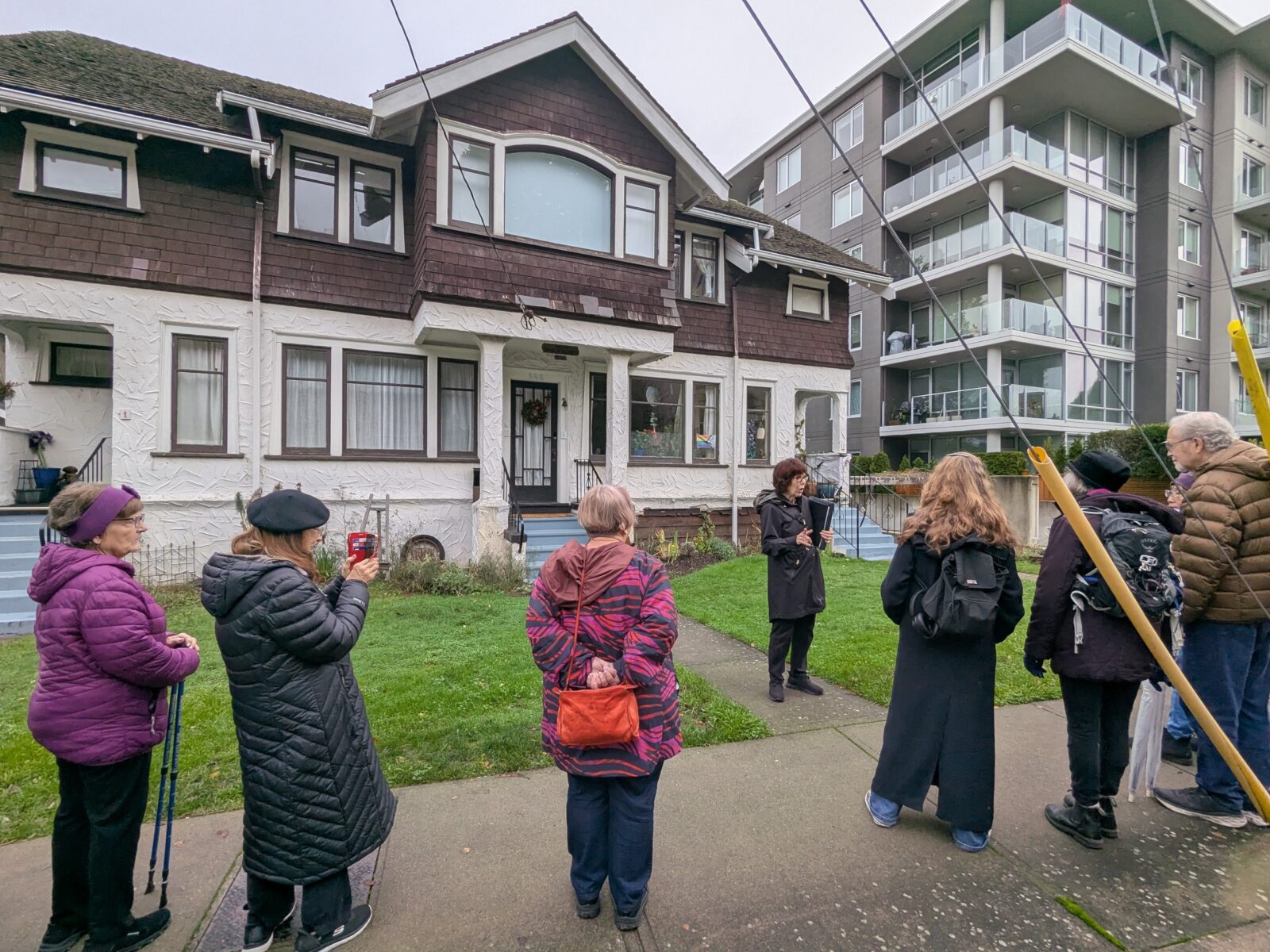
But just around the corner, and often overlooked, the house where Emily spent the most years of her life and did some of her best paintings is not a museum, but a small privately owned apartment building. First called “Hill House” by Emily, for its view looking south-east into Beacon Hill Park, it’s known today as the “House of All Sorts,” after a book by the same name, which Emily wrote about her time as a landlady there (published in 1944). If you are lucky enough to visit, or perhaps even stay in the upstairs suite where Emily lived and painted, you can still feel her presence in the house.
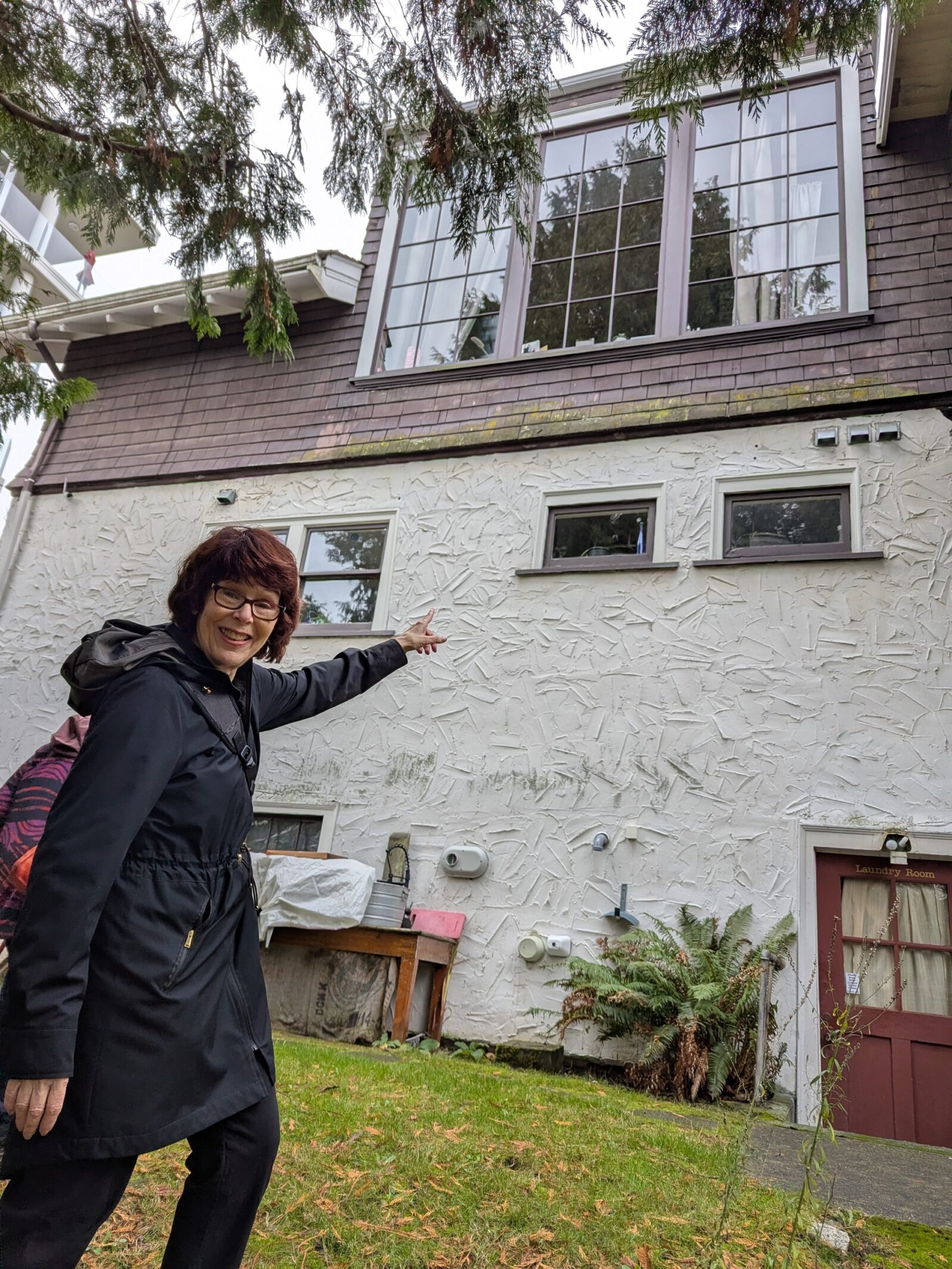
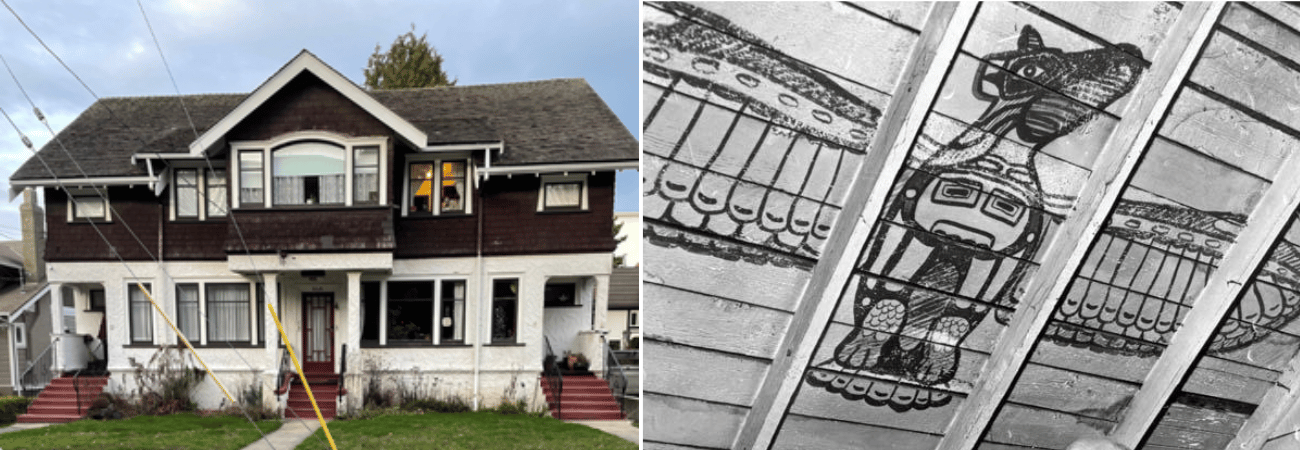
Built in 1913 on what was originally the Carr family’s cow yard, the house was designed by British-trained local architect John Wilson to Emily’s particular specifications. It had two rental apartments on the main floor, and the whole upper floor was dedicated to Emily’s own living space and art studio. The outside of the house was originally covered with wooden shingles. Today, the top half retains its shingles, painted dark brown, while the bottom half is stuccoed white, reminding the viewer of a layered All Sorts candy. Originally there was one large outside staircase at the back of the house leading to the upstairs suite.
An interior staircase was added sometime after Emily moved from the house. While changes were made to the upstairs over the years, the two downstairs apartments remained largely unchanged (other than losing their functioning fireplaces when the interior stairway was installed).
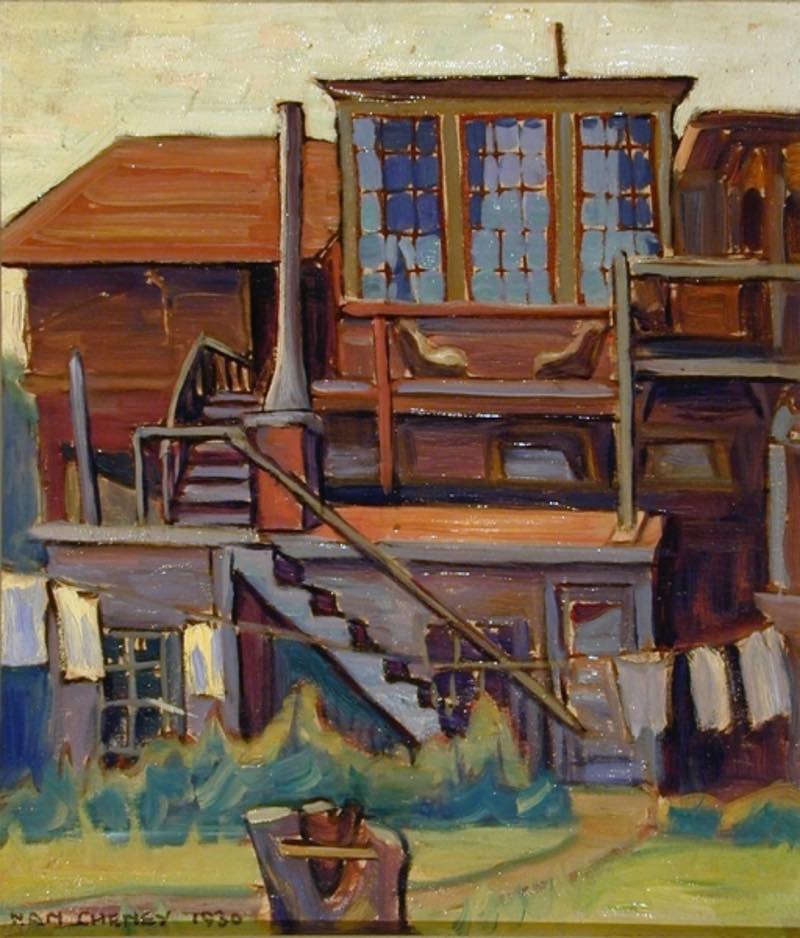
The focal point for Emily, which is not visible to anyone looking at the house from the street, is a bank of three large multi-paned windows facing the backyard—creating a light-filled space for her to work on her paintings of forests and sky. (Painting of Emily’s backyard by Nan Cheney in1934.)
Full of inspiration after her time spent studying painting in France and England, Emily had such high hopes for the work she would produce in her studio here, freed from financial worries by the income she expected the two ground-floor rental units to generate. She even had a small room set aside upstairs for a live-in maid. She didn’t foresee the coming of the First World War and the economic slump that brought a drop in rental prices and rise in taxes. Rather than freeing her to paint, the house weighed her down with the worries and drudgery of being a landlady.
The maid did not materialize. Instead, Emily did all the work herself, trudging up and down the back steps to the laundry room, the furnace, and the backyard, where she kept a garden, chickens, rabbits, and dogs that she bred and sold, as well as a kiln to fire the pottery she made—all to help make ends meet. For over ten years, she turned her top-floor sanctuary into a rooming house for women, where she cooked and cleaned for everyone—even giving up her own bedroom and sleeping in the attic, or in a tent in the backyard in summer.
It was during her time in the attic, that Emily painted two large Kwakwaka’wakw-inspired spirit birds that she referred to as “eagles,” each with a row of Haida-influenced frogs underneath. These birds were a great comfort to Emily, as she says in her book, The House of All Sorts:
The heads of the eagles tilted upwards in bold, unafraid enquiry. I loved to lie close under these strong Indian symbols. They were only a few feet above my face as I slept in this attic bedroom. They made “strong talk” for me, as my Indian friends would say.
By 1925-26, Emily was able to stop taking in boarders and reclaim her top-floor suite. Though, she continued to rent out the two main floor apartments and possibly a small section at the south-west end of the top floor, which she referred to as the “Doll’s house.” Emily lived in the House of All Sorts from 1913-1936, and despite the difficult years, she painted some of her most inspired work here and received national attention for her paintings.
The house was also full of life and activity, with Emily’s sisters, friends and visiting artists coming and going. And there was also the company and antics of Emily’s animal companions—her favourite bob-tailed sheep dog, Bobbie, and all the dogs that followed, her cat Adolphus, a kitten, parrot, chipmunk, rats, and, of course, her Javanese monkey, Woo, whose paw prints can still be found on a wall at one end of the attic. And despite changes made to the building by new owners over the years and a few leaks in the roof, Emily’s eagles still watch over the house from the attic ceiling, their wings spread protectively.
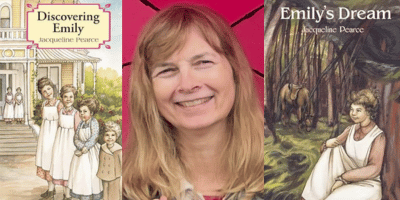
Jacqueline Pearce, author of two children’s novels about the childhood of Emily Carr, Discovering Emily and Emily’s Dream. Her novels and nonfiction for children and teens celebrate friendship, diversity, local history, and relationships between people, nature, and animals.

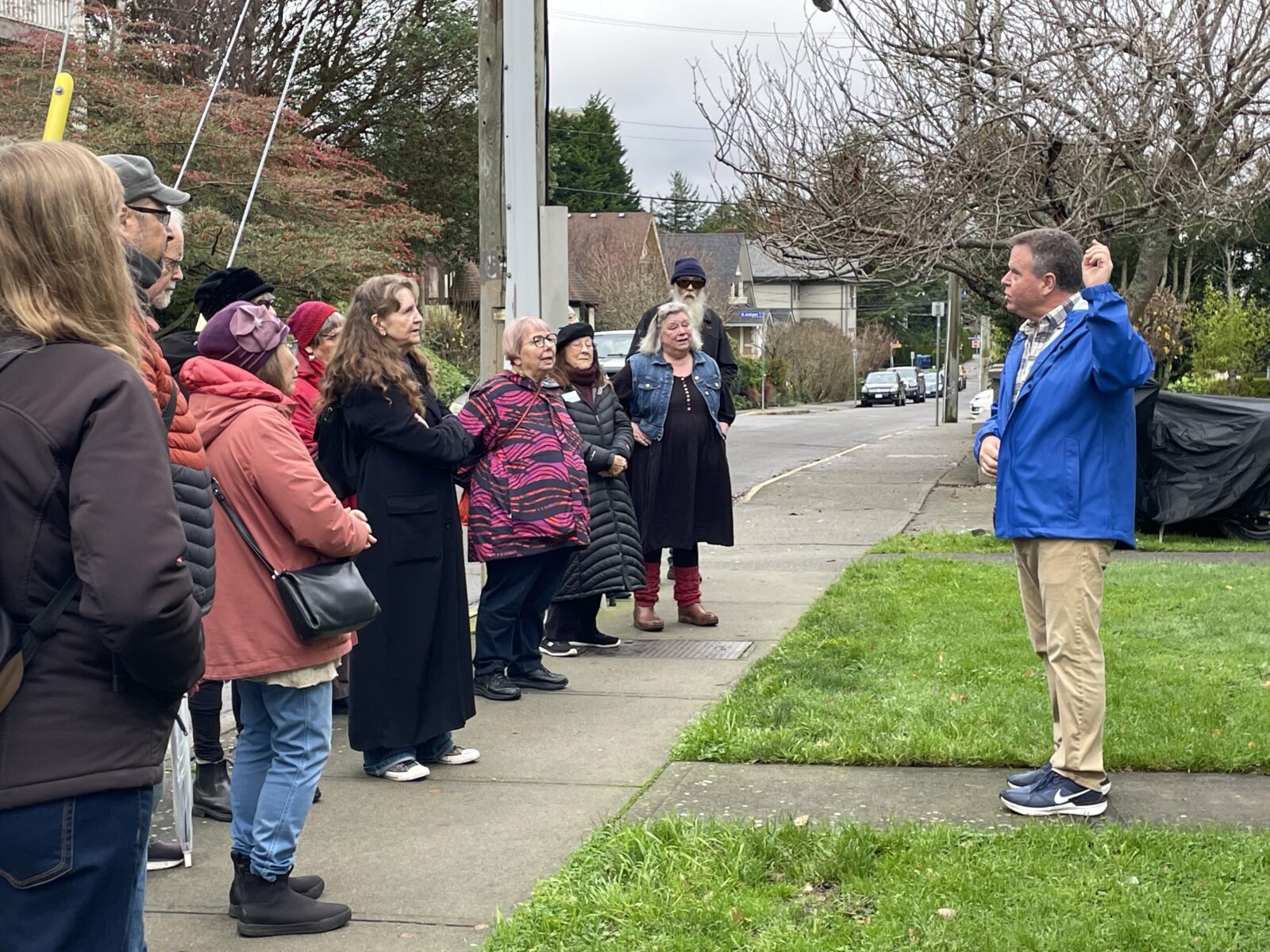
Photos from Emily Carr’s Birthday Party Held on December 13, 2025