
Emily Carr at the BC Archives: A World-Class Collection
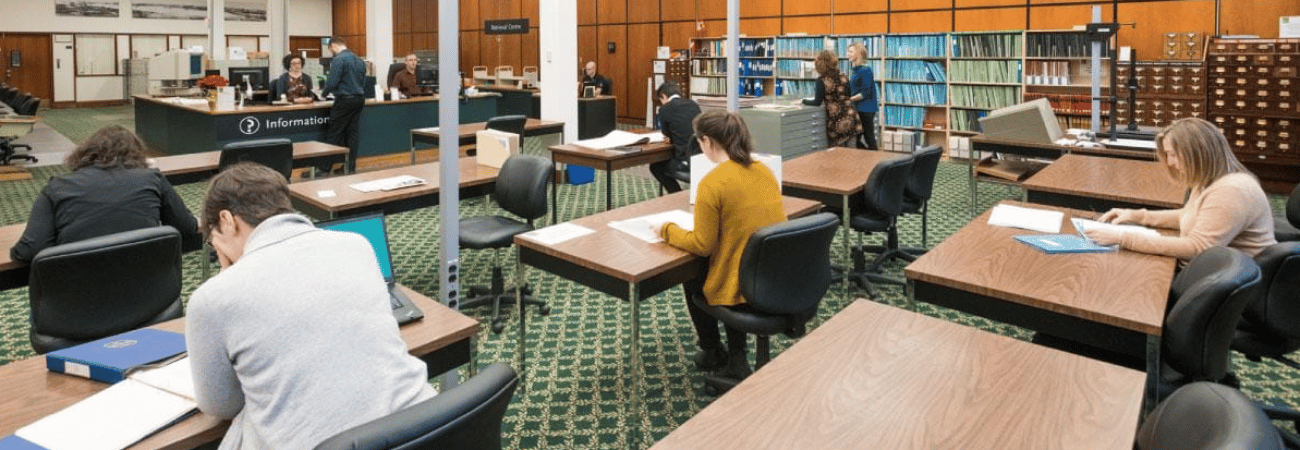
The BC Archives, housed within the Royal BC Museum in Victoria, is the province’s primary repository for records that document the political, social, economic, and cultural history of British Columbia. It holds a vast and diverse range of materials—everything from government files and family papers to maps, films, audio recordings, and works of art. For anyone interested in the life and legacy of Emily Carr, the BC Archives is not only a valuable resource—it’s the most comprehensive public collection of her artwork and personal papers in existence.
The holdings of the BC Archives are enormous in scale. There are over 110,000 boxes of textual records, more than 5 million photographs (100,000 of which are digitized), 180,000 maps and architectural drawings, 27,000 sound recordings, 12,600 film and video titles, and a visual art collection of over 10,000 items. The archives also contain a library with around 72,000 books and publications relating to British Columbia.
Among the many notable collections housed at the BC Archives, the materials related to Emily Carr stand out as a cornerstone of provincial and national heritage. The Royal BC Museum and BC Archives together hold the largest and most comprehensive Emily Carr collection in the world. Their vast array of archival materials that document nearly every aspect of her life and career.
Artistic Works: Paintings, Sketches, and Crafts
The Carr holdings include oil paintings that span her early, mid, and late periods. Additionally, there are approximately 1,000 works on paper, including sketchbooks, watercolours, and preliminary drawings that offer insight into her process. The collection also features more unusual works by Carr, such as hooked rugs and pottery, created during her years as a landlady at the House of All Sorts in the 1920s.
Writings, Letters, and Personal Papers
Equally significant is the extensive archive of Carr’s manuscripts, journals, letters, and notebooks. These include drafts of her published books, personal diaries (such as the journals later published as Hundreds and Thousands), unpublished writings, correspondence, and scrapbooks. Through these documents, researchers can trace Carr’s thoughts, spiritual reflections, and the evolution of her literary voice.
The BC Archives also preserves photographs, audio recordings, and interviews that contextualize her life and friendships—offering a fuller portrait of Carr not just as an artist, but as a person deeply engaged with the world around her.
How the Collection Came Together
The first Emily Carr painting acquired by the BC Archives came as a surprise. In 1933, one of the worst years of the Great Depression, two of her friends , Edythe Hembroff-Scheicher and Frederick Brand, began to collect funds to purchase this painting Kispiox Village from Carr.
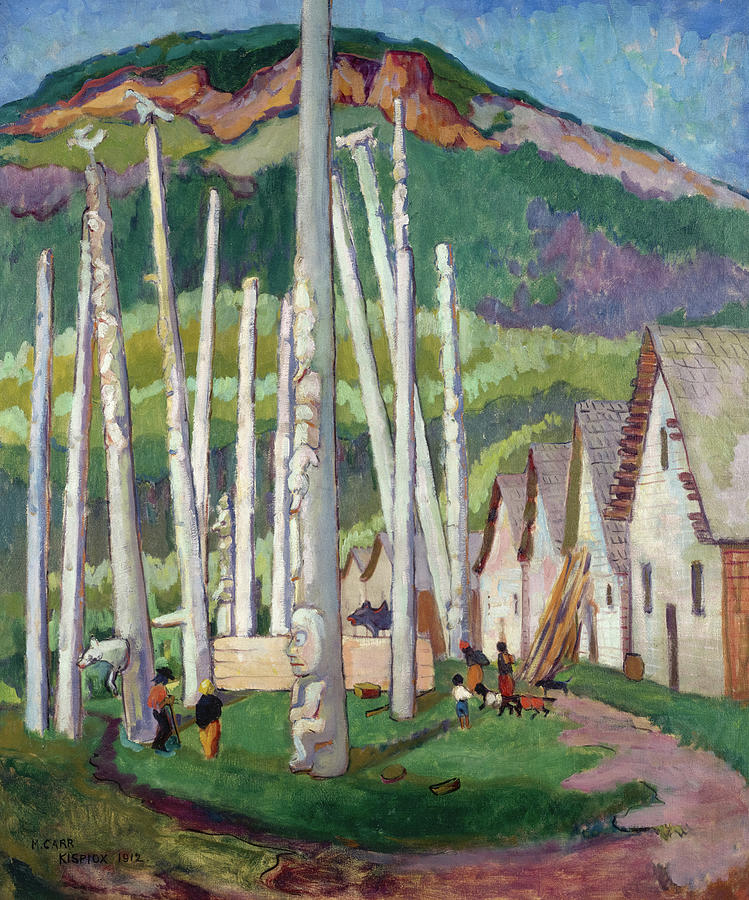
The collection has grown steadily over time. After Carr’s death in 1945, the provincial government purchased several major paintings from her estate. In 1962, the estate of William Arnold Newcombe, Carr’s friend and literary executor, donated a significant number of early works and field sketches. In 1976 and 1981, further acquisitions were made from the estate of Ira Dilworth, Carr’s close friend and primary literary champion, including her journals, manuscripts, and correspondence. Over the following decades, more donations enriched the collection with photographs, memorabilia, and letters from friends and admirers.
Access and Use of the Collection
While many items in the Emily Carr collection are available online, much of the material—particularly fragile or unique items like sketchbooks and original journals—must be viewed in person at the archives in Victoria. Some artworks and archival materials are subject to conservation protocols, copyright, or donor restrictions, which may limit access or reproduction.
The Royal BC Museum continues to digitize key portions of the collection, making selected paintings, photographs, and documents available through their collections search portal. Researchers and the general public can also make appointments to view original materials, depending on availability and condition.
A Living Legacy
The Emily Carr holdings at the BC Archives do more than preserve her work—they help bring her complex, passionate, and pioneering life into ongoing conversations about art, nature, colonial history, and the role of women in Canadian culture. For scholars, students, artists, and anyone drawn to Carr’s remarkable vision, this collection is an indispensable resource.
Three Archival Examples
Here are three important archival items (non‑painting) in the Emily Carr collection at the BC Archives / Royal BC Museum, along with why each is particularly significant.
“Kitwancool” Sketchbook (1928 trip sketchbook)
What it is:
A sketchbook of about 54 pages of drawings, sketches, and watercolours that Emily Carr made on her 1928 trip to Gitxsan / Gitanyow (often referred to as “Kitwancool”) and nearby Indigenous villages—Gitwangak, Kispiox, etc.
search-bcarchives.royalbcmuseum.bc.ca
Why it matters:
Firsthand documentation of Indigenous totem poles, village architecture, and landscapes. This sketchbook shows Carr working in situ: observing design motifs, monumental Indigenous art (totem poles), and the built and natural environment of the villages. It gives insight into her fieldwork, how she moved around, what she chose to record, how she saw Indigenous art and architecture.
search-bcarchives.royalbcmuseum.bc.ca
Artistic process & style evolution
Because these are sketches and watercolours (not finished paintings), we can see her methods of observation, her compositional decisions, how she experimented with design, how she translated what she saw into her art. Such sketchbooks are invaluable for understanding how Carr’s mature works developed from these field notes.
Physical/Conservation history
This sketchbook is fragile, de‑acidified and disassembled in the 1980s; each sheet encapsulated to stabilize it. That tells us about both the archives’ care practices and also limitations on access — handling restrictions mean special viewing arrangements. search-bcarchives.royalbcmuseum.bc.ca
Nootka Sketchbook (1929‑1930 coastal trips)
What it is:
A sketchbook with 43 drawings by Carr from her 1929 trip up the west coast of Vancouver Island to Nootka Sound and in 1930 to Quatsino Sound. The sketches include landscapes, settlement and wharves, beaches, forest forms, and includes copies of First Nations design motifs (for example, the Captain Jack pole at Yuquot). Many pages contain notations about colour and geographic location.
search-bcarchives.royalbcmuseum.bc.ca
Why it matters
Geographic reach & thematic diversity. These trips were remote, and included a variety of environments — coastline, settlements, natural scenery. Carr’s sketches in this book show how she responded to a variety of maritime‑BC environments, beyond just forest interiors, and how she dealt with practical challenges (weather, remoteness etc.).
Cultural contact and Indigenous visual art. Her drawings include copies of Indigenous design motifs; important for understanding how she engaged with Indigenous art forms—how she saw them, adapted or interpreted them. Also valuable for Indigenous studies and art history, both for what is there and for what is missing.
Notations & colour information
Many sketches are not just visual but include notes: this gives additional data (on her perception of landscape, colour, light) that artists and historians can use to reconstruct her thinking, training, visual vocabulary. Also helps in comparing sketch to finished works to see how she transformed colour/light/line.
Conservation & access
Like the Kitwancool sketchbook, this one is in fragile condition and handled with restrictions.
search-bcarchives.royalbcmuseum.bc.ca
“Hundreds and Thousands: The Journals of Emily Carr” (Journals, 1927‑1941)
What it is:
A published version of her private journals spanning 1927 through 1941. These are Carr’s own diaries, her reflections, observations, personal ups and downs, and contain her thoughts during periods when her art was becoming more acknowledged (after decades of struggle) and when her life and art were undergoing change.
Why it matters:
Insight into her inner life & motivations. These journals are one of the few continuous sources of Carr’s personal voice — her self‑doubt, ambition, her reactions to the landscape, to other artists, to the Indigenous communities she visited, and to her position in the art world. They reveal psychological, philosophical, spiritual dimensions of her life that are less visible in sketches or letters.
Historical context & timing
The period 1927‑1941 is especially critical: she was re‑evaluating her role as an artist, her recognition was growing, and her style and themes were solidifying. Her writing during these years helps us see how she experienced these transitions (professional validation, exposure, evolving subject matter).
Literary as well as artistic legacy. Carr was not only a painter, but also a writer. Her journals contribute to Canadian literature and biographies, not just art history. They show how she wrote about nature, about identity, about colonialism, about her own family and personal losses.
Source for published extracts and later works. Some of Carr’s published books draw on the material in her journals; the unpublished material adds depth and sometimes surprises that complicate simple narratives. It’s essential for scholars wanting to understand what she edited out, what she emphasized, and what she suppressed.
A published version of her private journals spanning 1927 through 1941. These are Carr’s own diaries, her reflections, observations, personal ups and downs, and contain her thoughts during periods when her art was becoming more acknowledged (after decades of struggle) and when her life and art were undergoing change.
Why it matters:
Insight into her inner life & motivations. These journals are one of the few continuous sources of Carr’s personal voice — her self‑doubt, ambition, her reactions to the landscape, to other artists, to the Indigenous communities she visited, and to her position in the art world. They reveal psychological, philosophical, spiritual dimensions of her life that are less visible in sketches or letters.
Historical context & timing
The period 1927‑1941 is especially critical: she was re‑evaluating her role as an artist, her recognition was growing, and her style and themes were solidifying. Her writing during these years helps us see how she experienced these transitions (professional validation, exposure, evolving subject matter).
Literary as well as artistic legacy
Carr was not only a painter, but also a writer. Her journals contribute to Canadian literature and biographies, not just art history. They show how she wrote about nature, about identity, about colonialism, about her own family and personal losses.
Source for published extracts and later works
Some of Carr’s published books draw on the material in her journals; the unpublished material adds depth and sometimes surprises that complicate simple narratives. It’s essential for scholars wanting to understand what she edited out, what she emphasized, and what she suppressed.


0 comments