
Framing a Legacy: Emily Carr and the Evolution of the AGGV
In the early decades of the 20th century, Victoria’s artists lived in a world of informal networks and makeshift exhibition spaces. Schools, churches, and private homes became galleries by necessity, and the Island Arts and Crafts Society, founded in 1909, provided one of the few organized platforms for artists to display their work. Yet even in this close-knit community, opportunities for serious public engagement were limited. For Emily Carr, the city she called home offered both inspiration and frustration.
In 1932, while living in her eccentric “House of All Sorts” in Victoria, Carr dreamed of something more ambitious: a Public Gallery where artists could exhibit their work professionally, and where the public could experience contemporary art in a dedicated space. She worked tirelessly to bring this vision to life, navigating the practical and financial obstacles that often confront pioneers.
However, the city rejected her request for support, with the mayor famously dismissing the idea by claiming that Beacon Hill Park already fulfilled the city’s cultural needs. Had the city embraced Carr’s proposal with ongoing funding, many of her most significant works might have remained in Victoria rather than going to the Vancouver Art Gallery after her death.
Undaunted, Carr was also involved in the early momentum toward creating a permanent public art gallery in Victoria. Alongside Mark Kearley, she was a founding member of the Federation of Canadian Artists (FCA), formed in 1941 to support Canadian artists through exhibitions and educational programs. The FCA sent travelling exhibitions across the country, but Victoria lacked a permanent venue to host them.
The Little Centre Gallery Emerges
That changed in 1946, when the Victoria branch of the FCA opened a temporary gallery space called “The Little Centre” in a former car showroom on Yates Street in Victoria. Its first exhibition featured the work of Emily Carr, on loan from the National Gallery’s national Emily Carr tour across Canada, marking one year since her death.
For the first time, the public in Victoria could experience her paintings in a formal, curated environment, connecting her visionary depictions of British Columbia’s landscapes and Indigenous cultures with a broader audience.
This was the first major Emily Carr exhibition in Victoria (not counting her exhibition in 1930 at Crystal Garden hosted by the Victoria Women’s Canadian Club), and it set the tone for the Centre’s ambitions and identity. Although not a solo show curated by the Centre itself, it was the first Emily Carr exhibition the group hosted, and the timing gave it added emotional and cultural impact.
After being forced to leave its Yates Street location in 1947, when the car industry rebounded, the Little Centre continued its mission by holding exhibitions and lectures wherever possible. This included ongoing efforts to exhibit artists like Carr, whose work had helped define the Centre’s early identity.
In 1949, the Centre moved into a new location at 823 Broughton Street and changed its name to the Arts Centre of Greater Victoria, reflecting its growing mandate to serve the entire region. However, the space was still considered temporary and inadequate for the long-term ambitions of the society.
Proposals to build a gallery attached to the new Blanshard Street library, the Provincial Museum, or to use artist Josephine Crease’s former home on Pentrelew were all rejected.
Sara Spencer Gifts Her Mansion to the Cause
The turning point came in 1951, when Sara Spencer, a philanthropist and member of the Centre’s board, donated her family’s Victorian-era mansion at 1040 Moss Street. This gift provided the Centre with a permanent home, and soon after, the organization became known as the Art Gallery of Greater Victoria.
In 1967, the AGGV organized its first solo exhibition dedicated entirely to Emily Carr. Titled simply Emily Carr: A Retrospective, the show marked Canada’s Centennial and was a landmark event for the gallery. The exhibition brought together works from both public institutions and private collections, many of which had not been seen together before. It demonstrated Carr’s full range — from her early studies in Europe to her bold, spiritual depictions of West Coast forests and Indigenous villages.
This retrospective solidified Carr’s reputation as a central figure in Canadian art and highlighted the AGGV’s commitment to preserving and celebrating her legacy. Since then, the AGGV has regularly exhibited Carr’s work and now holds one of the most important public collections of her paintings and drawings in Canada.
AGGV’s Emily Carr Exhibitions:
Oil Paintings from the Emily Carr Trust | September 30 – October 19, 1958
- exhibition catalogue lists 36 paintings selected from the Emily Carr Trust.
Emily Carr: A Centennial Exhibition | December 14, 1971 – February 1972
- exhibited 29 oil paintings from the Golden Anniversary show after it closed at Vancouver Art Gallery
Emily Carr From the Collection (2001)
- A focused exhibition inviting viewers into Carr’s evolving style—from her classical training to her expressive vision of B.C. landscapes, guiding visitors through light, rhythm, totemic forms, and spiritual resonance. Visitors enter the rain forest and experience the serenity of sunlight penetrating dense vegetation. Car leads us to see the rhythm of tree trunks, the patterns that dance on water, the power of totem poles, and the energy that emanates from the constantly changing coastal skies.
Emily Carr and Her Contemporaries (2008)
- This exhibition placed Carr in conversation with her peers, from traditional British influences like Sophie Pemberton and Josephine Crease, both Victoria residents, to modernist figures including members of the Canada’s Group of Seven,: Lawren Harris, A.Y. Jackson and Arthur Lismer, and Seattle’s Mark Tobey —highlighting both Carr’s antecedents and legacy.
Emily Carr: On the Edge of Nowhere (2010)
- This exhibition served as a historical survey of Carr’s artistic career, featuring pieces in all the media and styles she explored and perfected. It focused on Carr’s influences and inspirations, such as European modern art, members of the Group of Seven artists, First Nations artists, Carr’s spirituality, and her interest in developing an art that speaks of her personal experience and her connection to the West Coast landscape.
Emily Carr: “Seeing + Being Seen” (2021–22)
- The two-part exhibition centered on Carr’s detailed renderings of sites and landscapes—13 key works, such as Odds and Ends, Big Eagle at Skidegate, and Above the Gravel Pit, focused on her documentation of land, culture, and history. The second part of the exhibition presented reinterpretations and responses to her legacy from contemporary artists and historians, fostering nuanced discussions around cultural memory, representation, and critical reflection.
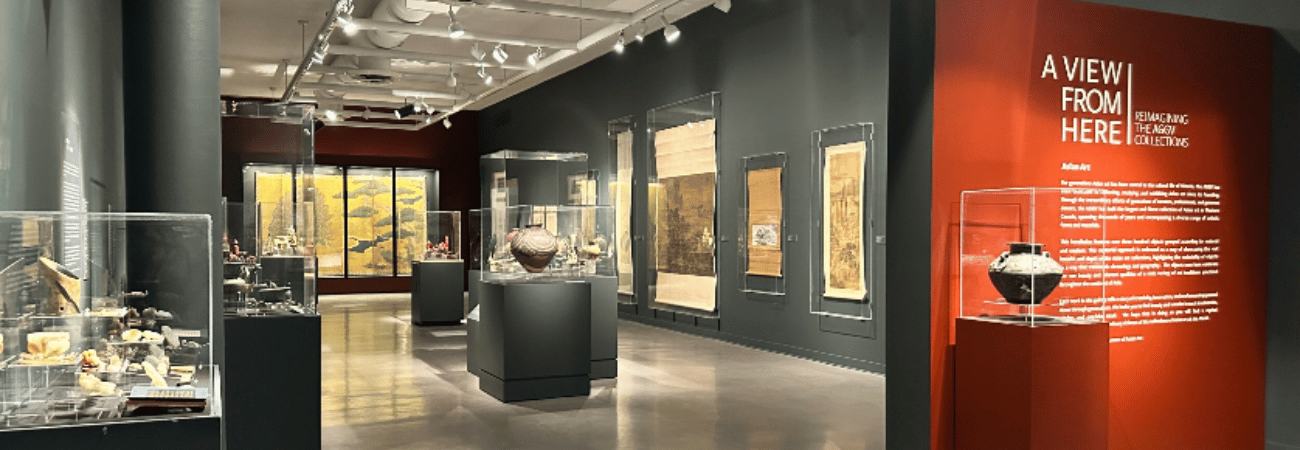
A View From Here: Reimagining the AGGV Collections (runs to April 27, 2029)
- Reframes Carr within a contemporary narrative. Co-curated by Steven McNeil, the exhibition is intended to showcase the strength of the gallery’s permanent collection, the largest public art collection in BC with more than 22,000 works of art, 60 of them by Emily Carr including these paintings included with this exhibition:
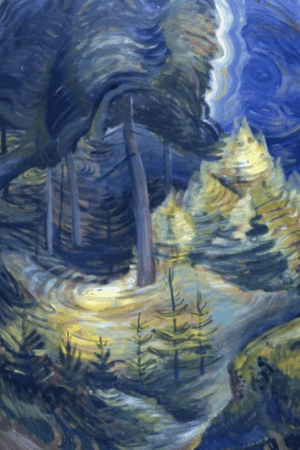
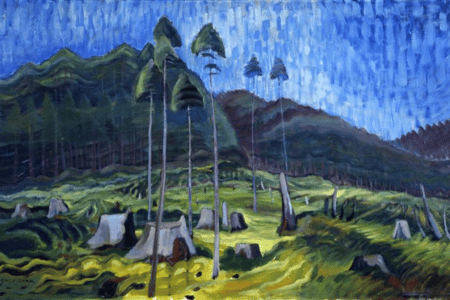
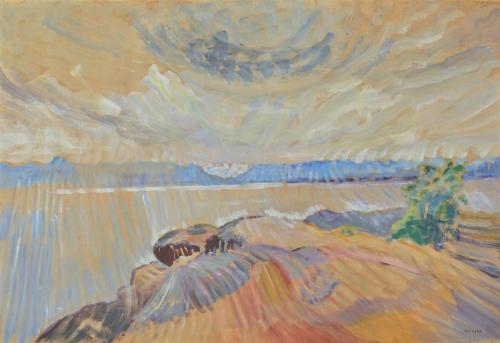
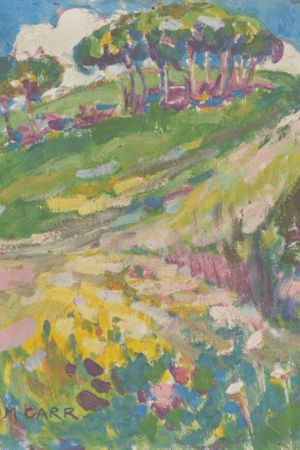
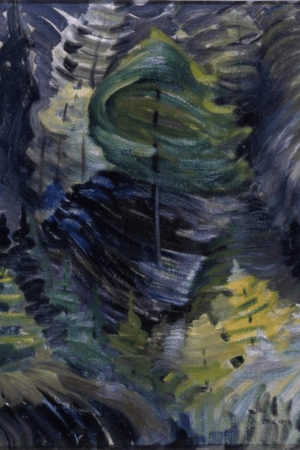
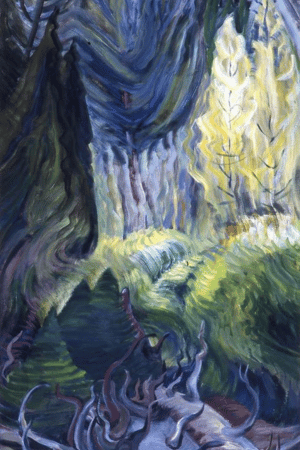
The Art Gallery of Greater Victoria stands as the realization of Carr’s enduring dream. From the “House of All Sorts” to the Little Centre, and finally to the AGGV, her efforts to make art public in Victoria resonate across generations. The gallery preserves her pioneering spirit, offering a space where her work—and the work of countless other artists—can be studied, celebrated, and experienced. Emily Carr’s influence is woven into the very fabric of Victoria’s cultural life, a testament to her belief that art belongs not only to the artist but to the community itself.


0 comments