
Guardian of a Vision: The Vancouver Art Gallery and Emily Carr
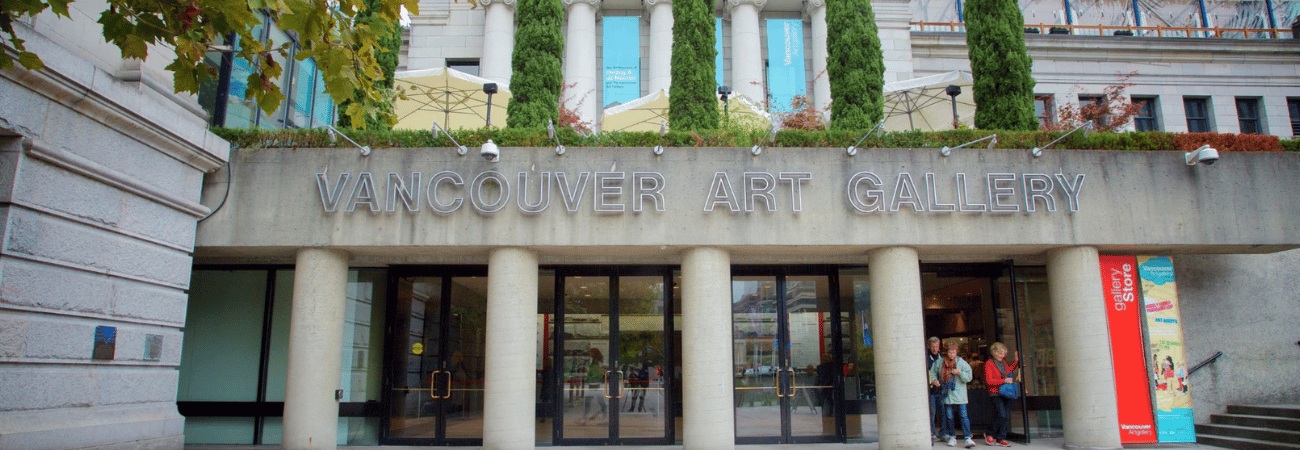
The Vancouver Art Gallery (VAG) and Emily Carr are indelibly linked in the history of Canadian art. Since the gallery’s founding in 1931, Carr has not only occupied a central place in its collection but has also played a foundational role in the gallery’s identity, legacy, and public engagement. Over the decades, the VAG has grown into the principal steward of Carr’s artistic legacy, housing the largest and most comprehensive body of her work in the world.
Although the VAG hosted Carr’s first solo exhibition in 1938, it was the 1966 acquisition of the Emily Carr Trust Collection that truly solidified her presence within the institution. This transfer of 157 works from the Trust—established after Carr’s death in 1945—marked a major curatorial milestone. From that point onward, the VAG became the principal custodian of Carr’s legacy, mounting over a hundred exhibitions of her work, lending it nationally and internationally, and fostering scholarship that continues to reinterpret her contributions to Canadian modernism and West Coast art.
Since its founding in 1931, the Gallery has presented well over a hundred Emily Carr exhibitions, facilitated thousands of loan requests and undertaken initiatives to tour her work across the province and country as well as internationally.
Emily Carr was in her sixties when the Vancouver Art Gallery opened its doors in October 1931. At the time, she was experiencing a dramatic late-career resurgence following her introduction to the Group of Seven in 1927 and her inclusion in their exhibitions. Although Carr lived and worked primarily in Victoria, her relationship with Vancouver was growing, and the new art gallery offered a vital venue for her expanding audience.
Early Years: Parallel Foundations
In 1938, the Vancouver Art Gallery presented its first solo exhibition of Emily Carr’s work, showcasing paintings that embodied her mature style—bold, spiritual, and deeply connected to the West Coast landscape. This landmark exhibition marked the beginning of the Gallery’s enduring commitment to her art. Between her debut solo show in October 1938 and her final exhibition—originally planned for June 1942 but postponed to 1943 due to a heart attack—Carr was featured in five solo exhibitions at the VAG.
The impetus behind these five solo exhibitions came from Eric Brown, then the director of the National Gallery of Canada. After Carr’s heart attack in 1937, he selected 15 painting to show perspective buyers in eastern Canada, many of which were sold to cover Carr’s mounting medical costs.
Her first show netted $172 and was well reviewed in the press. The Daily Province reported on October 13:
Judged by this show, no other painter has come so close to the heart of the province. Although a first glance the pictures appear to be merely forest scenes, a closer study reveals forms, colour and light which drive toward a fundamental conception of B.C. as a growing organism.
Her last solo exhibition at the VAG in her lifetime, contained 27 paintings and was also well received. The Vancouver Sun critic art critic reported:
Victoria’s Emily Carr, whose work both as an artist and a writer has received such wide acclaim during recent years, is holding her firth one-man show at the art gallery. There is something courageous and remarkable in the general spectacle of this woman., no longer young and in very poor health, painting with such profusion and with growing power at an age when many are laying down their tools and slackening in the mental concepts.
Mid-Century: Consolidating the Legacy
Following Carr’s death in 1945, her reputation continued to grow. The Vancouver Art Gallery began acquiring more of her work through donations, purchases, and bequests. The 1960s and 1970s saw a deepening scholarly interest in Carr, and the gallery emerged as a leading institution for the study and exhibition of her art.
The 1971 Emily Carr: A Centennial Exhibition at the VAG was a landmark event. It reassessed her career in light of modernist trends and positioned her not just as a regional artist, but as a national and international figure. This exhibition significantly enhanced public and critical understanding of her place in the canon of Canadian art.
The Carr Collection and Research
Today, the Vancouver Art Gallery holds more than 250 works by Emily Carr, including oil paintings, watercolours, charcoal sketches, and works on paper. These span the full arc of her career—from early work influenced by post-Impressionism and Fauvism to her powerful later paintings of forests, totem poles, and Indigenous villages.
The gallery has also served as a center for Carr research. Its curators, especially Doris Shadbolt (author of the 1979 book The Art of Emily Carr), played a major role in advancing scholarly understanding of Carr’s significance. VAG’s publications, monographs, and catalogues have become definitive sources in Carr studies.
Contemporary Exhibitions and Interpretation
Carr remains a cornerstone of the VAG’s programming. Major retrospectives and thematic exhibitions continue to reframe her legacy through new lenses—feminist critique, decolonial studies, environmental themes, and the complex relationships between settler artists and Indigenous cultures.
Significant Emily Carr Exhibitions at the VAG (1938–Present)
1. Emily Carr’s First Solo Exhibition (1938)
- VAG’s inaugural exhibition dedicated solely to Emily Carr showcased her mature style and featured approximately 150 work spanning early sketches to her mature paintings of the 1930s, the exhibition marked a significant moment in her career, offering long-overdue recognition in her home province.
2. Emily Carr: Into the Forest (May 13 – December 3, 2017)
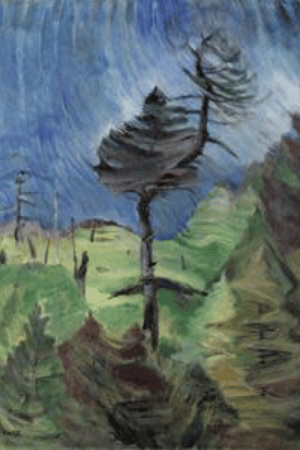
- A major retrospective centered on Carr’s forest paintings from the 1930s, particularly her oil-on-paper works and canvases. The exhibition included early works (1913–1918) and the iconic Grey from private collections Curated by Ian Thom, it emphasized Carr’s transformative vision of the BC forest landscape and how it reshaped regional perceptions.
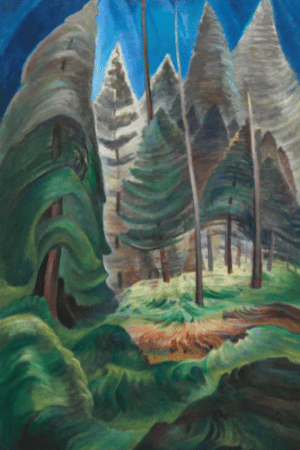
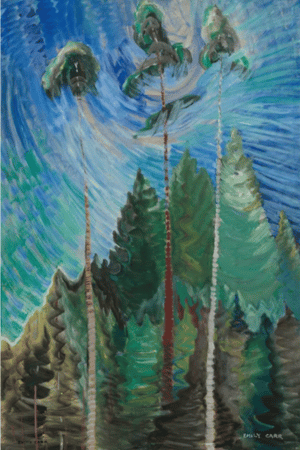
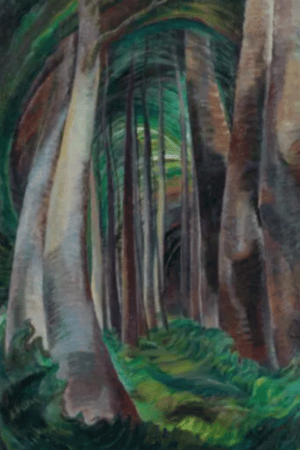
From the left: Rushing Sea of Undergrowth (1935), Untitled (1938-39), Wood Interior (1932-35)
3. Emily Carr (June 1, 2019 – May 31, 2020)
- A curated presentation in the VAG’s rotunda featuring four of Carr’s emblematic works: Big Raven (1931), Red Cedar (1931), Scorned as Timber, Beloved of the Sky (1935), and Above the Gravel Pit (1937). The presentation offered insight into her technique, deep engagement with the landscape, and distinct expressive vision.
Vancouver Art Gallery
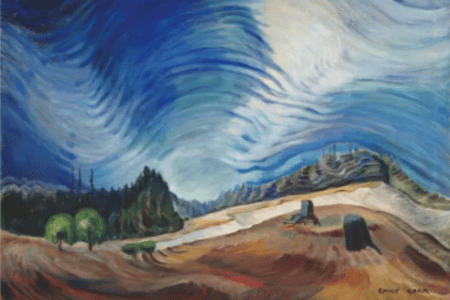
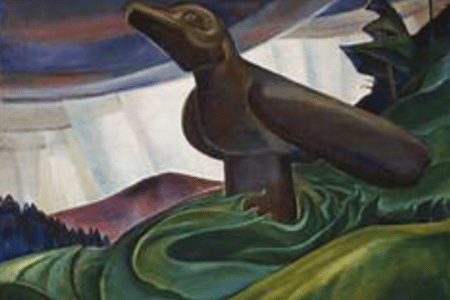
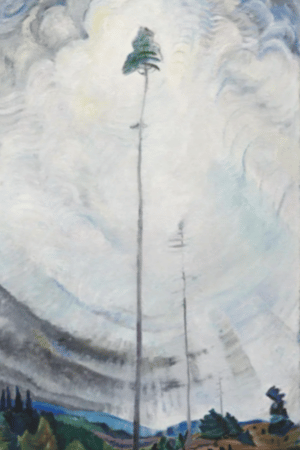
From the left: Above the Gravel Pit (1937), Big Raven (1931), Scorned as Timber, Beloved of the Sky (1935)
4. Rapture, Rhythm and the Tree of Life: Emily Carr and Her Female Contemporaries (Dec 7, 2019 – Jan 22, 2020)
- This exhibition positioned Emily Carr alongside fellow early 20th-century women artists from British Columbia, highlighting their shared explorations of modernism on the West Coast. Set within a wider socio-cultural context, the show featured works by Carr’s contemporaries, including Unity Bainbridge, Beatrice Lennie, Nan Lawson Cheney, Irene Hoffar Reid, Grace Wilson Melvin, and Vera Weatherbie
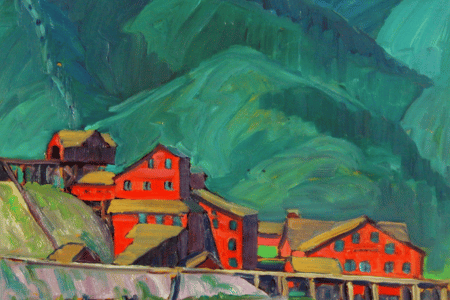
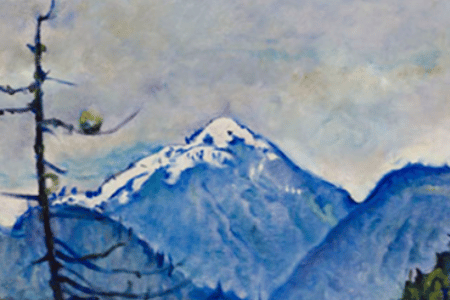
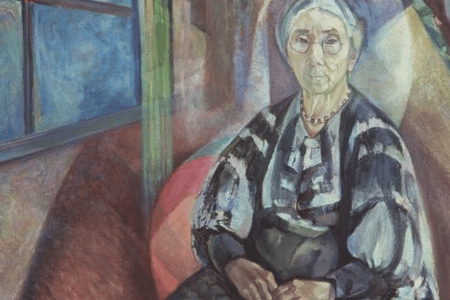
From the left: Ivanhoe Concentrater (1931) by Nan Cheney, Northern Lake Nostalgia (1944) by Unity Bainbridge, Portrait of Mrs. Annie McKay (XXXX) by Vera Weatherbie
5. Emily Carr: A Room of Her Own (Sep 30, 2023 – Jan 5, 2025)
- A focused exhibit featuring approximately 25 works from VAG’s Carr Collection, presented within a single room with a timeline. It charted key biographical and institutional milestones—how the Gallery and the collection have shaped each other over time
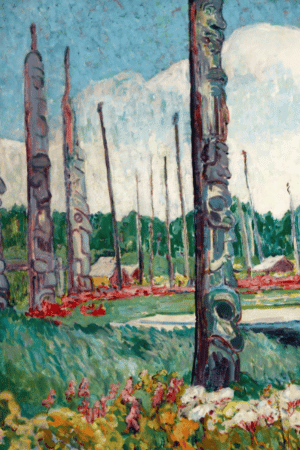
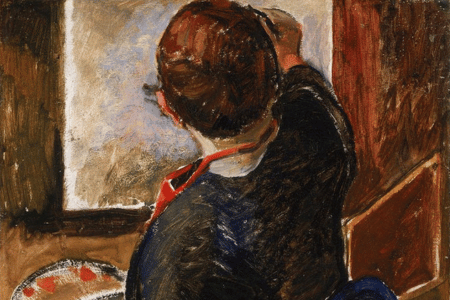
From the left: Yan QCI (1912) Self Portrait (1924), Survival (1940)
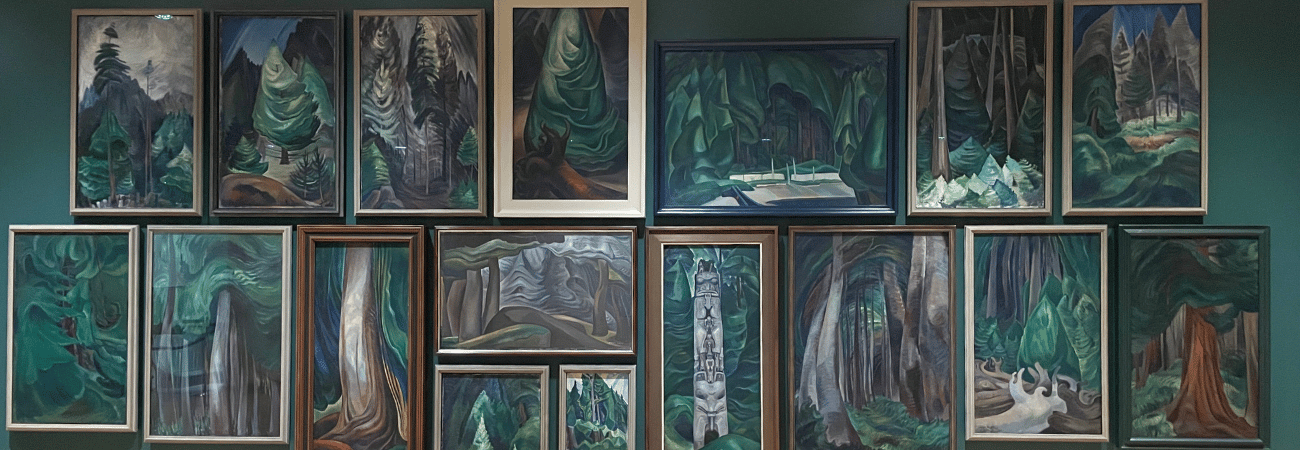
6. Emily Carr: Navigating an Impenetrable Landscape (Jan 25, 2025 – Jan 4, 2026)
- This exhibition explores Carr’s spatial composition—juxtaposing densely forested works with pieces depicting open horizons, often resulting from clear‑cut logging. It also critically examines how her portrayals of Indigenous subjects occupy the interplay of nature and culture
Additional Noteworthy Exhibitions in Dialogue with Carr
- Emily Carr in Haida Gwaii (Jul 20, 2013 – Mar 9, 2014) This exhibition explores Emily Carr’s two trips to Haida Gwaii in 1912 and 1928, where she documented totemic sites in watercolours and oils. Her early works focused on capturing the carved forms and their placement in village settings. The later paintings, more forceful and dimensional, reflect her matured style while drawing on earlier sketches.
- Scorned: Emily Carr (Mar 1 – May 26, 2014). Presented as a dialogue with A Terrible Beauty: Edward Burtynsky, this exhibition highlights Carr’s response to the denatured landscape—an occasional but powerful theme in her work. Key works such as Scorned as Timber, Beloved of the Sky and Above the Gravel Pit reveal her complex engagement with the environmental impact of forestry and mining as she confronted industrial transformation with both horror and fascination.
- Emptiness: Emily Carr and Lui Shou Kwan (Dec 16, 2017 – Apr 7, 2018) Emptiness pairs Canadian modernist Emily Carr with Lui Shou Kwan, founder of Hong Kong’s New Ink Movement, exploring how both artists combined modernist experimentation with mysticism in their depictions of nature. Featuring over forty works, the exhibition highlights their distinct yet resonant approaches to landscape.
- Uninvited : Canadian Women Artists in the Modern Movement (June 2022 to January 2023) This exhibition, organized by the McMichael Canadian Art Collection, made a powerful statement by centering Canadian women’s voices within the modernist movement. Through rich and varied media, it amplified stories of environmental change, cultural displacement, and social transformation.
The relationship between Emily Carr and the Vancouver Art Gallery is one of mutual evolution. As Carr’s stature as an artist grew, so did the VAG’s prominence as a cultural institution. The gallery became the guardian of her legacy, a champion of her art, and a site for ongoing reinterpretation of her work in the context of shifting cultural, environmental, and historical narratives.


0 comments