
Founding BC’s Art Scene: Emily Carr and the BC Society of Fine Arts
Founded in 1909 in Vancouver while Emily Carr resided there, the British Columbia Society of Fine Arts—now known as the BC Society of Artists—emerged as the province’s first formal organization dedicated to promoting the visual arts. Modeled after eastern Canadian and British art societies, the BCSFA held annual juried exhibitions and played a foundational role in shaping early public appreciation for art in British Columbia.
It also laid the groundwork for future institutions, including the Vancouver Art Gallery (founded in 1931) and the Vancouver School of Decorative and Applied Arts (founded in 1925) and evolved into the Emily Carr University of Art + Design, one of B.C.’s oldest and the only one dedicated solely to professional education and learning in the arts, media and design in Canada.
At a time when British Columbia was still developing its cultural identity, the Society sought to elevate public appreciation of art and provide a professional platform for local artists. The organization held its inaugural exhibition in 1909 at the Dominion Hall in Vancouver, a milestone event that featured a range of works from painters, sculptors, and designers committed to building a West Coast artistic presence.
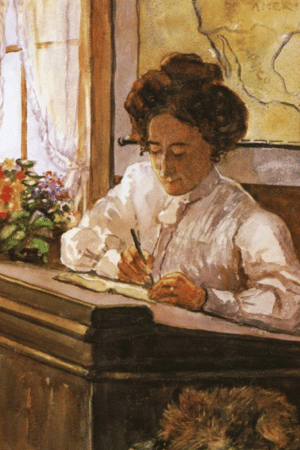
Emily Carr was a charter member of the Society and exhibited these ten paintings in their First Annual Exhibition in April 1909, the year before she attended art schools in France. There were 179 artworks on display at the Dominion Hall on Pender Street, in Vancouver and an exhibition catalogue was printed. Much of the artwork was available for purchase, with prices ranging from $7 to $250 although one painting was priced at $1,000.
First Annual Exhibition
April 20th to 28th 1909
Dominion Hall
Vancouver, B.C
- Big Trees, Stanley Park | M. Emily Carr | $60.00
- Indian Village Scene, Alert Bay | M. Emily Carr | $50.00
- War Canoes, Alert Bay | M. Emily Carr | $30.00
- Old Warriors | M. Emily Carr | $50.00
- A Little Old-fashioned Lady | M. Emily Carr | –
- The Tawny Girl | M. Emily Carr | $20.00
- Arbutus Trees | M. Emily Carr | $18.00
- Deadman’s Island | M. Emily Carr | $55.00
- Indian Camp, Victoria | M. Emily Carr | $20.00
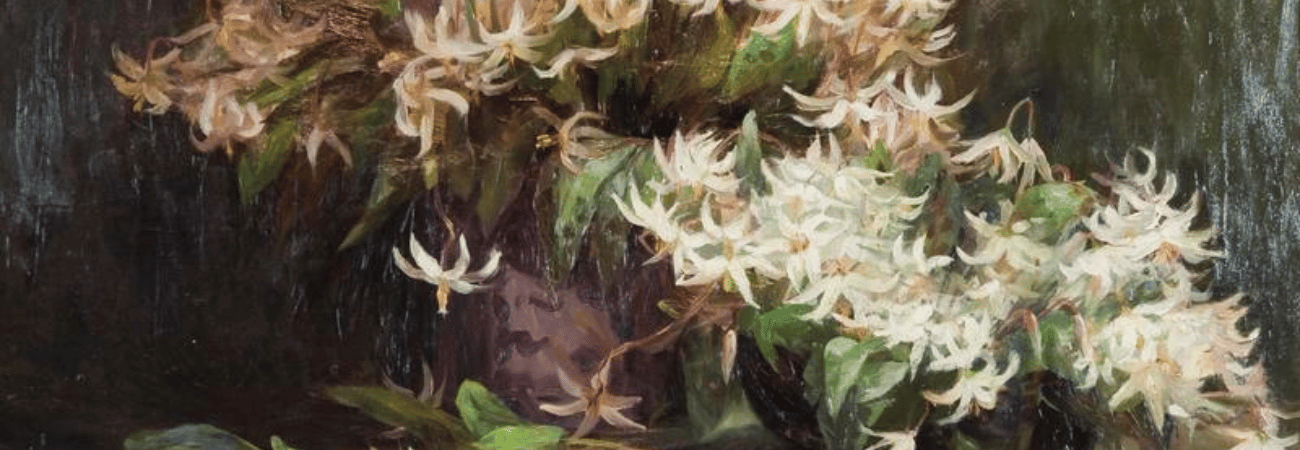
- Wild Lilies | M. Emily Carr | $75.00
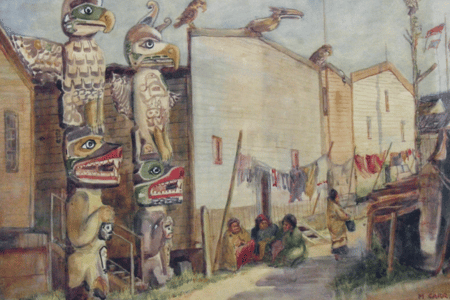
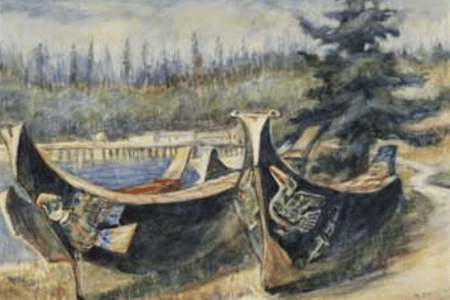
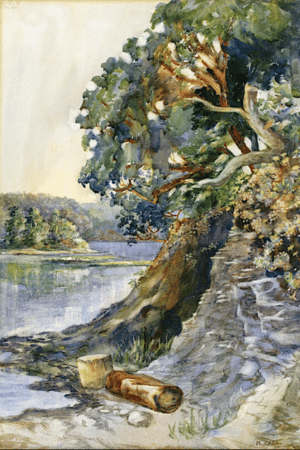
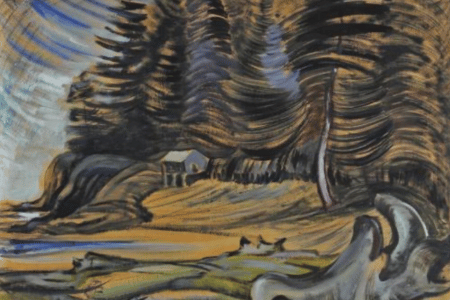
In her early career, Carr’s relationship with the Society was ambivalent She was seen as an outsider by many art elites at the time, and her style often clashed with prevailing tastes. This meant her work sometimes got minimal attention or less favourable placement in exhibitions. While Carr would eventually distance herself from the group due to aesthetic differences, her early participation underscores her foundational role in British Columbia’s artistic development.
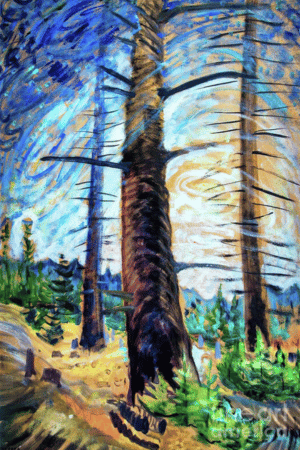
Her style, so vibrant and unconventional, was not what the conservative members of the Society were used to. At the time, British Columbia’s art scene was dominated by academic realism and genteel landscapes, and Carr’s emotionally charged interpretations of totem poles, remote villages, and dense forests seemed jarring and even inappropriate to some. One reviewer sniffed that her colours were “too loud.” Carr, deeply discouraged, felt misunderstood and marginalized by the very organization that was meant to support artists like her.
It did not help that the Society, while vital in building the foundations of art institutions in BC, was still beholden to Eastern tastes and traditions. Its exhibitions were often curated to appeal to the sensibilities of a conservative public, and Carr’s untamed canvases drew criticism.
The Society came to be seen as old-fashioned, and new art groups sprang up. Unfortunately, many of the Society’s members stopped exhibiting work in the early 1960s, including a number of life members. With the number of members in the Society being fixed, this prevented prevented others from showing their work. Finally one last desperate mailing was sent out in 1967, begging old members (and new) to sign up and revitalize the group. The plea did not succeed, and the remaining members of the group voted it out of existence and donated its records to the Vancouver City Archives in 1970.
By that time, the organization had lost much of its relevance to a new generation of artists who were experimenting with abstraction, installation, and conceptual art—movements that did not fit easily within the Society’s more traditional framework. The organization had struggled to evolve from its roots in British academic realism and was increasingly seen as conservative and out of step with post-war artistic developments.
The Society served its purpose well for many years, providing an important venue for artists to show and sell their work, using the stable foundation of the annual exhibitions. Because the rules of the Society required that members exhibit new work every year, an atmosphere of continuous creativity was engendered. The Society’s tenure spanned from the pioneer artists of Vancouver who founded the group through to the rise to prominence of the Vancouver School of Decorative and Applied Arts and its evolution into the Emily Carr University of Art + Design.
Also in 1909, Carr also exhibited eight of the ten paintings in Exhibition of Pictures held by the Vancouver Studio Club and School of Art, a predecessor organization to the B.C. Society of Fine Arts, that had begun exhibiting in Vancouver in 1904.
Carr was made a lifetime member of the BC Society of Fine Arts in1938, soon after she suffered her first serious heart attack. Her final exhibition with the Society was held from May 15 – June 8, 1943 in which she exhibited six paintings: for sale.
33rd Annual Exhibition
May 15 – June 3, 1943
- Old Cedar Poles | M. Emily Carr | $50.00
- Cordova Bay | M. Emily Carr | $50.00
- At Seaton, B.C. | M. Emily Carr | $50.00
- Alice | M. Emily Carr | $50.00
- Old Fir Tree | M. Emily Carr | 5$0.00
- Mrs. Jones’ Farm | M. Emily Carr | $50.00
The Society served its purpose well for many years, providing an important venue for artists to show and sell their work, using the stable foundation of the annual exhibitions. Because the rules of the Society required that members exhibit new work every year, an atmosphere of continuous creativity was engendered. The Society’s tenure spanned from the pioneer artists of Vancouver who founded the group through to the rise to prominence of the Vancouver School of Decorative and Applied Arts and its evolution into the Emily Carr University of Art + Design in Vancouver.


0 comments